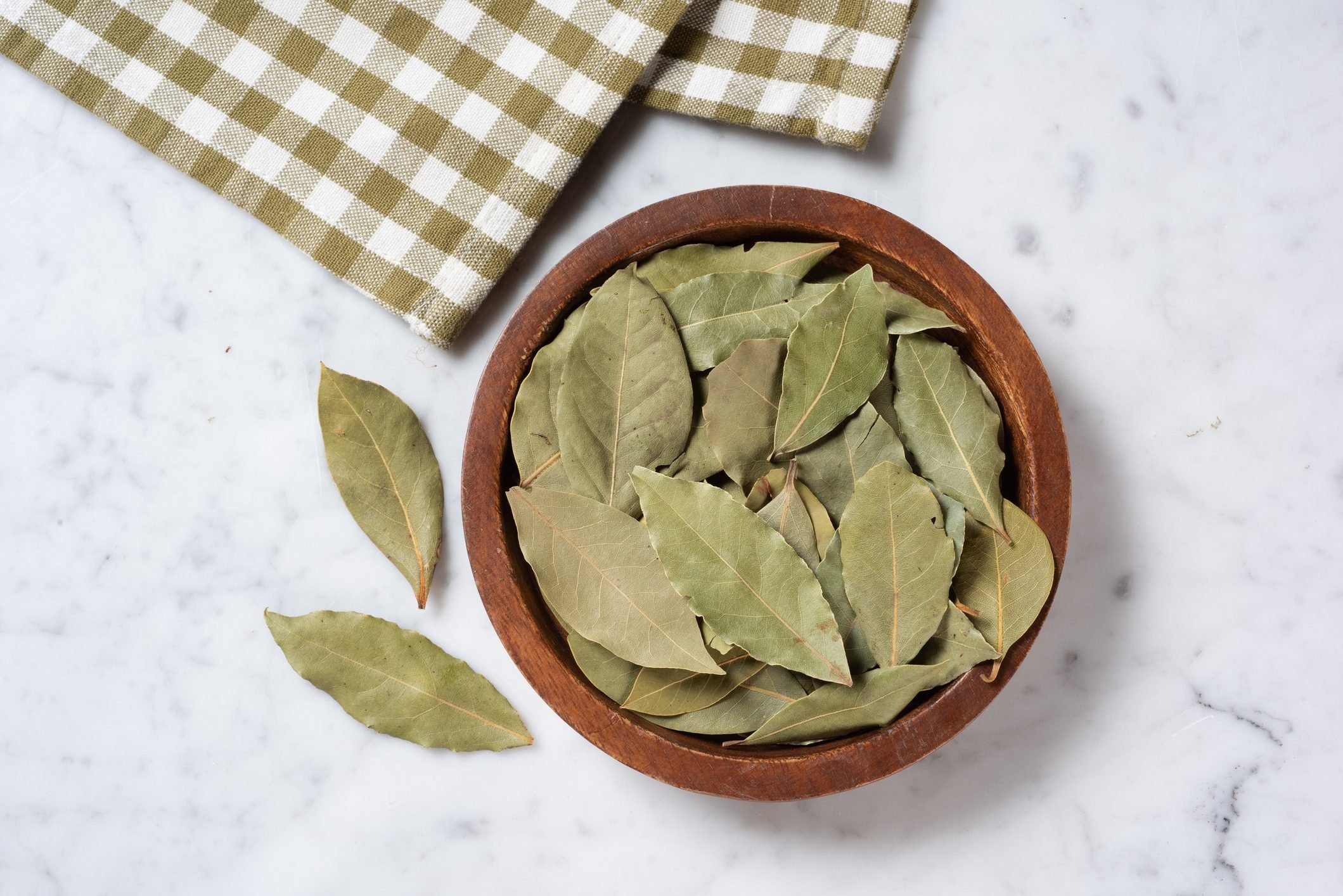
Can you eat bay leaves, or are they toxic? We'll separate the truth from the myth and explain why you technically can but should not eat this seasoning.
If you are the kind of cook who regularly drops a few bay leaves into a pot of simmering rice or soup, it’s inevitable that one occasionally ends up in a serving bowl. It can be jarring to find a bay leaf in your mouth while dining on luscious, hearty stew recipes. The moment your tongue finds the jagged, aromatic leaf, you may panic or pause, unsure if you should spit it out or chew it up. So, can you eat bay leaves, or are they harmful?
There is a longstanding rumor that bay leaves are toxic, thanks to their visual similarity to other members of the laurel family, such as mountain laurel or cherry laurel. Those are poisonous to humans and livestock, but bay leaves are not toxic. Read on to discover the truth about bay leaves and why you still shouldn’t eat them.
What are bay leaves?
Bay leaves are a whole-leaf herb added to recipes with long simmering times or grains, like this Spanish rice, for a subtle flavor boost and a more well-rounded overall taste. They can be dried or fresh, but should always be removed from the dish before serving.
A member of the laurel family, there are several types of bay leaves used for cooking. Two of the most common are: Bay laurel (also known as Mediterranean bay leaves or Laurus nobilis) and California bay leaves (Umbellularia californica). They have a very similar flavor profile, but California bay leaves have a longer oval shape and a stronger taste.
Can you eat bay leaves?
Although bay leaves are technically edible, no, you shouldn’t eat them. Even after hours and hours of simmering in a pot, bay leaves are still shockingly tough and pointy. As such, ingesting a bay leaf is an unpleasant sensation, may scratch your mouth or esophagus and could become a choking hazard. They won’t make you sick, but you should not eat bay leaves nor serve them to your family or dinner guests.

Tips for Cooking with Bay Leaves
What do you do with bay leaves?
Bay leaves are one of our top essential spices (even though they’re really an herb) that add just the right flavor note to many slow-cooked dishes, from stews and soups to braised meats. But because nobody wants a surprise bay leaf in their mouth, it’s best to discard them before plating.
To make this task easier, keep bay leaves whole and remember how many you used, so you know how many to remove. For a foolproof method that won’t require a fishing expedition in a big vat of soup, add your bay leaf to a bouquet garni (herbs held together with kitchen or butcher’s twine or bundled together in cheesecloth).
What do bay leaves taste like?
Bay leaves have a light, herbal flavor, similar to eucalyptus or tea, with subtle notes of pine and black pepper. It’s one of those flavors that you may not be able to identify immediately, but if you dig in to a soup or stew that failed to use a bay leaf, you’d notice something was missing. This unassuming ingredient will make all the difference in simple slow-cooker dump dinners, hearty pasta sauces and braised short ribs. Although a dried bay leaf has a gentle aroma, it just needs some heat to coax out its flavor.
Are bay leaves poisonous?
Bay leaves aren’t poisonous or toxic. However, if you bite into a bay leaf, you’ll almost immediately want to spit it out because it’s nearly impossible to chew or swallow, no matter how long it’s been cooked.