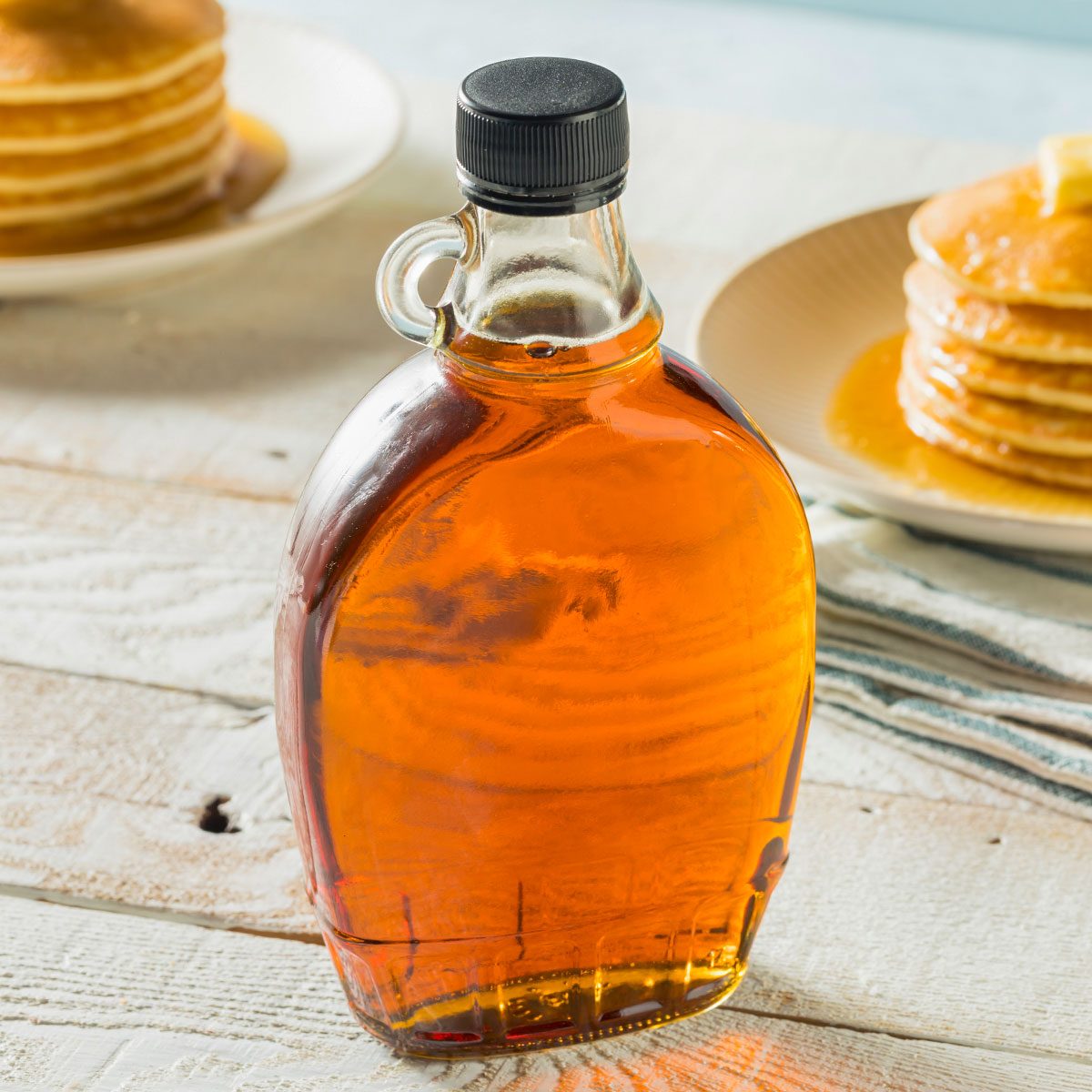
Once opened, real maple syrup belongs in the fridge, not the pantry. Here's why, plus how to tell when it's gone bad.
Few ingredients taste more like fall than maple syrup. It’s the finishing touch on stacks of fluffy pancakes, the secret to perfectly glazed roasted carrots and the star of cozy recipes like maple-pecan pie or homemade granola. But if you’ve ever hesitated by the refrigerator wondering where that delightfully sticky bottle should live, you’re not alone.
For all its versatility, pure maple syrup can be a little fussy once opened. So, do you stash it in the fridge or tuck it away on a pantry shelf? Here’s what the experts—including one longtime maple producer—have to say.
Do you need to refrigerate maple syrup after opening it?
The answer lies in a little kitchen chemistry.
To get the full picture, I reached out to Ken St. Pierre, founder of Big Lake Maple. Ken has been crafting small-batch syrup in New Hampshire for over a decade. His family-run sugarhouse began as a backyard hobby and has since grown into a full-scale operation surrounded by beautiful, sugar-rich New England maples.
“Pure maple syrup is all natural,” St. Pierre says. “As soon as the seal is opened, air and mold spores are introduced. The syrup’s high sugar content slows them down, but they can still grow using the trace amounts of water. Leaving syrup unrefrigerated after opening just speeds up that process.”
That’s why producers and food safety experts alike agree: Once you open a bottle, store it in the refrigerator. This isn’t unique to syrup; cooling slows down microbial growth and preserves flavor, according to Mississippi State University.
The freezer is a great option, too. Interestingly, maple syrup doesn’t turn solid when frozen; it stays soft and spoonable, ready when you need it. St. Pierre says his family keeps an opened gallon jug in the freezer and a pint-sized mason jar in the fridge, ready to pour.
Quick storage guide:
- Unopened: Keep in a cool, dark pantry for up to one year
- Opened: Refrigerate for 6 to 12 months
- Freezer: Indefinite shelf life
Editor’s Tip: Don’t love cold syrup? Microwave it for 20 seconds before pouring it. It’ll taste like it just came from the sugar shack.
Do you need to refrigerate pancake syrup?
Not necessarily. Commercial pancake syrups—the kind made with corn syrup, caramel coloring and artificial flavors—are formulated for shelf stability. Many contain preservatives that keep them safe at room temperature. Of course, shelf stability doesn’t always equate to flavor. It sometimes seems like these types of syrups are built more for endurance than for actual enjoyment.
“That commercial stuff is so loaded with additives it’ll probably outlast us all,” St. Pierre jokes.
If your bottle lists ingredients like high-fructose corn syrup or natural flavor, pantry storage is usually fine. But if it says 100% pure maple syrup, treat it with the care it deserves and store it in the fridge once it’s opened.
How to Tell If Syrup Has Gone Bad
Even with proper storage, syrup can eventually spoil. The most common culprit? Mold.
“Typically, mold appears at the top of the syrup as a floating mat,” St. Pierre says. “At first it may look like white specks, but as it grows it can get furry—just like anything else that’s been in the fridge too long.”
If you notice mold, “off” odors or a fermented, bubbly texture, it’s time to toss the syrup. While some old school advice suggests skimming and reboiling, St. Pierre cautions that some molds are heat resistant, so it’s safer to cut your losses and start fresh.
Not everything floating in your syrup is bad news, though. You might notice sugar crystals or a fine layer of “sugar sand” settling at the bottom of your bottle. These are just natural minerals and excess sugars from the sap—harmless, and honestly, kind of delightful. Think of them as nature’s sprinkles.
Related: