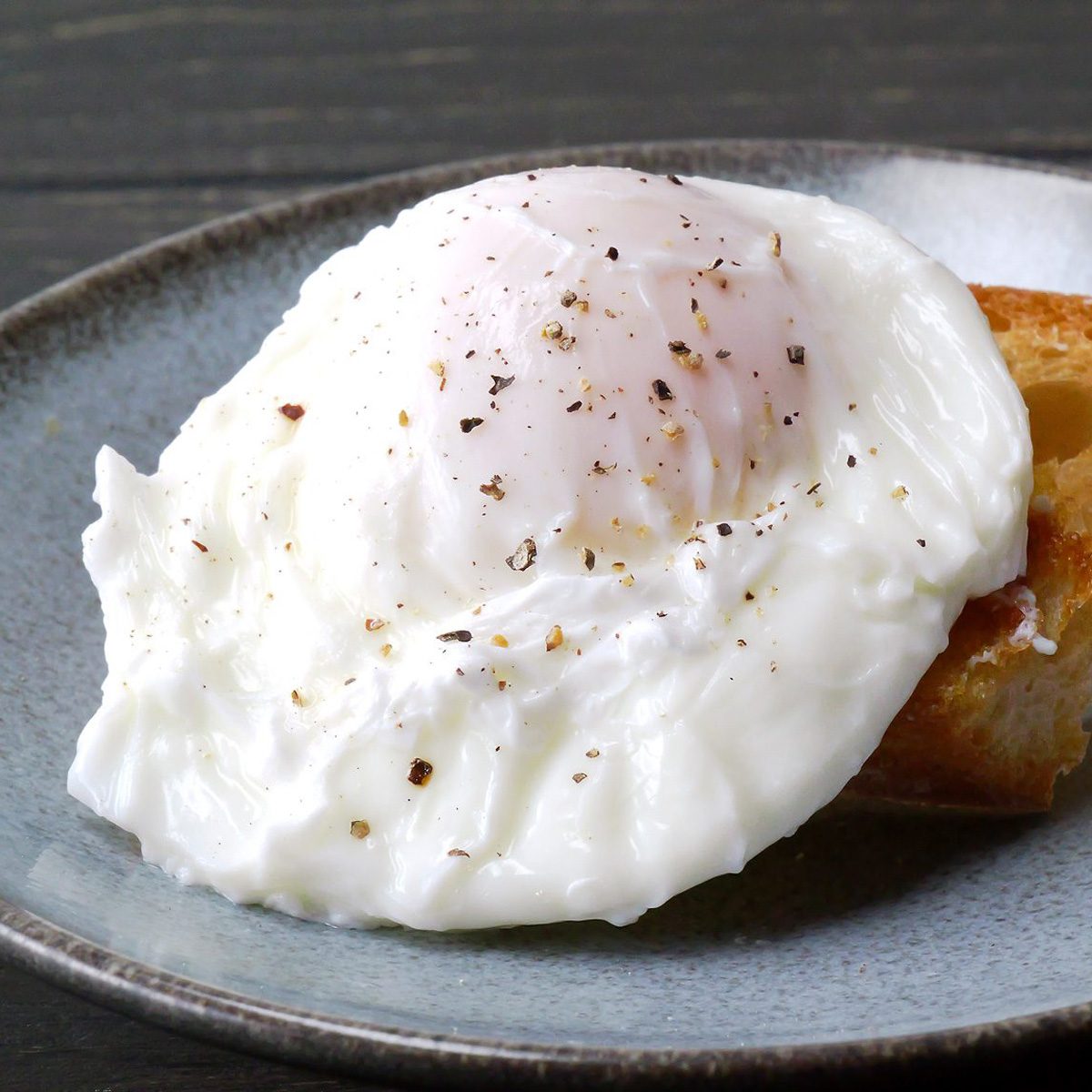
This viral vinegar hack promises perfectly shaped poached eggs—and it actually works.
There are a thousand ways to cook an egg—fried, scrambled, baked and coddled, to name a handful—but few feel as impressive as the poached egg. With its silky white and soft, jammy yolk, it’s the crown jewel of breakfast favorites everywhere, from eggs Benedict to avocado toast.
But there’s one thing even seasoned cooks struggle with: those messy, stringy egg whites that float like ghostly ribbons in the pot. These aggravating little tendrils tangle and swirl until your poached egg looks more like a sea creature than breakfast. That’s why when I saw a viral Instagram video promising a fail-proof way to poach eggs without the dreaded “sploogy bits,” I had to try it for myself.
What is the vinegar poached egg hack?
The video, shared by Instagram creator Jason Ortynski, shows a simple process that looks almost too easy. Instead of cracking an egg straight into simmering water and swirling it like you’re auditioning for Top Chef, you’ll first give it a simple vinegar bath.
Here’s how it works:
- In a small bowl, mix equal parts water and vinegar.
- Crack your egg directly into the mixture.
- Let it sit for at least 10 minutes.
During the soak, the acid in the vinegar starts to gently set the outside of the egg white, forming a thin, jelly-like coating that holds the egg’s shape once it hits the hot water. It’s a little bit of food science magic that promises to eliminate those wispy whites that usually run amok during poaching.
My Thoughts on the Vinegar Poached Egg Hack

I followed Ortynski’s instructions exactly, using equal parts water and plain white vinegar. One commenter mentioned using apple cider vinegar to great results, but I stuck to the basics.
I cracked my eggs gently into the vinegar-water mixture—emphasis on gently. If you crack too hard, you’ll create a splash that will actually encourage more of those whispy whites we’re trying to avoid. I let my eggs sit for 15 minutes (a little longer than the video’s “at least 10”), but mine didn’t seem quite as jellied as his were on camera.

Still, the results were impressive. Once I slipped the egg into simmering water, the whites hugged the yolk quite well. The egg cooked evenly, with a delicate, creamy center and far fewer stray strands than with my usual swirl method.
Were they Michelin-star material? Not quite—but the difference was significant. The hack really does make poaching less intimidating, especially for beginners who want neat, restaurant-style results without the learning curve.
Do the eggs taste like vinegar?
Not at all—and here’s why: The vinegar never actually soaks into the egg; it just firms up the outside so the white holds its shape. Once the egg goes into the water, that thin layer of vinegar rinses right off. What you get is a clean, delicate poached egg that tastes exactly as it should.
So, does it work?
If you’ve ever sworn off poaching eggs because of those frustratingly rebellious whites, this hack is worth a try. The vinegar soak gives the egg a little head start toward that perfect, cloud-like shape. Even if you’re an experienced cook, it’s a fun experiment that blends kitchen chemistry with breakfast magic—and it just might earn a permanent spot in your Sunday brunch routine.
Related: