This durable pan should last a lifetime if you know how to care for it. We'll walk you through how to clean a cast-iron skillet in a few simple steps.
For some people, prized possessions come in the form of cars or fancy electronics. For me, it’s my fire-engine red 12-inch Le Creuset cast-iron skillet. Since I acquired this powerhouse pan, it’s helped me whip up veggie-packed frittatas, pan-seared scallops, homemade rolls and countless chicken skillet dinners.
This all-in-one pan has become my go-to kitchen tool, but I’ve heard that cast-iron cooking comes with a special set of rules. I have to make sure to treat the pan with extra care, which includes learning how to clean a cast-iron skillet.
Can you use soap on a cast-iron pan?
Despite popular belief, it’s totally OK to use soap on a cast-iron pan. Part of what makes cast iron so great for cooking is that it develops a layer of seasoning over time through regular use. Seasoning is basically a layer of oil that bonds to the pan’s surface when it’s heated. It builds each time you cook with oil or fat, and eventually, it makes the pan nearly nonstick.
That hard-earned seasoning can come off in the wash, so it’s important to be gentle when cleaning up. You can use soap, but you may want to rub in some oil after cleaning and drying to ensure you season your cast-iron skillet as needed.
How to Clean a Cast-Iron Skillet
Step 1: Rinse your skillet with warm water

Let your cast-iron pan cool down a little bit (you don’t want to burn your hands!). Then, rinse it in the sink with warm—never cold—water to dislodge any clingy food scraps to prevent them from hardening and sticking to the pan. If you don’t want to wait, you can pour a glass of hot water into the pan while it sits on the stove.
Editor’s Tip: It’s OK to get your cast-iron skillet wet, but avoid soaking it in the sink to prevent rusting. We like to minimize the number of times it comes into contact with water, which means no dishwasher, either!
Step 2: Scrub it with a little soap

Sometimes, plain water will do the trick. But most times, a little bit of dish soap is needed to help loosen the stubborn scraps. A little soapy water now and then will help banish stuck-on food and reduce the elbow grease. Use warm water, gentle dish soap and a scrubber brush to clean your pan where it needs it.
Editor’s Tip: Avoid abrasive scrubbers, like scouring pads or steel wool, which can remove the pan’s hard-earned seasoning. Instead, use a stiff brush or a chain-mail scrubber specifically designed for cast iron. If you feel like you need help to remove tough residue, try using kosher salt as a natural buffer to remove any difficult bits.
Step 3: Dry it immediately
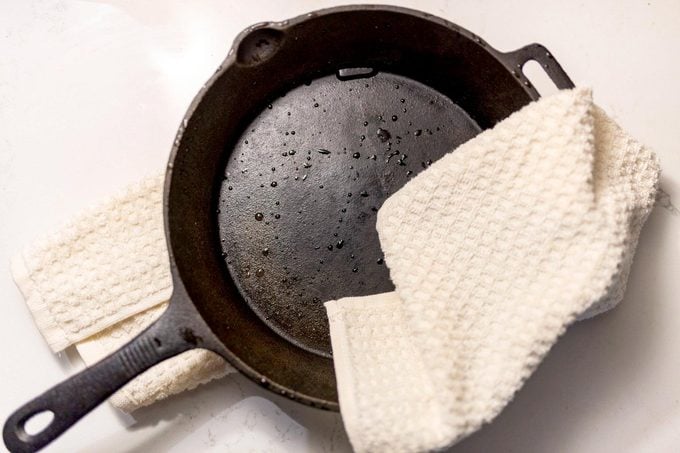
Instead of leaving your pan on the rack to dry, wipe it down with a clean rag or paper towel immediately to prevent rusting. Don’t use a light-colored towel, though, which could be stained by the cast iron.
Editor’s Tip: To reinforce your seasoning after a wash, apply a light coat of vegetable oil to the pan while it’s still warm. Brush it in with a paper towel to ensure the oil doesn’t pool. Then, set it on the stovetop over low heat for a few minutes to help it soak into the surface.
How to Season a Cast-Iron Skillet
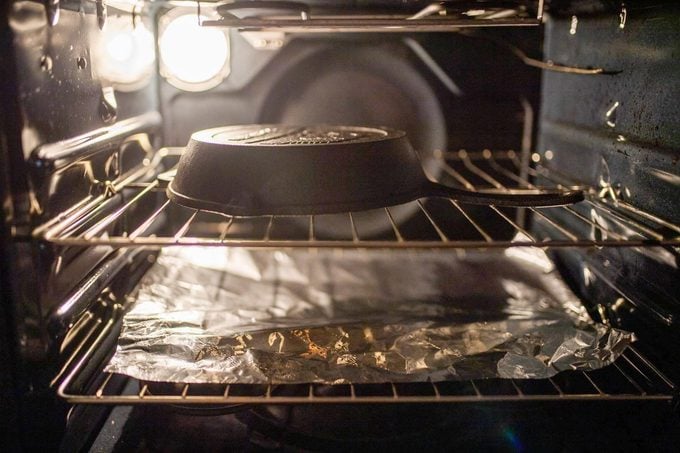
If you just bought a brand-new cast-iron skillet (or had to restore a rusted cast-iron skillet), you’ll need to season your pan before use.
- Apply a layer of oil: Starting with a clean, rust-free pan, apply a thin coat of vegetable oil to the whole pan—outside and handle included.
- Bake it in the oven: Place the cast-iron skillet upside down in the oven, and bake it at 350°F for one hour. I like to lay a sheet of aluminum foil on the lower rack to catch potential drips.
- Let it cool: Once your timer goes off, leave the pan in the oven until it’s completely cool. Now you’ve got a seasoned pan!
When to Replace Your Cast-Iron Skillet
Cast iron is extremely durable, and these pans should last a lifetime with proper care and maintenance. The only reason to consider replacing your cast iron is if it cracks or has chips in the surface due to corrosion or improper cleaning. Of course, that doesn’t mean you can’t expand your cast-iron cookware to include multiple skillets, Dutch ovens, grill pans and woks.