


Whether you picked apples at an orchard or bought them at the store, here's how to store apples to keep them crisp for as long as possible.
My all-time favorite fruit is an apple. Eaten with peanut butter as a midday snack, baked into cozy apple desserts or cooked into pork and apple recipes for dinner, there are endless ways to enjoy this perennial fruit. I love apples so much that when it’s apple-picking season, or my favorite type of apple is on sale at the grocery store, I really stock up. Despite my best efforts, I can’t eat them all at once, so knowing how to store apples properly is essential.
From taking humidity, temperature and the apple variety into account to storing whole versus sliced apples, we’ve gathered all the key information for you. Here is everything you need to know about the best ways to keep apples fresh.
Choosing Apples for Storage
First off, it’s a good idea to start with apples that are in the best possible shape. When shopping or at an orchard, you can pick the best apples by evaluating their firmness and skin integrity. Avoid discolored or wrinkled apples, as those are likely past their prime, as well as ones with damaged peels and bruised flesh. Those cuts and soft spots speed up the production of ethylene gas, causing apples to rot. Once you bring them home, handle apples with care so they stay blemish-free.
The Best Way to Store Whole Apples

Short-Term Apple Storage
If you plan to use your apples within a few days, you can keep all the popular apple varieties, like Gala, Fuji and Granny Smith, in a bowl or other fruit storage keeper on the kitchen counter for up to a week before they start to soften. Avoid storing onions close by, as they release the same ethylene gas that causes apples to ripen quickly.
Long-Term Apple Storage
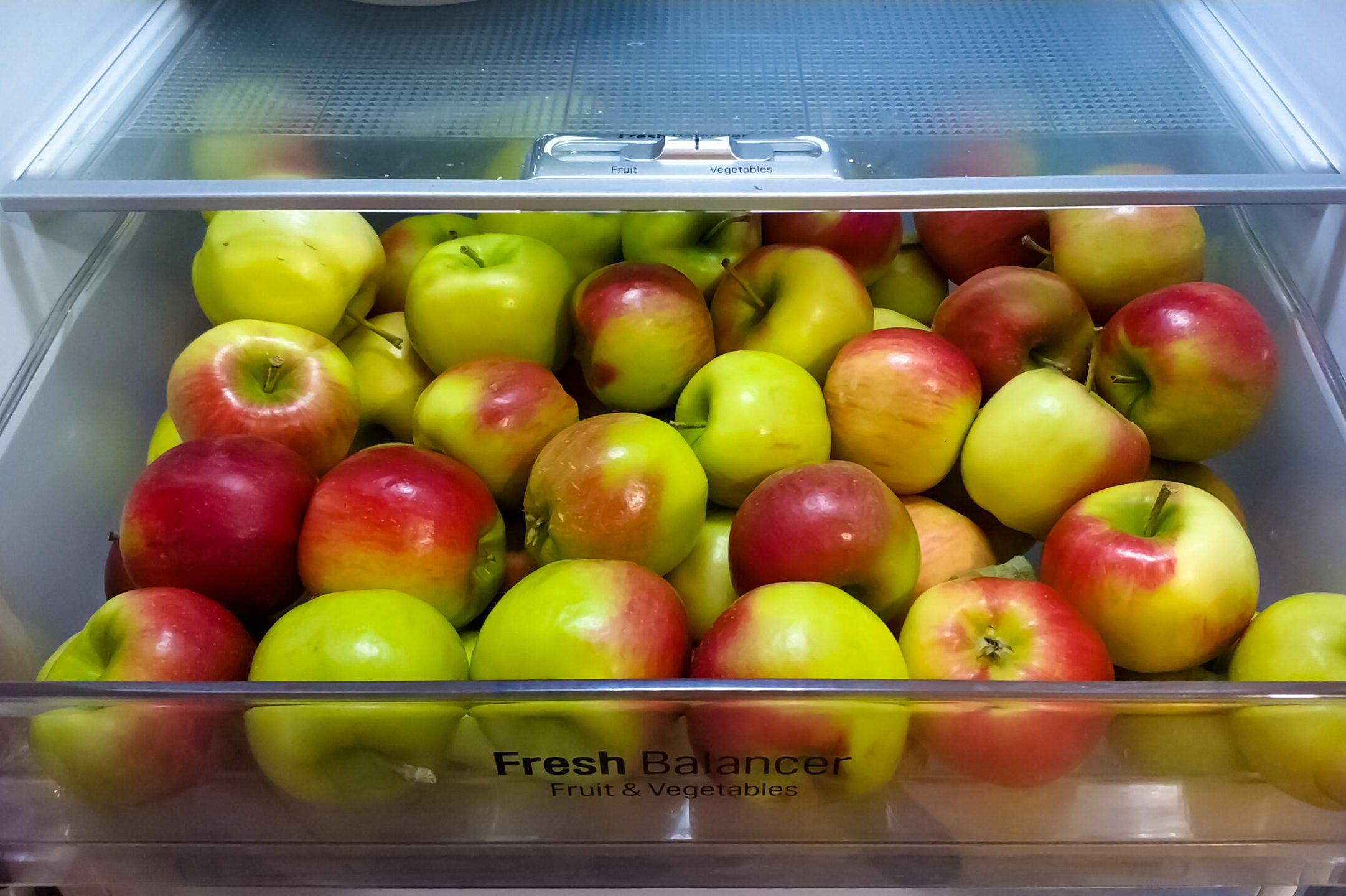
To keep your apples fresh for more than a week, or if you want to be extra-cautious with heirloom apple varieties, store them in a humid spot in the fridge with a temperature between 30 and 32 degrees. For a small bag of apples, the crisper drawer is a great option. To increase humidity, transfer apples to a paper bag or a perforated plastic bag (poke a few holes in a produce bag) before placing them in the drawer. Apples will stay crisp for several months, for snacking, baking or in recipes like air-fryer apple chips.
If you have a root cellar, basement pantry or garage that is typically 40 degrees or colder, you can store your apples there, too. Just put them in a bag or container with some insulation, such as a few crumpled paper bags or kitchen towels, to prevent the apples from freezing during a frost.
How to Store Cut Apples and Prevent Browning

Cut and sliced apples should be stored in resealable food storage bags or airtight containers in the refrigerator for up to five days. Left untreated, the cut surfaces of the apples will begin to oxidize and turn brown very soon after slicing. Though these browned slices are perfectly fine to eat, they don’t look appetizing, especially to kids. The good news is that a few items in your pantry can help keep cut apples from browning.
- Salt: Add 1/4 teaspoon of salt to 2 cups of water and stir until dissolved. Soak apple slices in the salt water for several minutes, then rinse well before serving or storing. This brine keeps browning at bay for up to a week.
- Lemon juice: Toss sliced or cut apples with a squirt of fresh lemon juice. As well as keeping apples from turning brown, this also gives them a bright, lemony flavor. The lemon-coated apples will resist browning for a few hours, long enough to tuck them into lunchboxes or set them out for a snack. The flavor also works well in baked apple recipes, like apple crisp or apple pie.
- Lemon-lime soda: This trick is a favorite of the Taste of Home food styling team. Just soak cut apples in lemon-lime soda, like 7-Up or Sprite, for about 10 minutes. Drain them, and they’re ready to eat. Since the flavor is fairly neutral, the fruit needs no additional rinsing. Apples soaked in the lemon-lime soda will stay bright for a couple of days.
How to Freeze Apples
Freezing will preserve your apple, whole or sliced, for three to four months. Keep in mind that after thawing, the fruit will be very soft and only suitable for cooked apple recipes, such as apple butter, German apple cake or apple pie bars. You can also add frozen apple slices directly into drinks like this apple cider smash. If you’ll need apple slices or chunks, do that prep before freezing to avoid a mushy mess.
- Whole apples: When you have a lot of apples to freeze and not a lot of time, this option is your best bet. Wash the apples, dry them well and then freeze them in a single layer on a tray. Once they’re frozen solid, transfer the whole apples to an airtight, freezer-proof container or freezer bags.
- Sliced apples: To freeze sliced or chopped apples, start by peeling your apples, removing the core and cutting into the desired shape. Toss them with lemon juice, then freeze them in a single layer on a tray. Once they’re solid, transfer them to freezer containers or bags, pressing as much air out as possible. Peeling and slicing apples before freezing makes it easy to grab and thaw only what you need.
Tips for Storing Apples

Why do apples spoil?
Apples spoil because they emit ethylene gas, a natural gas that causes fruit to ripen. While it helps apples grow and sweeten on a tree, the gas doesn’t stop being produced once the fruit is picked. Instead, ethylene continues to be released, eventually pushing apples from crisp and ripe to soft and spoiled.
Do apples last longer on the counter or in the fridge?
Apples will last longer if they’re stored in the fridge because the cool temperatures and increased humidity slow down the release of ethylene gas. Apples stored on the counter will last about a week, but they can last several months in the fridge. You’ll know it’s time to toss the fruit if it smells vinegary, or you see mold, black spots, oozing liquid or one side flattened and brown.
Can you store apples with other fruits and vegetables?
It’s best to keep apples separate from other fruits and vegetables because, it’s not your imagination, apples will make fresh produce go bad more quickly! This is due to the ethylene gas apples release. Apples should be stored on their own, but kept especially far away from ethylene-sensitive produce like cruciferous vegetables, leafy greens, melons, grapes, onions and bananas. If you’re tight on space, you can store apples near berries, garlic, most citrus, tomatoes and potatoes, but it’s not ideal.


