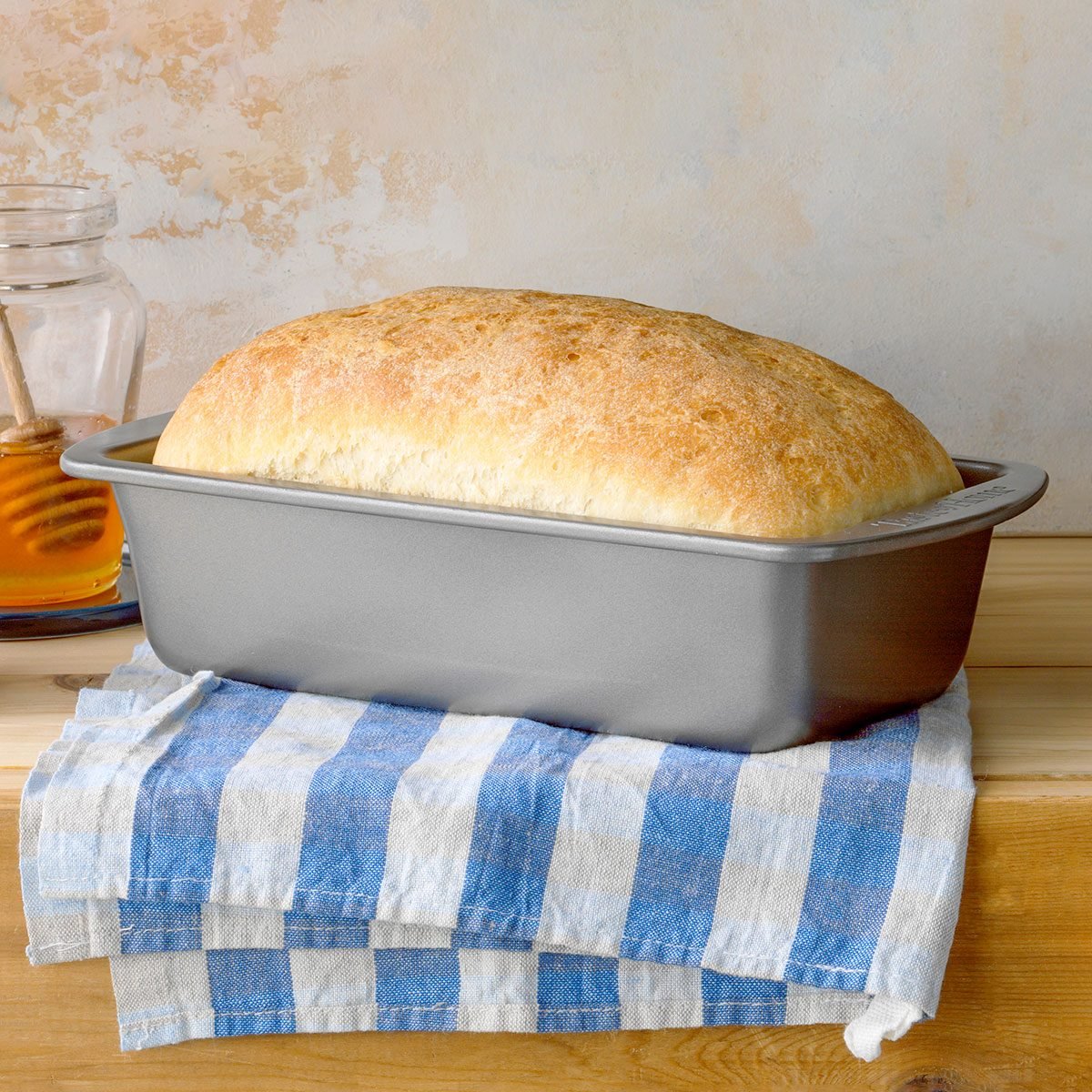
Learn how to pick the best loaf pan size for yeast breads and quick breads.
Bakers use loaf pans for everything from yeasted breads to quick breads. But does the size of the loaf pan you choose matter?
In short, the answer is yes. While loaf pan sizes may seem insignificant, the pan’s volume can make all the difference in the outcome of your bread recipes. This goes for everything from basic homemade bread and pull-apart garlic bread to classic banana bread. If your breads are short and squat instead of rising high, your pan may be to blame. It’s best to stick to the size the recipe calls for, but we have tips and tricks for adjusting, if needed.
What is a standard loaf pan?

A loaf pan is a kitchen essential tool for any home baker. Its rectangular shape and high sides make it ideal for baking many bread loaf recipes, from sandwich bread to pumpkin bread, pound cakes and even savory dishes like meat loaf. There are two standard loaf pan sizes: 8-1/2-by-4-1/2 and 9-by-5 inches. Both have sides at least 2-1/2 inches tall (most 9-by-5-inch pans have 3-inch tall sides). The smaller pan holds 6 cups of batter or dough, while and the larger one holds 8 cups.
How to Choose the Right Size Loaf Pan
| Pan Size | Dough Volume |
| 9″ x 5″ | 8 cups |
| 8 ½” x 4 ½” | 6 cups |
| 8″ x 4″ | 4 cups |
| 5 ¾” x 3 ¼” | 2 cups |
Baking recipes will call for a specific loaf pan size for a good reason. While the difference between the two most popular sizes seems small, it equals a 15% change in capacity. That percentage can undoubtedly affect your final bake.
If your recipe calls for an 8-1/2-by-4-1/2-inch pan and you use a 9-by-5-inch pan, your bread could fall flat instead of properly rising. On the other hand, if your recipe calls for a 9-by-5-inch pan and you use an 8-1/2-by-4-1/2-inch pan, your batter may overflow and burn in the oven. It’s best to choose the size based on what you’re making, sticking to the recipe-recommended loaf pan size as closely as possible.
Types of Bread You Can Bake in a Loaf Pan
- Yeasted breads: Yeasted breads usually start as dough made with water, yeast and flour. Bake homemade bread, like English muffin bread and garlic herb loaf, in a loaf pan.
- Quick breads: Quick breads start off as batter made with either a butter or an oil base. The batter is usually loose enough to be poured into a loaf pan to bake. Some quick breads you can make in a loaf pan include zucchini bread, pumpkin bread and cinnamon roll bread.
Tips for Baking Bread in a Loaf Pan
What is the best loaf pan for baking bread?
The best loaf pans are made from glass, ceramic or metal. While any of these options are suitable for baking quick breads and yeasted breads, it’s not a bad idea to stick with a metal loaf pan. Aluminum and other metals conduct heat better, leading to nicer browning and crisping of the crust than ceramic and glass can achieve.
Do I need to grease a loaf pan before baking bread?
Whether baking a quick bread or yeasted homemade bread, greasing the loaf pan is an important step. This helps to prevent the bake from sticking to the pan. Grease it with cooking spray or butter. You can also use a long, rectangular piece of parchment paper to form a sling, making it easier to retrieve the baked and cooled loaf from the pan.
How do I scale a recipe for different-sized loaf pans?
If you don’t have the right size pan for your recipe, it’s essential to adapt baking recipes accordingly. That way, you can still use the pans you already have in your kitchen. Calculate the volume or size difference of the pan. For some recipes, you can use whatever loaf pan you have on hand, but try lowering the oven temperature and increasing the baking time for smaller pans.