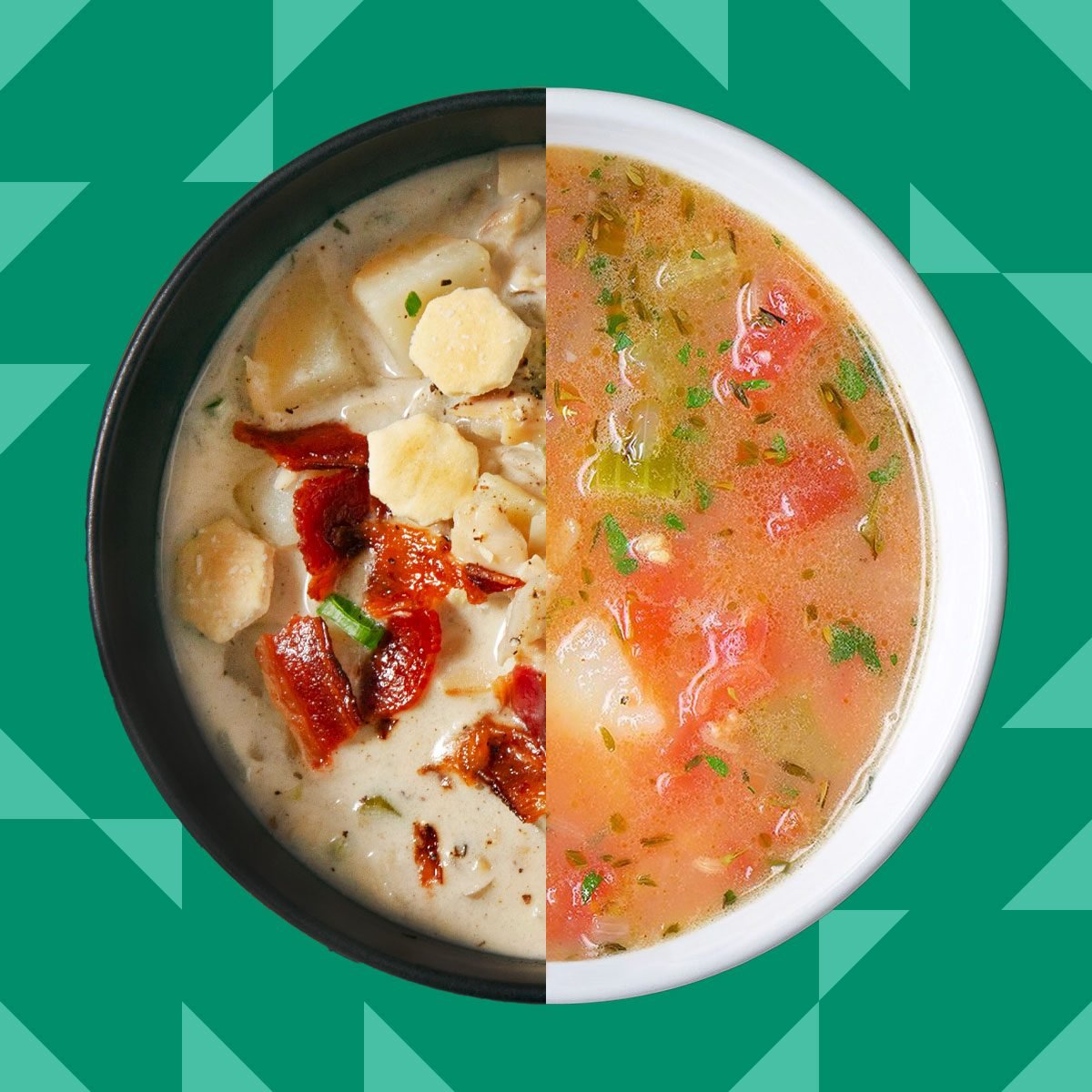
You'll know it when you see it.
My very first job was as a host in a local restaurant, and one of my opening shift duties was to write all the daily specials on a board next to the host stand. One Saturday morning, I printed off the specials and went to work. The soups of the day were beef barley soup and Manhattan clam chowder. Since I was running out of space on the board, I just wrote “clam chowder.”
If you’re a chowder fan, then you know exactly where this is going. But at 16, I had never heard of Manhattan clam chowder, and figured it was just the soup’s full name, so to speak. My manager scanned the specials board, noted the error and said, “Babe, Manhattan clam chowder is different—fix the board.”
As I learned that morning, our restaurant served both versions: New England clam chowder and Manhattan clam chowder. If you’ve ever been puzzled by the difference, then allow me to explain.
What is New England clam chowder?

New England clam chowder might be the first thing that comes to your mind when you think of the dish. It has a thick, rich white broth thanks to the addition of cream. The contents of the soup vary based on who’s making it, but it typically includes an aromatic base of onion, celery and garlic, plus chopped clams, potatoes, bacon, clam juice and of course, cream or half-and-half cream.
It’s a classic American dish that dates back to the 1700s, when New England settlers took advantage of the fresh quahog and razor clams that were prevalent along the shoreline. It’s now become a staple in New England restaurants, and is something of a culinary tourist attraction. It’s typically served with oyster crackers.
What is Manhattan clam chowder?

Manhattan clam chowder has been around since at least the mid-1800s, and its origins are often traced to Portuguese fishing towns in the Northeast. A lot of Portuguese cuisine highlights tomatoes, and the same is true of this dish. Because these communities sold their catch and prepared dishes at New York’s fish market, it earned the moniker of Manhattan clam chowder. It started appearing in restaurants in the 1930s.
The differences are subtle, but important. Manhattan clam chowder uses an aromatic base that’s reminiscent of Cajun cuisine, with onions, celery and green peppers in addition to garlic. It also uses clams, potatoes and butter, plus canned tomatoes and a spice blend that includes cayenne pepper for a hint of a spice kick.
What is Rhode Island clam chowder?
Plot twist! There’s also a secret third option, which I didn’t even know about until I started researching this story. Rhode Island clam chowder stands apart for its use of a clear broth. This version doesn’t use any cream or tomatoes, so it really lets the sweet, briny clam flavor shine through. If you’re a big fan of seafood, this version will be the most clam-forward of the trio.
Related: