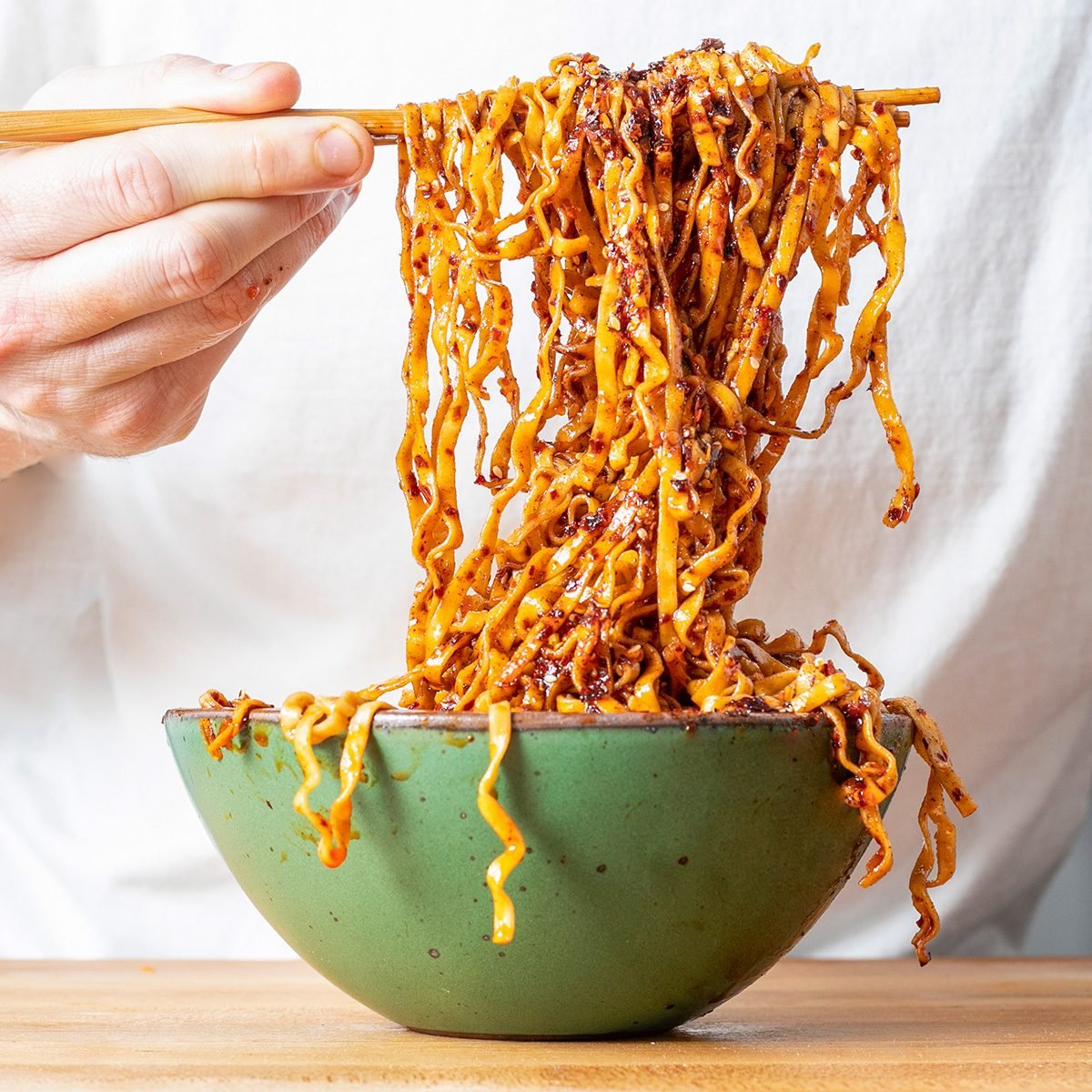
The days of avoiding that chile pepper on the menu are over.
As the saying goes, variety is the spice of life. It’s also true that spice adds variety to life and brings so much vibrant flavor to dishes. While I consider myself an open-minded cook and eater, there is one place where I feel a little behind. Unfortunately, my spicy food tolerance is pretty low, and I really want to work on improving it.
I’ve definitely gotten a little better at tolerating spice over time. But I want to dive headfirst into Dan Dan noodles or Korean barbecue chicken without being completely overwhelmed! Since I know I’m not alone in this conundrum, I decided to ask a spicy food expert for some pro tips on how to incorporate spicier dishes into my life.
I spoke with Young Chang, the founder and CEO of A-Sha Foods. A-Sha specializes in air-dried Taiwanese-style noodles that don’t hold back when it comes to heat, so I figured Chang would be able to help guide me on my spice quest.
How to Increase Spicy Food Tolerance

1. Start with the basics
Taste of Home: What kinds of spicy foods are good for beginners, aka people who don’t have much spice tolerance but want to expand their palate?
Young Chang: Start with foods that balance flavor and heat, rather than going for intensity right away. Look for dishes that pair chile with garlic, sesame or a touch of sweetness—something that gives a warm tingle rather than a full burn. Thai sweet chili sauce, gochujang or chili crisp are great starter condiments. Noodle dishes that layer spice with umami are also an approachable intro.
2. Turn down the heat
TOH: If you become overwhelmed by spicy food, what’s the best way to alleviate that sensation?
YC: First rule: don’t reach for water! Water can actually spread the spice oils around your mouth and make it worse. Instead, go for dairy-based drinks (like milk or yogurt), or even bread or rice to help absorb and neutralize the heat. A spoonful of honey or sugar can also help tame the burn.
3. Make it a habit
TOH: We’ve all seen people like Demi Moore eat super spicy food on Hot Ones and not even flinch. Are some people just not affected by spice?
YC: Some people do seem to have a naturally higher spice tolerance, whether from genetics, exposure or practice. Over time, your brain can become desensitized to the pain signal triggered by capsaicin (the active compound in chile peppers). It’s a real phenomenon, and a spicy badge of honor! In fact, A-Sha’s spice-loving fans inspired us to partner with Hot Ones to create a fiery lineup of increasingly spicy and flavorful ramen noodle kits that turn up the heat with every bite. If you’re interested in trying them out, you can purchase A-Sha x Hot Ones Ramen Cups and Bowls at Walmart and Target.
TOH: Is it possible to get used to spiciness over time?
YC: Absolutely! Like any other flavor, your spice tolerance can build with exposure. Start slow, eat spicy foods more regularly, and give your taste buds time to adapt. A great approach is to layer a little chili oil or hot sauce into a dish, then gradually add more over time.
4. Balance your plate
TOH: What kinds of meals or dishes have a good balance of flavors that incorporate spice, but don’t overpower it?
YC: Dishes that balance sweet, salty, sour and spicy are ideal. Examples include Thai noodle dishes, Sichuan-style Dan Dan noodles and Korean kimchi fried rice. These meals use spice to complement, not dominate, other flavor notes. That’s something we strive for with A-Sha’s spicy lineup: bold but balanced.
TOH: Any final thoughts on spice?
YC: Spice is meant to elevate, not punish. When you combine it with bold sauces, chewy textures and balanced flavor, it becomes an experience, not just a sensation. Whether you’re easing in or chasing the heat, it’s all about finding what makes your taste buds light up. For anyone starting their spicy journey, it’s all about balance, quality and enjoying the process.
Related: