


We finally found the answer!
Our editors and experts handpick every product we feature. We may earn a commission from your purchases.
Learn more.

We finally found the answer!
Our editors and experts handpick every product we feature. We may earn a commission from your purchases.
Learn more.
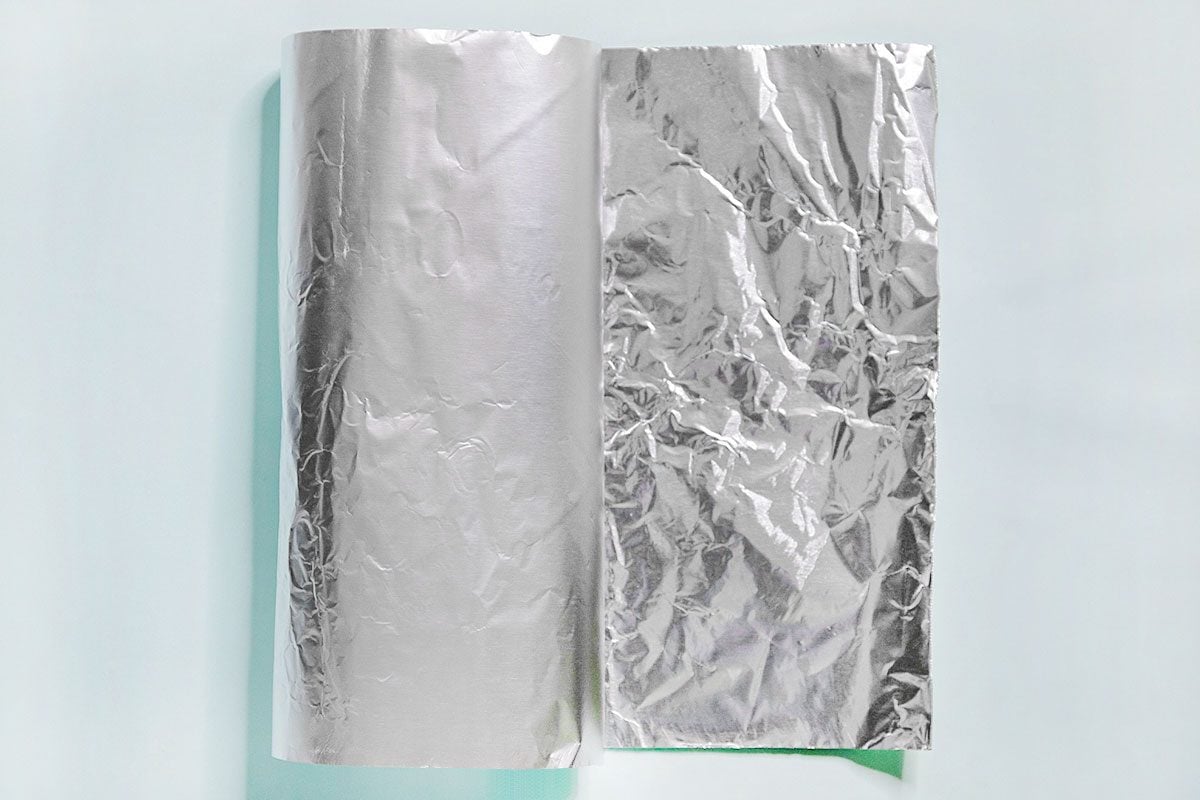
Aluminum foil is a kitchen staple most of us use without thinking much about it. It’s reliable for cooking and wrapping prepped foods and has plenty of uses beyond that, like making your silverware shiny and keeping garden pests at bay. There’s always a roll in your cabinets waiting for you to tear off a sheet, wrap the food and move on. But at some point—usually mid-recipe—you notice something curious: one side is shiny, the other dull.
Which side should face the food? Does it actually matter? And is there a “right” way to use it—or have we been overthinking this for years?
Everyone’s favorite foil brand, Reynold’s Kitchen, says that the difference between the two sides is due to a manufacturing process called milling, during which heat and tension are applied to stretch and shape the foil. Two layers of foil are pressed together and milled at the same time, because otherwise, it would break.
“Where the foil is in contact with another layer, that’s the ‘dull’ side,” Reynold’s explains. “The ‘shiny’ side is the side milled without being in contact with another sheet of metal. The performance of the foil is the same, whichever side you use.”
Since the performance of the shiny and dull sides is the same, there’s no “correct” side of aluminum foil to use when cooking. Both sides are equally effective at heating your food, so just choose whichever one you prefer.
There is one caveat to this: While it doesn’t make a difference which side you use when cooking with regular foil, this isn’t the case when using the nonstick variety. If you’re using nonstick foil, there is a difference between the two sides. Since the nonstick coating is only applied to one side, you’ll want to use the dull side. There will be a label that designates the “nonstick side” in case you forget!


