End-grain cutting boards are prized by chefs and home cooks for good reason. Here's why.
Cutting boards are the quiet workhorses of the kitchen—always there, rarely fussed over. Yet what seems like just a simple slab of wood is really a small feat of design. The way a cutting board is constructed has an enormous impact on how it will hold up after years of slicing and dicing.
End-grain cutting boards marry practicality with old-world craft, and are beloved by chefs and home cooks alike. Their tightly packed blocks of wood create a surface that’s both sturdy and gentle, making everyday chopping a little bit easier. Many cooks think of them as a lifetime piece—equal parts utility and art.
What are end-grain cutting boards?
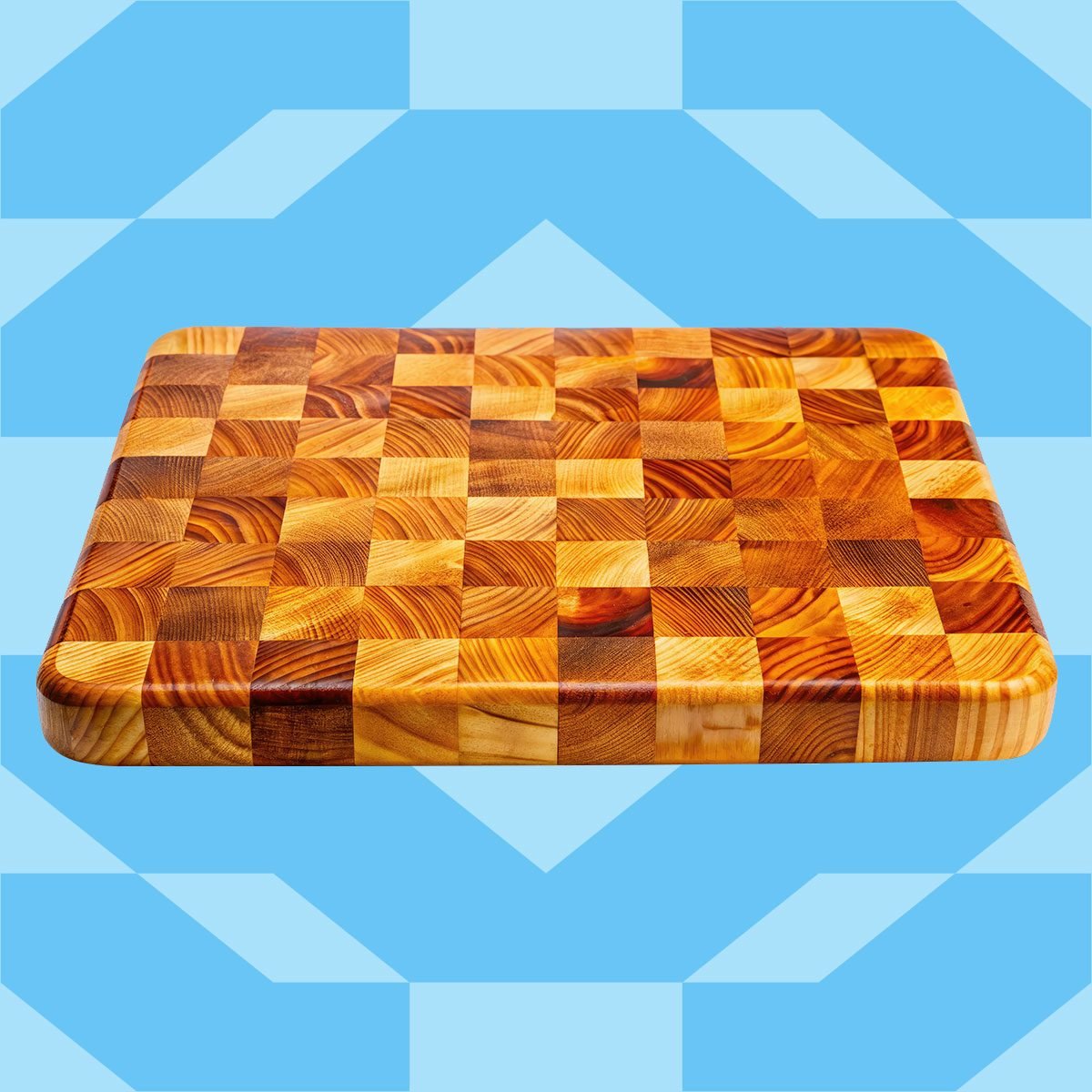
End-grain boards are made from small blocks of hardwood arranged so that the cut ends of the wood fibers form the cutting surface. Instead of slicing across the grain, your blade slips between the fibers as you chop. That construction gives the surface a distinctive checkerboard look, with the squares providing subtle shifts in tone and pattern.
Because the fibers stand upright, the board naturally “self-heals.” Shallow knife marks fade as the wood relaxes, leaving the surface in good condition for years.
How are end-grain cutting boards made?
Most end-grain boards start as strips of hardwood—often maple, walnut, cherry or teak. These strips are glued together into a single block, cut into smaller sections and rotated so the end grain faces upward. According to the Woodworkers Guild of America, “End grain cutting boards require two glue-ups, table saw work, leveling and a fair bit of sanding.” The process exposes the ends of the wood fibers—what we recognize as the tree’s growth rings—creating a tougher, more resilient surface once everything is sanded.
This layered construction takes time and skill, which is why end-grain boards tend to cost more. The reward is durability: With proper care, they can last for decades.
Why are end-grain boards considered superior?

End-grain boards have earned their reputation as the gold standard because they’re beautiful, easy on knives, and hard to wear out. John Boos explains that when a blade meets an end-grain surface, it moves between the wood fibers rather than across them. Over time, those fibers relax back into place. This keeps the board smooth and your knives sharp, which means both will last longer.
Edge-grain boards—the more common type of wooden cutting board—are made from long, parallel strips of wood. These are typically more affordable, but because the grain runs lengthwise, they show knife marks more easily and have a slightly firmer feel.
Plastic boards remain budget-friendly and easy to clean, though they’re more prone to scarring over time and can dull knives faster. Plus, they don’t bring the same warmth or beauty to the kitchen.
Are end-grain cutting boards worth it?
End-grain boards do tend to cost more, but they deliver impressive longevity and treat your knives kindly, making them, an investment that can extend the life of your board and your blades. So for anyone who loves a beautiful, well-crafted kitchen tool, an end-grain cutting board is a thoughtful, long-term investment.
Related: