The best bread knife slices through sourdough just as easily as it glides through tomatoes.
Our editors and experts handpick every product we feature. We may earn a commission from your purchases.
Learn more.

The best bread knife slices through sourdough just as easily as it glides through tomatoes.
Our editors and experts handpick every product we feature. We may earn a commission from your purchases.
Learn more.
Those who love bread as much as we do may just tear into homemade sourdough with their own two hands. But for the dignified among us, the best bread knife is a necessity in the kitchen. Unlike a chef’s knife, which offers a sharp, smooth blade, a bread knife boasts teeth called “serrations.” These notches help the knife slice through baked goods like butter, without tearing or squishing your sourdough.
When it comes to bread knives, there are plenty out there. The shopping experts at Taste of Home tried dozens of options during our quest for the best kitchen knife set. Here are the few that impressed our editors.
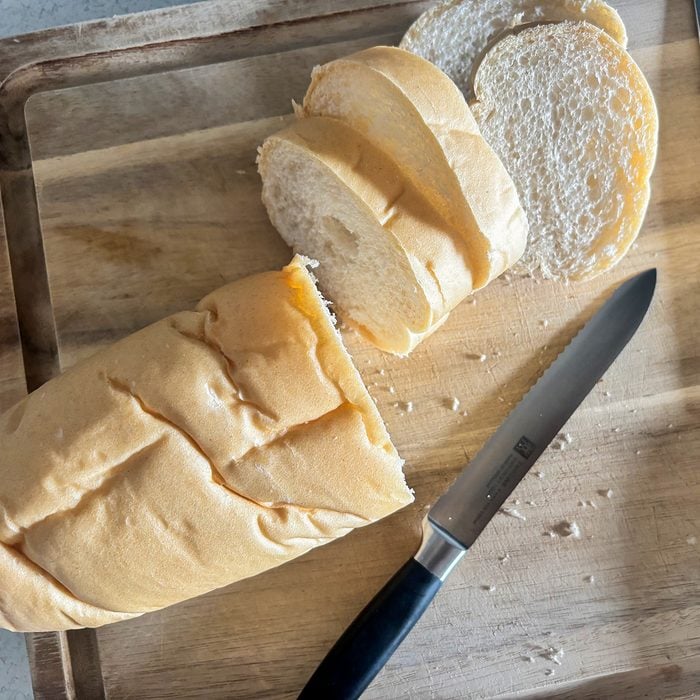
After putting all that effort into a beautifully crusty homemade bread, you’ll need a good bread knife for picture-perfect slices. A serrated knife is a must—it cuts through crusty exteriors without crushing the crumb inside. This eight-inch bread knife from Zwilling, part of the best kitchen knife set we tested, holds its own as the best bread knife, too.
“I’ve had these knives since May 2024 and use them several times a day,” says product tester Nicole Doster. “The knives perform as good as day one! They are still my favorite knives for everyday use. The blades have not chipped or warped, and the handles are still in perfect condition.” Nicole also notes that it is a bit on the short side at only eight inches, but the incredible performance makes up for its smaller stature. Plus, it’s easier to store than a big, bulky option.
“You know how prepping ingredients usually feels like a chore? Now I look forward to it because I have such a nice knife that slides through celery, peppers, potatoes, broccoli florets, roast chicken and steak like butter,” says Nicole. “With just a little pressure, the Zwilling knife chops harder ingredients too, like super fibrous sweet potato.”
Because sharpening a bread knife is harder than sharpening other knives, it’s important that the edges are nice and honed from the get-go. The Zwilling bread knife is made from high-carbon German stainless steel that is ice-hardened using Zwilling’s proprietary “FRIODUR” method. This makes it remarkably resilient to dulling, tarnishing and warping while ensuring it’s razor-sharp right out of the box. In addition, it’s technically dishwasher safe, though Nicole recommends hand washing to cut down on any potential damage.
While pricey at around $120, it doesn’t damage the delicate crumb of danishes or squish through super juicy tomatoes. If you want to overhaul all your kitchen knives, we recommend snagging it as part of the full three-piece set, which also includes an 8-inch chef’s knife and a 3-inch pairing knife.
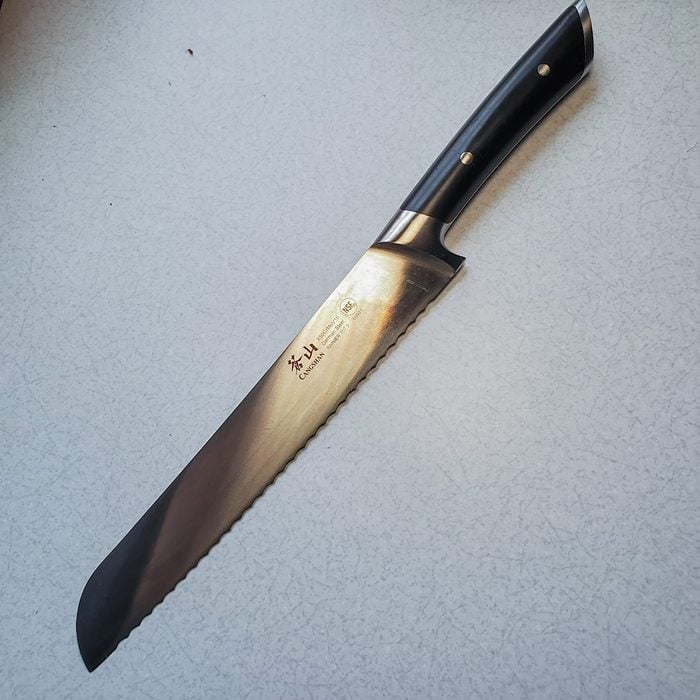
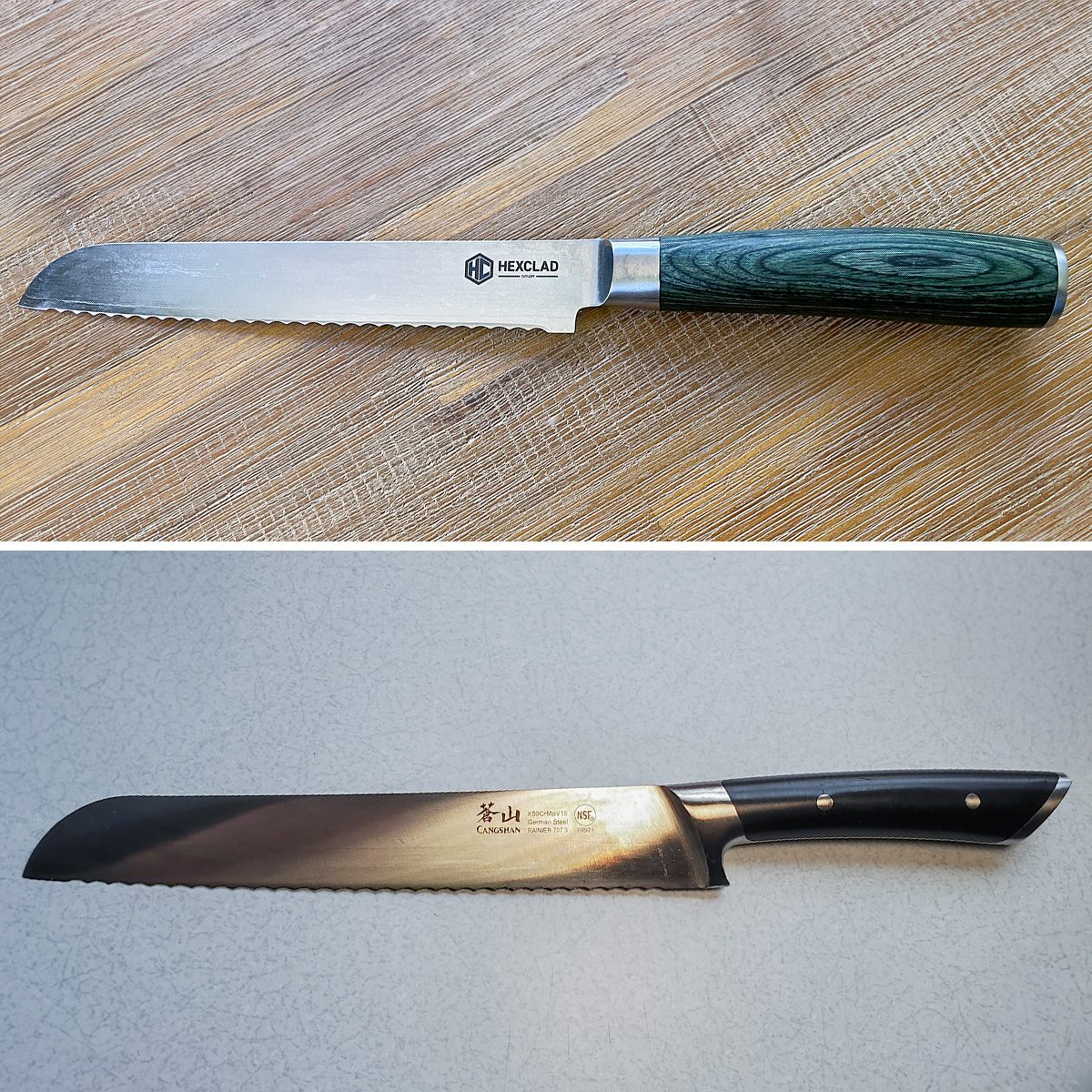
Ever since my mother-in-law gifted me and my husband the Helena German steel knife block set several years ago, I’ve been a huge Cangshan fan. The Helena bread knife is by far the most used bread knife in my kitchen. Over the few years I’ve had it, it has sliced through countless crusty loaves, lots of watermelon and many, many pineapples. It’s also perfectly suitable for slicing through stubborn sourdoughs, thanks to the deep-set serrations.

It takes little effort to cut through most baked goods, and the balanced blade helps hold it steady as it cuts. Compared to other types of knives, the tight-grained, German steel blade is incredibly durable—a must for cutting through bread. As a bonus, Cangshan stands by their products with a lifetime warranty against defects in materials and/or craftsmanship.
The knife also feels nice and sturdy thanks to the full tang. It cleans up well during a hand wash, though it does look a little less lustrous as time goes on. That said, after more than three years of use (and several dozen spins in the dishwasher—whoops!), I haven’t noticed any deterioration, and the small amount of discoloring doesn’t affect the performance at all.
Like many folks, I’m happy to invest in kitchen tools that actually perform well. However, there’s no need to break the bank for this one—it retails for around $70. While certainly pricier than a budget brand, the price is a total steal for a bread knife that lasts through years and years of use. Although not as important as its performance, the smooth, clean look also makes it a stunning gift for bread bakers.
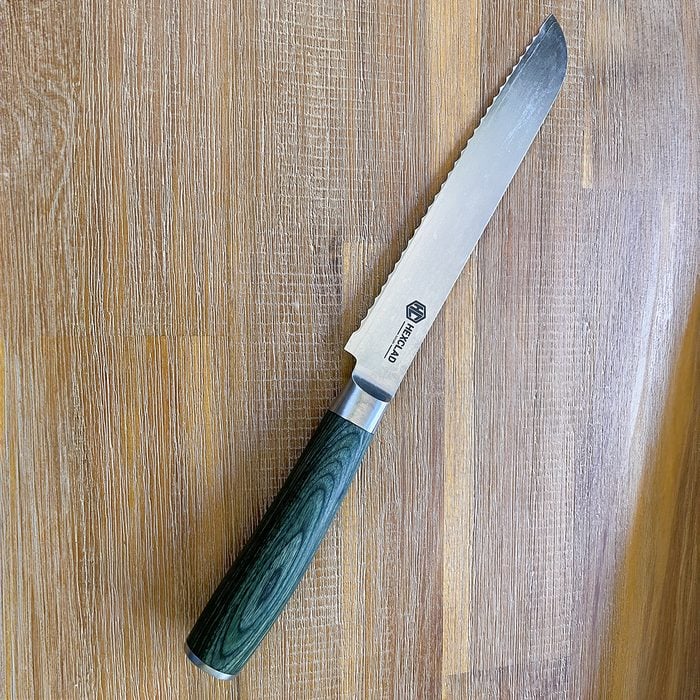
Damascus steel knives are easily identifiable due to the gorgeous, swirling patterns on the blades. What makes them different than regular steel knives is their resistance to corrosion, thanks to the use of various impure metals. Deputy Editor Katie Bandurski has been using her HexClad Damascus steel knife as part of her HexClad knife set for over two years.
“This knife does a great job cutting (without tearing!) pretty much any type of bread,” says Katie. “I’ve used it on everything from dense, overbaked homemade Dutch oven bread to soft and pillowy store-bought focaccia. It also works when you need perfect slices of soft foods like heirloom tomatoes.”

Like all HexClad knives Katie tested, it’s held up beautifully. She notes that despite near-daily use, there are no nicks, rust spots or other signs of damage. “We have hard water, so sometimes the blade acquires water spots if I don’t immediately dry them, but that’s a very minor cosmetic thing,” says Katie. “I do think part of this longevity is because I take care of my knives. No dishwasher—ever! Hand-wash only. But they’ve certainly been through periods with dried, stuck-on goop and still clean up just fine.”
In the time Katie has used the knife, she’s had it professionally sharpened once. While it’s slightly pricey at around $120, there are frequent HexClad sales to take advantage of. The green pakkawood handle is also very pretty; especially when displayed on the magnetic knife block.
When shopping for a bread knife, first consider what you plan on using it for most often, according to Alycia Johnson, VP of Merchandising, Kitchen at Sur La Table.
“Apart from ensuring you’re buying a high-quality knife, think of what you use your knives for most often,” she says. “Longer blades (9+ inches) are best for gliding through loaves and boules, while shorter ones (6–8 inches) are nimble for smaller tasks like cutting bagels and sandwiches.”
A longer knife can also create longer slices, like those needed for sizable Dutch oven breads. If you’re shopping for a knife to cut through crusty homemade sourdough, you’ll want to opt for a knife that’s sharp and offers good balance, according to Alycia.
“It’s a myth that bread knives can’t be sharpened—they can, but it’s trickier,” she says. “Each serration is like a tiny saw tooth that needs to be sharpened individually with a honing rod or specialized tool. If that feels daunting, many knife brands and local sharpeners offer professional services to refresh your blade so it performs like new. With regular use, sharpening your bread knife every other year is enough to make a big difference.”
Our hunt for the best bread knives began by first testing some of the best knife sets. For that piece, we enlisted the help of the Shopping and Product Testing Teams. Together, we tested 20 different knife sets—that’s over 70 knives in total! From there, we honed in our our top performers, paying careful attention to how each set’s bread knife performs on its own. We used these bread knives to slice through sourdough, chop up slippery tomatoes and carve through cakes and pastries. After over a year of testing, we narrowed down our pool of over 20 picks to the three top performers.
A serrated knife is best for slicing bread, as it cuts through thick crust and delicate interiors without tearing or squishing according to Sur La Table’s Alycia Johnson.
“A bread knife’s serrated blade is designed for a gentle sawing motion that slices cleanly through even the crunchiest crust while keeping the tender crumb inside intact, making it ideal for cutting bread,” she says. “In contrast, chef’s knives, with their weight and straight edge optimized for downward slicing, tend to crush bread rather than cut it, leaving squished slices in its path. In a pinch, a serrated steak knife can work, but nothing matches the ease and satisfaction of a sharp, high-quality bread knife.”
“Price point aside, quality is king,” says Sur La Table’s Alycia Johnson. “A great bread knife is like a great mattress—you feel the difference right away and appreciate it for years to come. High-quality knives slice with such ease it’s almost surprising, and they hold their edge far longer than bargain versions, making them worthwhile investments. Many cooks, including myself, even find themselves reaching for their bread knives for a variety of tasks beyond cutting bread, such as carving roasts or tackling firm produce like cabbage and melons.”
According to Sur La Table’s Alycia Johnson, an offset bread knife has the same serrated blade as a classic version, but with the handle angled above the blade.
“This clever design keeps your knuckles clear of the cutting board and reduces wrist strain, especially when slicing tall loaves or thick sandwiches,” she notes. “While a traditional bread knife works beautifully, the offset style may feel like an ergonomic upgrade.”
I’m the Taste of Home shopping team’s resident food and beverage expert and a home cook who knows her way around a kitchen. I have ample experience using and reviewing everything from kitchen utensils to cookware. I’m also well-versed in everything kitchen-related, from the best knife sets to the best bread tools. Our expert shopping team has a combined decade of experience testing and reviewing products in the kitchen and beyond.
For this piece, I spoke to Alycia Johnson, VP of Merchandising, Kitchen at Sur La Table. Alycia shared her tips and guidance regarding what to look for when purchasing a bread knife.