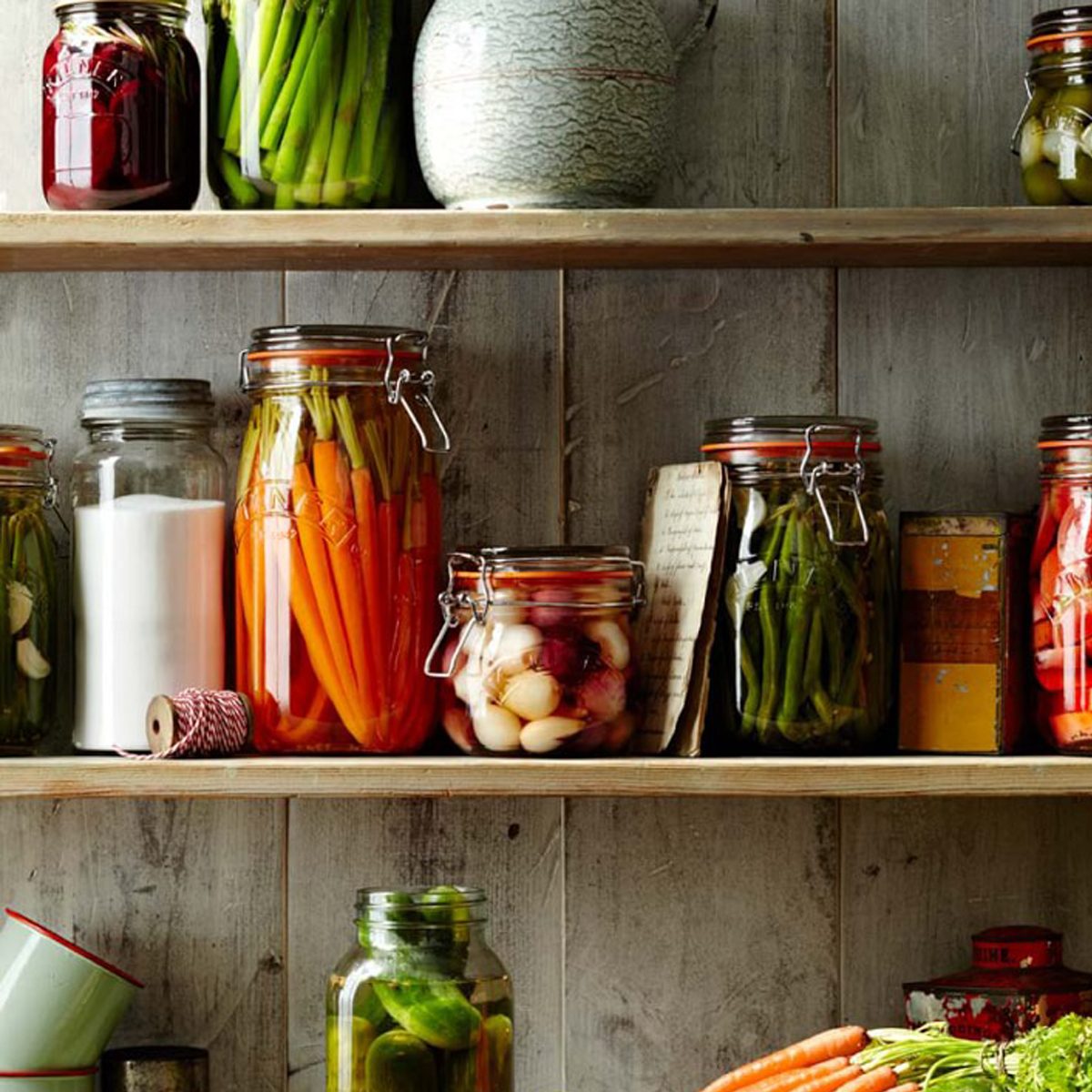
Canning might seem old-fashioned, but it's a great way to preserve the flavors of the season. Get started at home by picking up these essential canning supplies.
Our editors and experts handpick every product we feature. We may earn a commission from your purchases. Learn more.
If you’re ready to indulge in briny pickles, sweet jams, flavor-packed sauces and other timeless canning recipes, you’ll need the right tools.
To start preserving fruits and vegetables, invest in basic canning supplies, like quality jars, lids and a processing method—either a water bath canner or pressure canner. These are our top picks for your harvest.
If you’re newer to canning, it never hurts to have a good resource on hand. The Ball Complete Book of Home Preserving is the canning bible. It has all the info you need for preserving your food safely, making it our top canning supplies pick. Keep this book on your bookshelf and have our Canning 101 guide bookmarked on your computer.
While you can reuse canning jars over and over again, you do need to replace the lids for a safe seal. Grab a pack or two of these replacement lids and rings to have on hand for seasons to come. Also, check out these other mason jar accessories to help organize your kitchen.
via merchant
Canning Funnel
After all the work involved in making homemade jams and jellies, the last thing you want to do is risk wasting any of those preserves by spilling them. Invest in a wide-mouthed canning funnel to make sure every last bit of your jams make it into the jar.
On Sale
via merchant
Lowest Price in 30 days
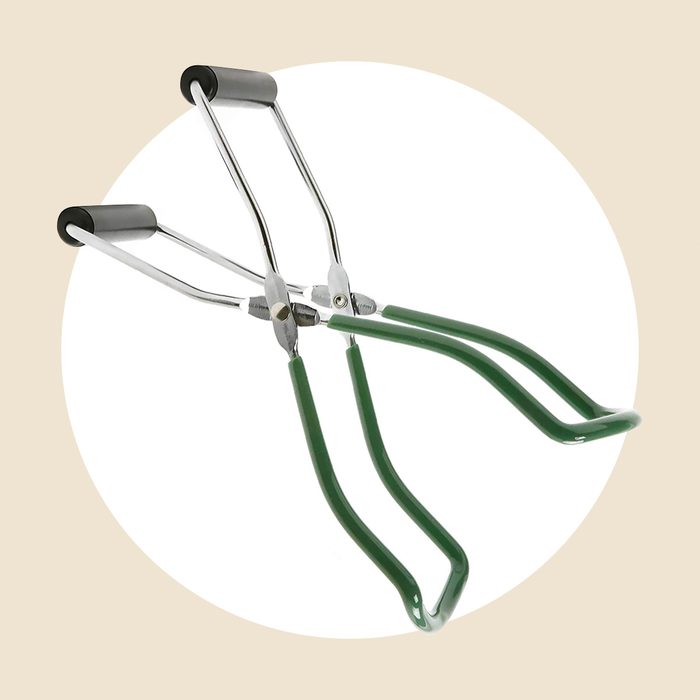
Jar Lifter
When your preserves are done, you’ll have to lift them out of the water bath or steam canner. Oven mitts, while cute, can be clumsy here. That’s why you need a jar lifter to grip the lids and safely remove them from the pot.
via merchant
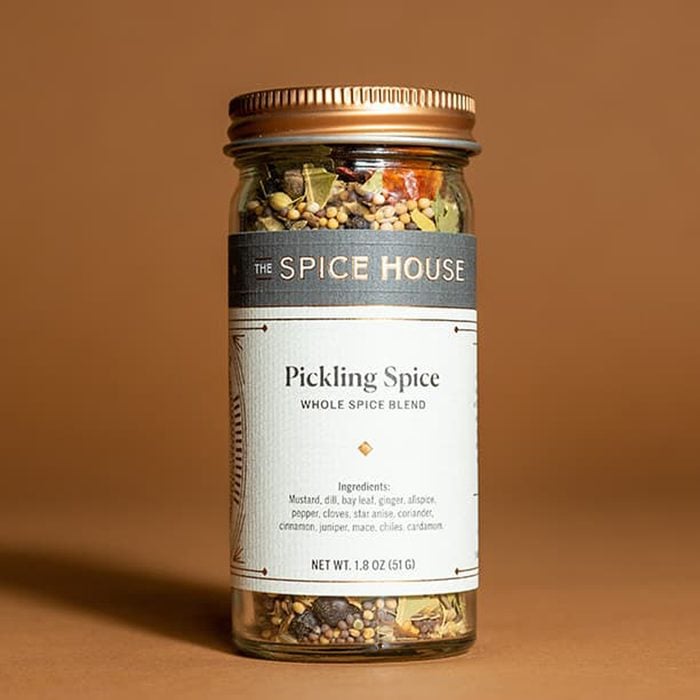
Pickling Spices
Love pickles? If you’re making your own at home, you’ll want to snag some pickling spices. This mix is a great shortcut. It has all the pickle flavors you want in one jar: mustard, allspice, dill, peppercorns and more. You can use it to preserve your favorite veggies or in some of our go-to recipes like these easy homemade pickles, pickled chard and pickled asparagus.
Pectin
If you’re interested in making jams and jellies, you’ll find that recipes call for pectin. Pectin is a naturally occurring starch and helps thicken up preserves for easy spreading on homemade bread and English muffins.
via merchant
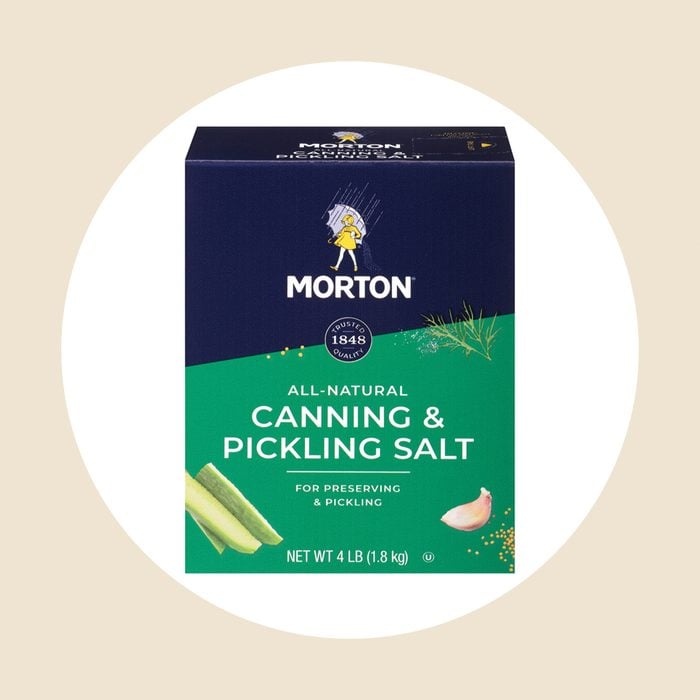
Pickling Salt
If you’re looking to pickle cucumbers and other veggies, be sure to grab a box of pickling salt. This salt has no additives (no anti-caking agents or iodine) which is exactly what you need for pickling. A giant box runs only a few dollars and will last you for a long time. Just keep it in an airtight container when canning season is over.
Pickling salt may sound hard to come by, but most grocery stores carry it. It may not be by the other salts, so just ask an associate to help you out. If you cannot find pickling salt, Kosher salt will also work.
via merchant
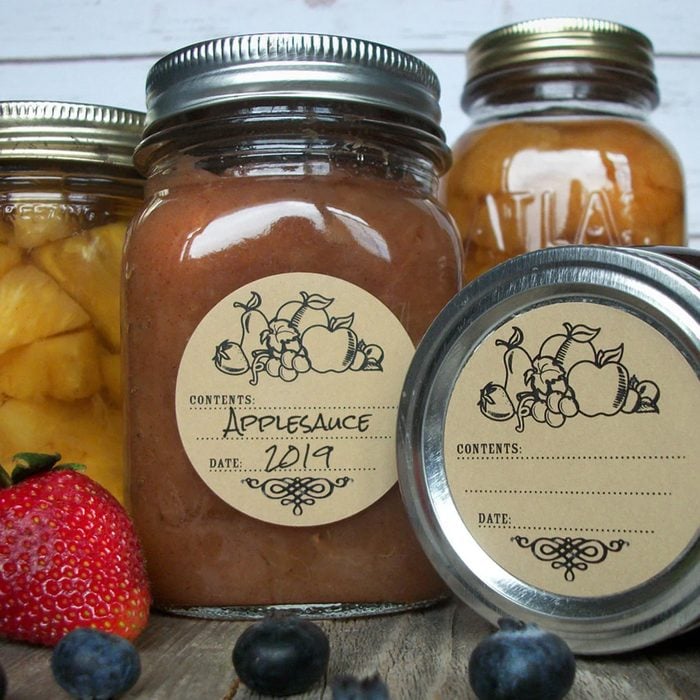
Jar Labels
Keep your preserves straight with cute adhesive labels. These stick right to the top of your Mason jar lids so you can mark what you’ve made and when it was canned.
via merchant
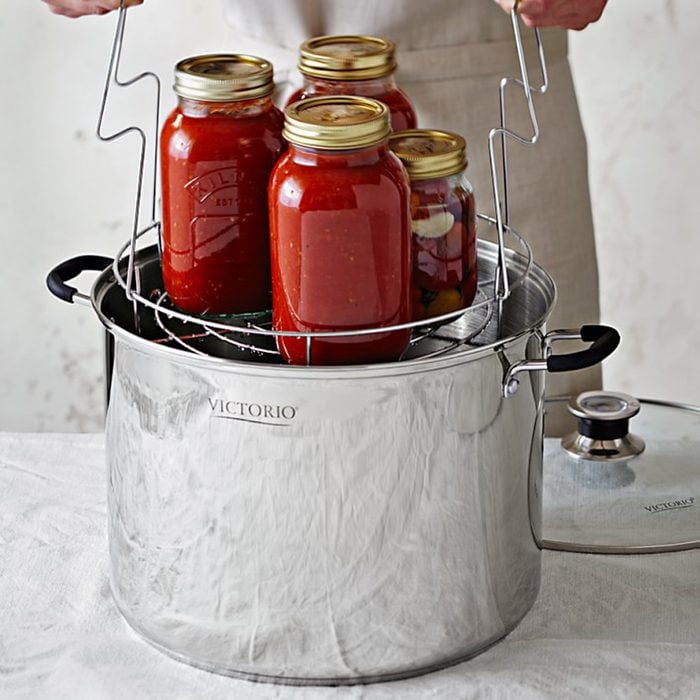
Water Bath Canner
A water bath canner is exactly the tool you need to process foods with high acidity—think tomato-based sauces and salsas as well as fruit. If you don’t want to invest in a special water bath canner, a large stockpot can also be used to create the water bath.
On Sale
via merchant
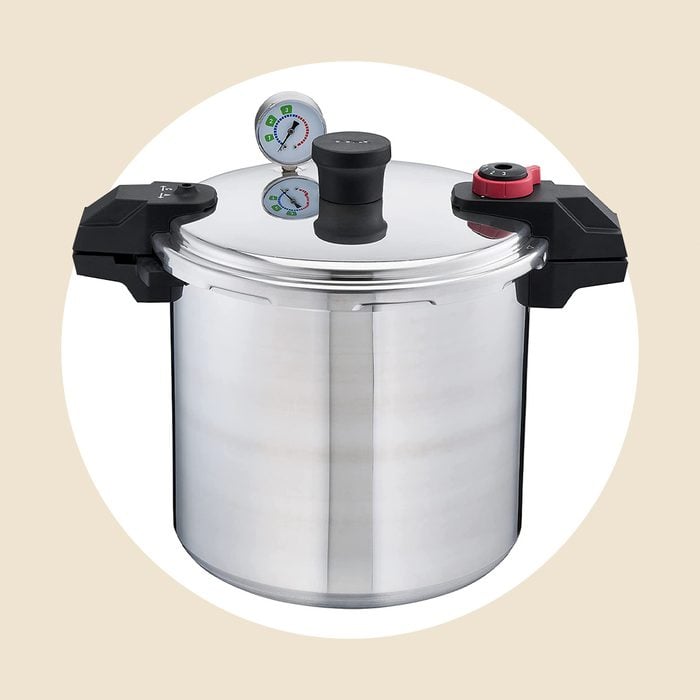
Pressure Canner
If you’re looking to can foods with lower acidity—think soups and some vegetables—you’ll need a pressure canner to get these recipes up to a safe temperature.
via merchant
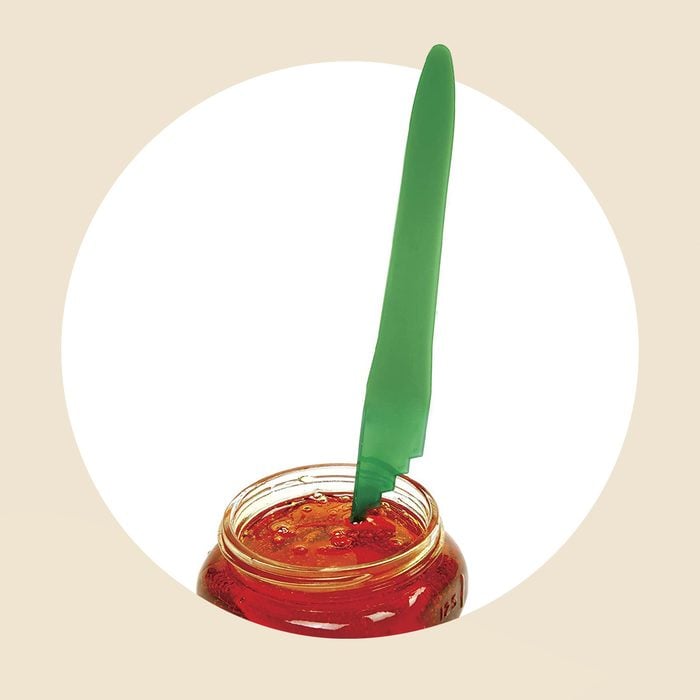
Bubble Popper
This two-in-one tool serves as both a bubble popper and headspace measurer. The flat end is designed to remove air bubbles from preserves before covering the jars, while the stepped edge ensures that you’ve left enough space in the jar for a proper seal. In other words, it helps prevent one of the most common canning mistakes: overfilling the jars.
via merchant
Vegetable Chopper
If you’re canning large batches of salsa, this vegetable chopper can help make prep much faster. It can quickly chop, dice, slice or grate virtually any ingredient, allowing you to dice onions and peppers in no time.
On Sale
via merchant
Liquid Measuring Cups
Precise measurements are essential for safe canning, so a set of measuring cups is a must-have. This set includes 1-, 2- and 4-cup measuring containers made from durable tempered glass. Use them to carefully measure ingredients in cups, ounces or milliliters.
via merchant
Steam Canner
Steam canning is an alternative to water bath canning, and this aluminum steam canner can process up to seven quart jars at a time. It has a built-in dial indicator that lets you know when it’s at the right temperature, and there are even markers for different elevation zones.
On Sale
via merchant
Lowest Price in 30 days
Kitchen Towels
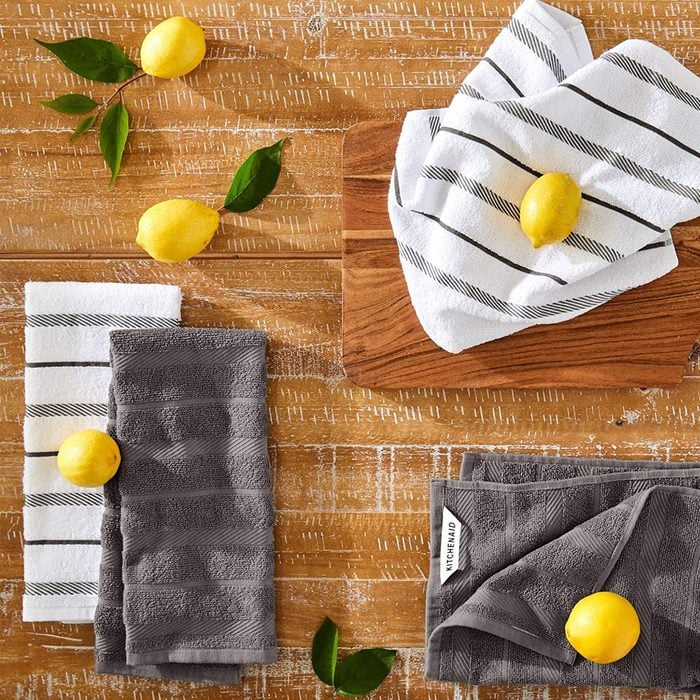
Since you’ll be handling wet jars, it’s beneficial to have a few absorbent kitchen towels on hand when you’re canning. This highly-rated set of towels comes in a variety of colors, and they’ll help you quickly soak up spills and dry off your canned goods after processing.
On Sale
via merchant
Lid Rack
An innovative lid rack quickly and easily sterilizes canning lids. It holds up to 12 regular or wide-mouth canning lids, and the handle safely lowers the lids into boiling water.
What to Consider when Buying Canning Supplies
Looking to kick off your canning journey the right way? Here are some factors you should consider when shopping for canning supplies:
Types of Food
Various foods can be safely canned, including fruits, vegetables, meats, soups, pickled and fermented products, jams and jellies, and more. Tracey Brigman, Associate Director of the National Center for Home Food Preservation, says the factors to consider when deciding if something can be canned include “the availability of a validated recipe, the availability of quality ingredients, the type of equipment available, food preferences and storage conditions.” Canned foods should last up to a year when properly stored in a cool, dry place.
Canning Methods
Water Bath Canning: This method involves packing jars with food, covering the jars completely with water, heating the water to boiling and processing the jars for the time listed in the research-tested recipe (depending on the food product, pack style and jar size).
Pressure Canning: This method is best used for low-acid foods, as it requires high temperatures (at least 240 degrees), which kills dangerous bacteria and other microorganisms. When heat is applied to a sealed pressure canner, pressure builds up. The water inside the canner forms steam, and once the canner is properly vented, the vents are closed and pressurized steam, hotter than boiling water, is in the canner. Processing times are indicated in research-tested recipes and depend on several variables.
Canning Containers
The two main types of containers used in canning are water bath canners and pressure canners. Brigman says that “water bath canning is used for foods with high acid levels such as tomatoes (which must be acidified with lemon juice, citric acid or vinegar), fruits, pickles, relishes and jams and jellies.” In contrast, pressure canners are better for low-acid foods, like meats, some vegetables (like carrots and okra), etc.
Safety Concerns
When done properly, canning can be a safe way to store foods for up to a year in your home. However, keep these potential concerns in mind. As Brigman says, “Our greatest concern in home canning is the bacteria Clostridium botulinum. This bacteria can produce spores that generate a dangerous toxin.” To avoid the risks, there are a few things to keep in mind:
First, ensure you’re using the right tools for the job—this includes ensuring your canner, jars and lids are in good condition. Next, verify that your recipes come from reputable sources that are well-researched and scientifically sound. Third, confirm your ingredients are high quality, as canning does not improve the quality of foods. Finally, adhere to proper processes.
Seasonality
Most canning occurs in summer and fall when canning-friendly foods are in abundance. It’s always best to check you’re buying high-quality, in-season produce.
Storage
Canned goods should be kept in a cool, dry place. They can last for up to a year on the shelf. When storing canning supplies, verify they are thoroughly cleaned, completely dry and not stacked to prevent the growth of bacteria, mold and other contaminants.
Expected Costs
While canning can save you money over time, especially if you grow produce or buy in-season produce in bulk, expect initial costs.
“The most expensive piece of equipment is a pressure canner, which can cost anywhere from $100 to $150,” states Brigman. “A water bath canner normally runs $50 to $100. A jar lifter (about $8), jar funnel (about $2), a bubble remover and head space tool (about $7), and canning jars (about $15 per dozen) are all required.”
Reusability
“You can safely reuse glass canning jars and screw bands as long as they are in good condition. Jars and lids should be inspected before each use. However, once the lids are used, they may not be used again, as the rubber seal has been heated and cooled and will no longer form a quality seal,” notes Brigman.
Using Online Recipes
While many recipes are available online, only use recipes that have been scientifically tested and proven to work. “To know what the safe process time should be for any recipe, each type would need to be studied in a properly equipped laboratory for specific pack styles, jar sizes and the canner to be used,” shares Brigman. “Open kettle canning, canning in the oven, microwave, dishwasher or in pressure cookers (multifunction cookers) have been proven unsafe. Additionally, any method without heat processing is also considered unsafe.” Only using tested, proven recipes protects your canned goods against contamination.
Why You Should Trust Us
Lisa Kaminski has over six years of professional writing experience with Taste of Home, including leading the brand’s Bakeable program, a guide-to-baking hub and social community of 20,000 home bakers. She has dedicated herself to finding and testing quality ingredients, kitchen gear and home products and writing articles about the best-of beverages, snack foods and ready-made baking ingredients. Furthermore, her cooking insights have reached over 500,000 Taste of Home newsletter readers.
For this article, we consulted Tracey Brigman, Associate Director of the National Center for Home Food Preservation, Georgia Farm Monitor Associate Director and Clinical Associate Professor at the University of Georgia (since 2005). Her areas of expertise include the science of cooking, food safety, home food preservation, management of food service systems and nutrition.
Sean Tirman, Content Updates Editor at Taste of Home, updated and contributed research to this piece. Sean has written shopping guides since 2016 and is a former associate editor at Gear Patrol.
How We Found the Best Canning Supplies
We thoroughly researched and consulted experts to create this piece, focusing on commonly used canning supplies within the community. We prioritized reputable brands, considered professional testimony and analyzed user reviews. After careful research and expert consultation, we compiled the final list above.
FAQ
What foods should never be canned?
While many foods can be successfully home-canned, several cannot. Foods that should never be canned include pasta and rice, very dense purees, thickeners, dairy products, fats and oils, as these all have a high risk of bacteria, says Brigman. Furthermore, bread, cakes and low-acid vegetables (including broccoli, cabbage and squash) won’t survive the canning process and will turn into mush.
What is the best method of canning for beginners?
Water bath canning is the best method for beginners. “It is the easiest and safest and uses very little equipment,” concludes Brigman.
Is canning cheaper than buying?
The start-up cost of canning can be pretty expensive. According to Brigman, if you have a home garden or buy in-season produce in bulk, it can be cheaper to can at home.
Do I need to boil jars before pressure canning?
“Empty jars used to process foods in a pressure canner do not need to be boiled before canning,” remarks Brigman. “Jars do need to be warmed prior to canning, however, to prevent them from breaking when filled with hot food.”
What method is not recommended for canning?
“While you can find many other methods of canning online, only pressure canning, atmospheric steam canning and water bath canning are safe methods,” reports Brigman. “Any method where there is no heat processing is also considered unsafe.”
We are no longer supporting IE (Internet Explorer) as we strive to provide site experiences for browsers that support new web standards and security practices.