


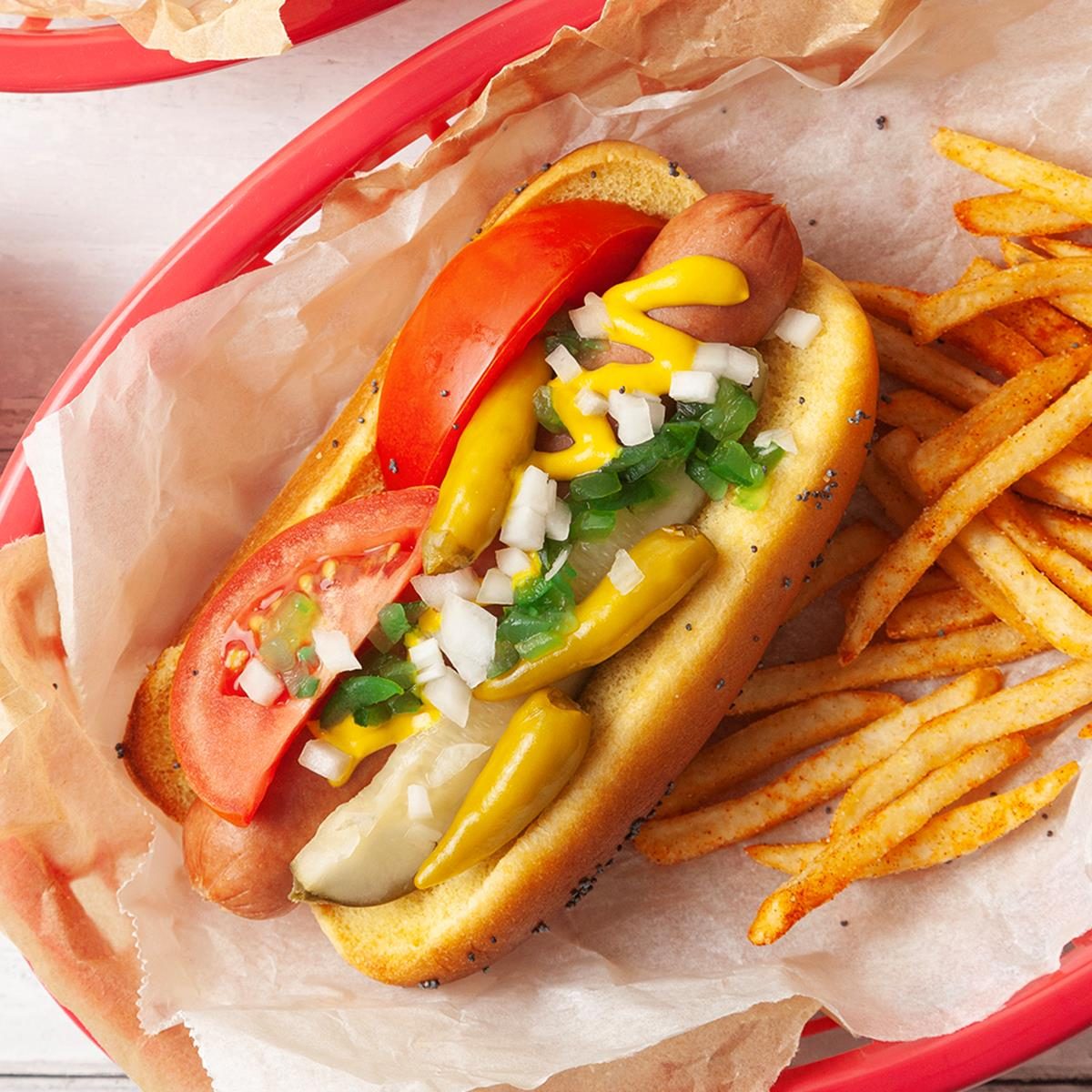
Whether you're a purist, a historian or just really hungry, our Chicago hot dogs recipe is a home run.
Chicago Hot Dogs

If you want to start a fight in Chicago, forget politics or sports: Just put ketchup on a hot dog and see what happens. Chicago-style hot dogs are more than a meal; they’re a cultural manifesto in a poppy seed bun. This iconic street food staple layers bold, bright and briny toppings over a perfectly boiled all-beef dog, and every ingredient has its place and purpose. Whether you’re a lifelong local or a curious tourist, crafting a proper Chicago hot dog is a sacred rite. And yes—there is a correct order to the toppings.
What is a Chicago hot dog?
The Chicago-style hot dog has roots in the Great Depression, when vendors needed to deliver maximum flavor and satisfaction for just a few cents. Enter the “dragged through the garden” dog: a loaded, veggie-topped beef frank that felt like a full meal on a bun. It gained major popularity during the 1933 World’s Fair, and today it’s part of Chicago’s culinary identity. You’ll find it in ballparks, on corner stands and at retro neon-lit drive-ins, and every location has passionate opinions on brand loyalty and topping placement.
What makes a Chicago-style hot dog? The ingredients, of course, but also the execution. A proper Chicago hot dog recipe starts with an all-beef frank (Vienna Beef is the gold standard) that’s been gently simmered (never grilled), nestled in a steamed poppy seed bun and loaded with a very specific lineup: yellow mustard, bright green sweet relish, diced onions, tomato wedges, a kosher dill pickle spear, sport peppers and a dash of celery salt. And no ketchup—ever.
So whether you’re grabbing one from a street cart near Millennium Park, hunting down a classic at a famous stand like Superdawg or Gene & Jude’s (or my favorite, Wolfy’s), or steaming up a batch at home, just remember: This isn’t just a snack. It’s the Chicago-style hot dog. And around here, that means something.
Ingredients for Chicago Hot Dogs
- All-beef hot dogs: Vienna Beef is the classic Chicago brand, known for its snap and spiced flavor. If you can’t find it, look for any uncured, natural-casing, all-beef hot dog at the grocery store.
- Poppy seed buns: These buns are the traditional carrier for a Chicago hot dog recipe, adding a little texture and a lot of style. They’re soft and steamy and have a little earthy crunch. Even though they’re steamed, they’re still tough enough to deliver all those toppings.
- Yellow mustard: We use just regular ol’ yellow mustard. No Dijon, no honey, no funny business.
- Sweet pickle relish: Look for a vibrant green relish like the one from Puckered Pickle Co., or add a drop of blue food coloring to basic relish to mimic that neon glow.
- Diced white onion: At Wrigley Field, you build your own dog. The diced onions are served in a little bit of water because a cold plunge makes them sweeter and milder with a crunchy texture. Don’t store them or keep them in water for too long, though, or you’ll lose all the flavor and texture.
- Beefsteak tomato: Ripe red tomatoes, sliced into wedges or half-moons, add juiciness and color. Beefsteak tomatoes are top-notch for their flavor and size. The bigger the tomato, the better!
- Dill pickle spear: This can’t-miss ingredient should be garlicky, briny and long enough to run the length of the bun.
- Pickled sport peppers: This small, tangy, slightly spicy type of pepper is key. In Chicago, they’re often from Marconi or Vienna Beef. If you can’t find them (although they’re easy to order on Amazon), substitute small pickled jalapenos or pepperoncini in a pinch.
- Celery salt: This is the final flourish that ties everything together with a salty, savory punch.
Directions
Step 1: Boil the hot dogs

Bring a pot of water to a boil and reduce it to a simmer. Add the hot dogs and cook for four to six minutes, or 8 to 10 minutes if they’re frozen.
Editor’s Tip: Boiling your dog gives it the snap when you bite into it—and it’s really the only authentic way to go. If you must grill it, we call it a char-dog. If you’re in Chicago looking for a char-dog, the best of these can be found at The Wiener’s Circle, where the service is, shall we say, notoriously aggressive, but the hot dogs are on point.
Step 2: Steam the buns
While the dogs are cooking, place your poppy seed buns on a microwave-safe plate. Cover them with a damp paper towel and microwave them for about one minute, until soft and steamy.
Editor’s Tip: Microwaves make it easy, but placing your buns on a small grate over the simmering hot dog water can also steam the buns in a snap.
Step 3: Assemble your Chicago-style hot dogs
Place one hot dog in each bun. Line one side of the hot dog with mustard, the other with relish, then sprinkle the diced onion down the center. Tuck tomato wedges along one side, the pickle spear along the other and top with a few sport peppers. Finish with a sprinkle of celery salt.
Editor’s Tip: These aren’t just garnishes—they’re architecture. Follow the order, and you’ll taste every layer with each bite.

Chicago Hot Dog Variations
Purists will not allow even one sport pepper out of place, but most Chicagoans will forgive a couple of alterations to the original and will even look the other way if you insist on ketchup. Here are a few variations of the Chicago hot dog recipe that have come to be known throughout history:
- Depression dogs: Mustard, relish, chopped onions, dill pickles, sport peppers, tomato slices and shredded lettuce were the toppings served on hot dogs in 1929. Each dog was sold for just five cents.
- Minimalist factory dogs: Before the Great Depression, hot dogs were served from street carts and factory-side stands. Many working-class Chicagoans grabbed a hot dog that was served with just mustard and onions because it was quick, portable and affordable. So if you don’t like all those toppings on the traditional Chicago dog, you can keep it simple and point to history if anyone gives you guff.
- Maxwell Street dogs: Time hopping to post-WWII-era Chicago, Maxwell Street was a vibrant open-air market full of immigrant influence, including Jewish and Polish communities that introduced sausages like the Polish kielbasa. By the 1940s, vendors in the area began combining hot dogs and Polish sausages with caramelized onions, sauerkraut, mustard and spicy peppers, reminding us that Chicago contains multitudes.
How to Store Chicago Hot Dogs
Chicago-style hot dogs are best enjoyed fresh, but you can prep ingredients ahead and store them separately. Keep hot dogs sealed in their original packaging or in an airtight container for up to a week in the fridge. Chopped onions and sliced tomatoes can last a few days in the fridge; while the relish, mustard, pickles and sport peppers can hang out in your condiment shelf for weeks. Steam the buns only right before serving or they’ll get soggy.
Chicago Hot Dog Tips

What if I can’t find poppy seed buns?
No poppy seed buns? No problem. Lightly brush the tops of plain hot dog buns with a mixture of egg and water. Sprinkle the buns generously with a couple tablespoons of poppy seeds and bake at 350°F for three to four minutes to set. You could also try reshaping homemade poppy seed buns into a more hot dog-appropriate shape. Voila—DIY poppy seed buns!
What should you serve with Chicago-style hot dogs?
Classic sides include french fries (crinkle-cut if you want a truly authentic meal), chips or a cold pasta salad. A dill pickle spear is technically already in the bun, but no one will judge if you serve more pickles on the side. For drinks, grab an ice-cold root beer or a Chicago-style old-fashioned. And if you’re really going big, follow up with a slice of Eli’s Cheesecake or a rainbow cone.
Ingredients
- 4 Chicago-style beef hot dogs
- 4 poppy seed hot dog buns, split
- 4 tablespoons yellow mustard
- 4 tablespoons sweet pickle relish
- 1/2 cup finely chopped white onion
- 1 large beefsteak tomato, cut into thick slices or wedges
- 4 dill pickle spears
- 12 pickled sport peppers
- Dash celery salt
Directions
- Place hot dogs in a large saucepan; cover with water. Bring to a boil; reduce heat to a simmer. Cook 4-6 minutes or until hot dogs start to split.
- Meanwhile, place buns on a microwave-safe plate. Cover with a wet paper towel; microwave 30-60 seconds. Place cooked hot dogs inside the steamed buns. Top each with mustard, relish, onion, tomato, pickles, sport peppers and a dash of celery salt. Serve immediately.
Loading Popular in the Community
Loading Reviews

