


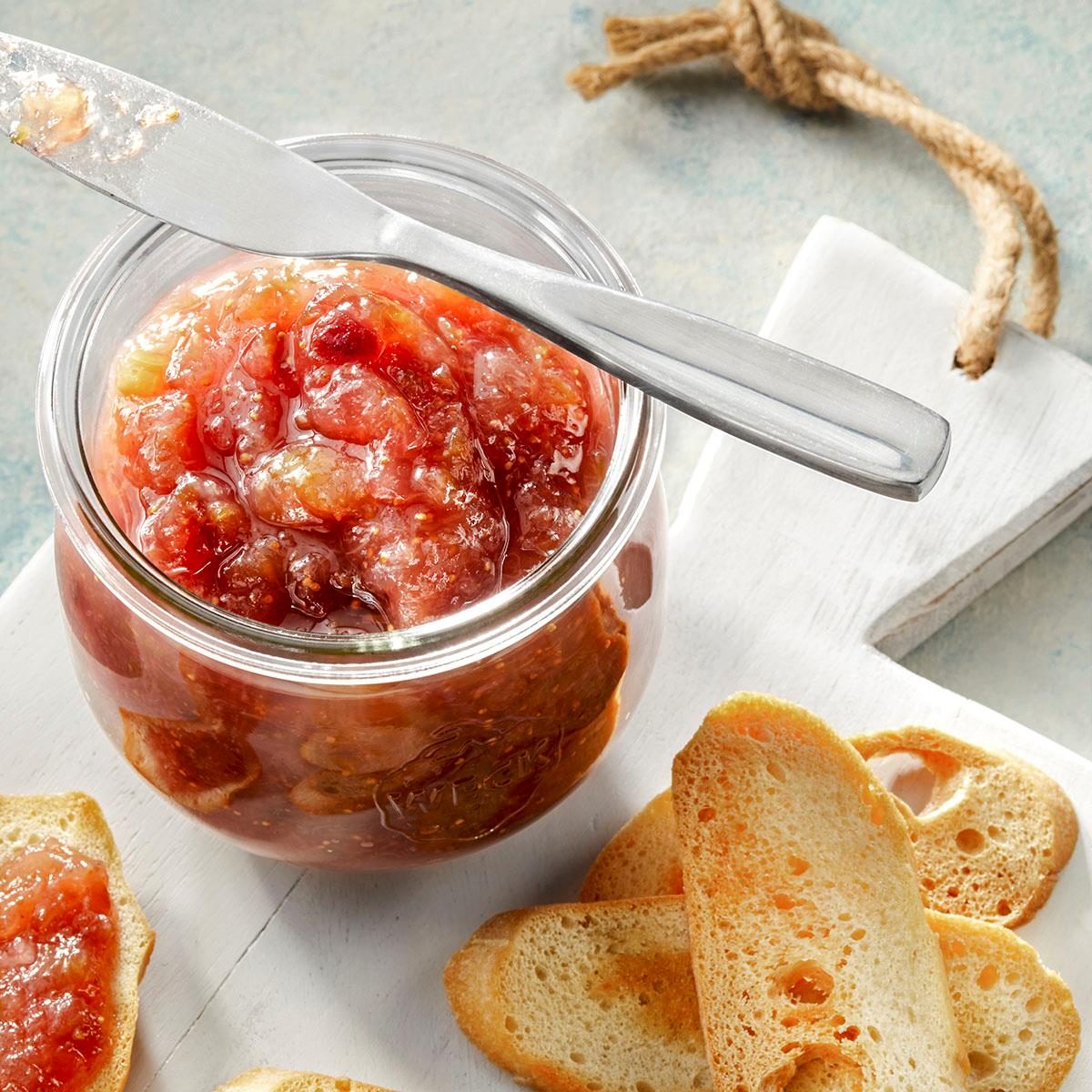
This three-ingredient fig preserves recipe is elegant and effortless. Make a batch for your next cheese board and use it as a spread for special sandwiches.
Fig preserves never met a cheese board they didn’t like. The sweet and oh-so-simple spread pairs well with everything from sharp cheddar to Brie to funky blues, and tastes excellent on sandwiches, too—particularly ones made with ham or prosciutto on crusty bread. You don’t even need an occasion to eat fig preserves: Switch up your morning toast, English muffin or bagel with a spoonful or two.
Figs have been a favorite late-summer and early-fall fruit since olden times. There were at least 29 varieties of fig trees in Ancient Rome, where the fruit symbolized prosperity and good luck. Today, almost all the figs consumed in the U.S., whether dried or fresh, come from California. And while you can find dried figs year-round, fresh figs are a seasonal treat. The most common varieties are black and green figs, which have a lovely, delicate flavor and a jammy texture that make them a delight to eat.
When you see them at the farmers market or grocery store, load up and make this simple stovetop recipe for fig preserves (no canning required!).
Fig Preserves Ingredients
- Fresh figs: Figs aren’t really fruits; they’re inverted flowers (that have a symbiotic relationship with wasps). Purple and green figs both make great preserves. Look for figs with unblemished skins that are still firm to the touch. They’re fine kept at room temperature, but if you don’t plan on using them within a day or two, store them in the refrigerator. You don’t need to peel the figs, but you may need to remove the stems.
- Sugar: Like most jam recipes, you’ll need regular granulated sugar.
- Lemon: Fresh lemon—peels included—balances the sweetness of the sugar and figs.
Directions
Step 1: Soak the figs
Place uncut figs in a bowl and cover them with 2 cups of water. Let the figs sit for 20 minutes, then discard the water.
Editor’s Tip: Soaking raw figs helps remove any traces of fig sap—to which some people are sensitive—from the outside of the fruit.
Step 2: Cook the fruit
Place 1 cup of water and the sugar in a large saucepan over medium heat. Bring them to a simmer and cook until the mixture is thickened, stirring frequently, for 10 to 15 minutes. Add figs and lemon slices and bring to a boil. Reduce the heat to a simmer and cook on medium-low heat until the figs and lemons are soft, 25 to 30 minutes. Remove the pan from heat and let the preserves cool to room temperature.
Step 3: Blend the preserves
Place the mixture in a food processor and pulse until a jam-like consistency is achieved.

Fig Preserves Variations
- Add spices: Any spices you’d associate with autumn desserts would be welcome in fig preserves, especially cinnamon, cloves, ginger, allspice and cardamom. Want to save time? Go straight for your jar of homemade pumpkin pie spice.
- Mix in other fruits: Figs can be pricey, so feel free to go halfsies with another kind of fruit. Apples or pears would be a great budget option, or you could mix them with juicy nectarines or peaches.
- Sweeten them with honey: For good reason, honey and figs have accompanied each other in dishes for thousands of years. To substitute honey for sugar in these preserves, use about 1-1/2 cups of honey and reduce the amount of water by 1/4 cup.
How to Store Fig Preserves
Store fig preserves in an airtight container in the refrigerator. I like using screw-top glass jars. Since they are not processed, they should not be stored at room temperature.
How long do fig preserves last?
Because you don’t know the pH of your fig preserves, it’s best to consume them within a couple of weeks, although some preserves can last up to six months. If you see any mold growing in the jar, it’s time to put the remainder in the compost!
Can you freeze fig preserves?
Preserves and jams freeze nicely. Spoon the fig preserves into a zippered bag or an airtight (glass preferred) container, squeeze out any extra air, and freeze them. For best results, use them within six months.
Fig Preserves Tips

Are fig preserves good for canning?
This recipe for fig preserves is good for short-term storage in the refrigerator or freezer, and should not be canned. If you want to make shelf-stable fig preserves, always use a tested recipe. There are plenty of vintage canning recipes out there for fig preserves as well as other jams, jellies and preserves.
How should you use fig preserves?
One of the wonderful things about fig preserves is that they’re great for both sweet and savory applications. Try the preserves slathered on ham biscuits, swap it for the strawberry jam in strawberry oatmeal bars, or use it in baked brie with jam. Don’t forget to put a bowlful on your next charcuterie board.
Ingredients
- 2 pounds fresh figs
- 3 cups water, divided
- 2 cups sugar
- 1/2 medium lemon, thinly sliced, seeds removed
Directions
- Place figs in a bowl; cover with 2 cups water. Let sit 20 minutes; discard water.
- Place remaining 1 cup water and sugar in a large saucepan over medium heat. Bring to a simmer; cook until mixture is thickened, stirring frequently, 10-15 minutes. Add figs and lemon; bring to a boil. Reduce heat to a simmer; cook on medium-low heat until figs and lemons are soft, 25-30 minutes. Remove from heat; let cool to room temperature.
- Place mixture in a food processor; pulse until jam-like consistency is achieved.

Loading Popular in the Community
Fig preserves are delicious spread on crostini with Brie or sandwiched into paninis. Our simple yet flavorful recipe calls for fresh figs, sugar and lemon and just a little time on the stovetop. —Julie Andrews, Rockford, Michigan
Recipe Creator
Loading Reviews

