


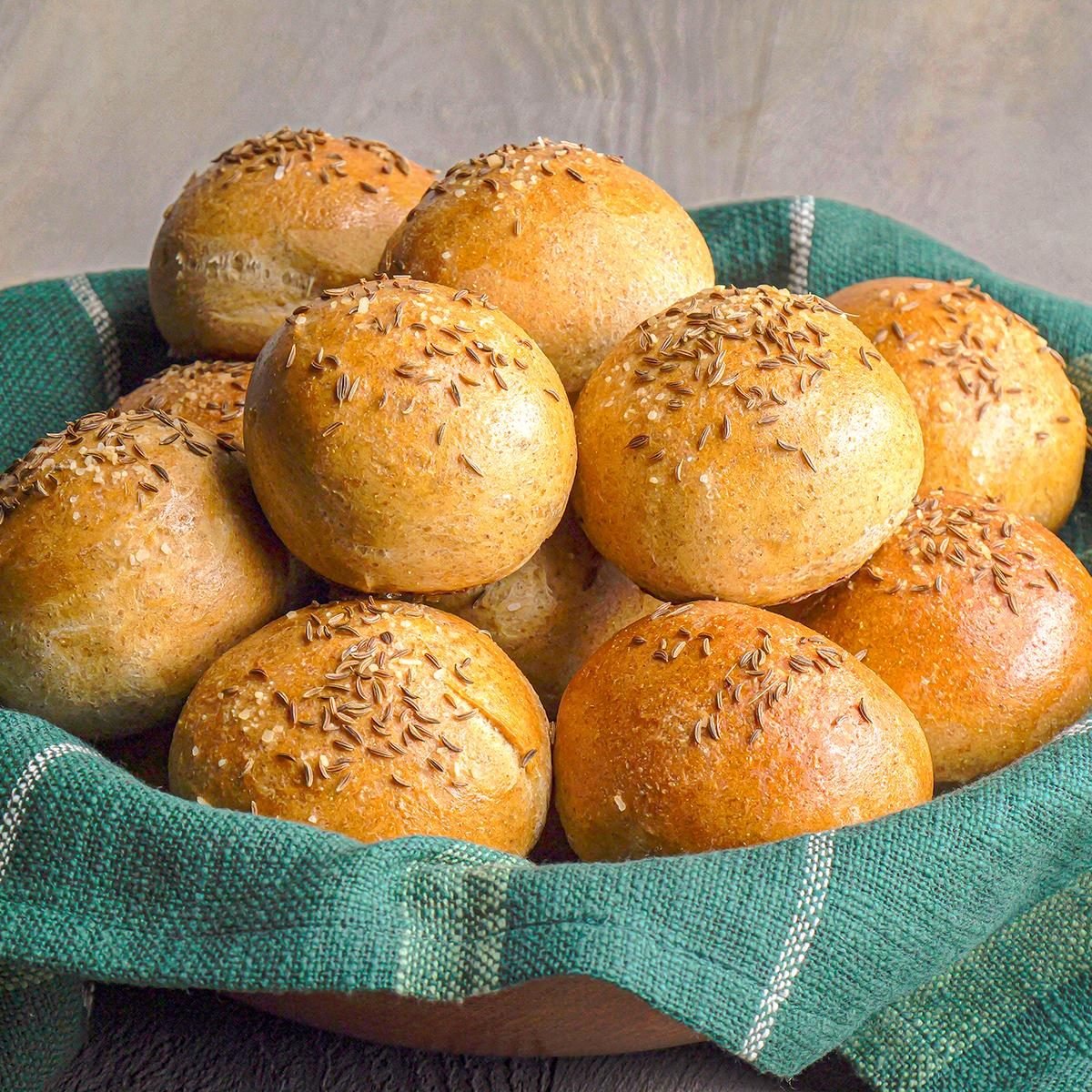
These rye rolls are fluffy and packed with earthy flavor—a perfect companion to your most comforting meals.
If there’s one food that can complement or improve just about any meal, it’s bread. Whether crusty or soft, flavored or plain, twisted in knots or sliced, puffed like focaccia or flat like naan, it just works. These rye rolls, which taste like rye bread but come in dinner-roll form, can be their own category.
These homemade rye dinner rolls begin with a yeast-based dough that’s enhanced with brown sugar and molasses for a hint of sweetness. The blend of all-purpose and rye flour offers that signature nutty, earthy rye flavor. These homemade rolls can be served alongside everything from soup and stew to roast beef or ham dinners. The recipe makes over two dozen rolls, so you’ll have plenty to serve fresh and extras to store away for later.
Ingredients for Rye Rolls
- Active dry yeast: Active dry yeast makes the dough rise, resulting in a fluffy texture. You’ll proof the yeast in warm water before starting the dough.
- Eggs: Room-temperature eggs add richness and moisture to the dough. There’s also an egg wash brushed over the rolls before baking, which gives them a glossy shine and a golden color.
- Nonfat dry milk powder: Milk powder gives the rolls a tender texture and enhances browning and color.
- Butter: Unsalted butter adds rich flavor and contributes to the texture of the rolls. Be sure to let your butter soften to room temperature for easier incorporation.
- Brown sugar: Brown sugar adds flavor and sweetness to the rye dough. You can use light or dark brown sugar; dark brown sugar will give the rolls a richer, deeper flavor.
- Molasses: Dark molasses adds depth of flavor to the rye dough.
- Salt: A pinch of salt goes a long way in balancing the sweetness and taste of the dough.
- Baking soda: Although yeast provides most of the rise in this dough, baking soda helps give them a fluffier texture.
- All-purpose flour: No need for bread flour here. All-purpose flour provides enough structure for the dough.
- Rye flour: Rye flour is key when it comes to baking a batch of rye bread or rye rolls. It adds the classic tangy, nutty flavor.
- Caraway seeds: Garnish the tops of the rolls with these signature seeds. They enhance the nutty taste of the rolls. Combine the caraway seeds with kosher salt for topping, or top the rolls with salt only.
Directions
Step 1: Make the dough

In a large bowl, dissolve the yeast in warm water. Add three eggs, the milk powder, butter, brown sugar, molasses, salt, baking soda and 2 cups of all-purpose flour. Beat them until they’re smooth.

Add the rye flour and enough of the remaining all-purpose flour to form a soft dough (the dough will be sticky).
Step 2: Knead the dough

Turn the dough out onto a well-floured surface. Knead it until it’s smooth and elastic, about six to eight minutes. Place the dough in a greased bowl, turning once to grease the top.

Cover the bowl and let the dough rise in a warm place until it has doubled in size, about one hour.
Editor’s Tip: The best way to know when the dough is kneaded enough is to use the windowpane test. Stretch a small amount of dough with your fingers. If it tears, it hasn’t developed enough gluten and needs more kneading. If it doesn’t, and it makes a sort of webby windowpane, it’s good to go.
Step 3: Form the dough into rolls

Divide the dough into 30 pieces and shape each into a ball. Place the balls of dough 2 inches apart on greased baking sheets.
Editor’s Tip: To make uniformly sized rolls, use a kitchen scale to weigh out the portions of dough.
Step 4: Top with egg wash and rise

In a small bowl, whisk cold water and the remaining egg. Brush the egg wash over the dough balls.

Sprinkle the dough balls with caraway seeds and/or kosher salt, if you’re using it. Cover the rolls and let them rise until they have doubled in size, about 45 minutes. Preheat the oven to 350°F.
Step 5: Bake the rolls

Bake the rolls for 14 to 16 minutes or until golden brown. Remove to wire racks to cool.

Rye Rolls Variations
- Top with other seeds: Not a fan of caraway seeds? After the egg wash, top these rolls with poppy seeds or a sprinkle of oats.
- Try another shape: Round rolls are classic, but you can shape these rolls into squares or even something a bit more oblong.
- Add herbs: Incorporate dried minced herbs to enhance the flavor of these rolls. Rosemary, thyme, sage and dill are all great options.
How to Store Rye Rolls
Store homemade bread at room temperature (not the refrigerator!) for the best results. You can store these rye rolls in a zip-top bag or an airtight container for up to five days.
Can you freeze rye rolls?
When freezing bread, the key to preventing freezer burn is to let the rolls cool fully before wrapping them as air-tight as possible. Transfer the rye rolls to a freezer bag or store them in an airtight container for up to two months. Let the rolls thaw at room temperature before enjoying them.
Rye Rolls Tips

What’s the best way to proof rye roll dough?
When proofing bread or roll dough, place it in a warm place to rise. For the best texture, cover the bowl with a silicone cover or a tea towel. This will prevent a crust from forming on the exterior of the dough. You can even proof bread dough with a heating pad if your kitchen runs cool.
How do you know when rye rolls are ready to come out of the oven?
Checking the color is the best way to tell when rye rolls are done baking. You’ll want to let the rolls bake until they’re golden brown.
What can you serve with rye bread rolls?
Prepping a holiday ham? Rye rolls make an excellent complement. You can also pair them with a beef roast, use them for small pastrami sandwiches or dip them in beef stew or soup.
Ingredients
- 1 tablespoon active dry yeast
- 2 cups warm water (110° to 115°)
- 4 eggs
- 1/2 cup nonfat dry milk powder
- 1/4 cup butter, softened
- 1/4 cup packed brown sugar
- 2 tablespoons dark molasses
- 2 teaspoons salt
- 1/2 teaspoon baking soda
- 3 to 4 cups all-purpose flour
- 3 cups rye flour
- 1 tablespoon cold water
- Caraway seeds and/or kosher salt
Directions
- In a large bowl, dissolve yeast in warm water. Add 3 eggs, milk powder, butter, brown sugar, molasses, salt, baking soda and 2 cups all-purpose flour. Beat until smooth. Add rye flour and enough remaining all-purpose flour to form a soft dough (dough will be sticky).
- Turn onto a well-floured surface; knead until smooth and elastic, about 6-8 minutes. Place in a greased bowl, turning once to grease top. Cover and let rise in a warm place until doubled, about 1 hour.
- Divide dough into 30 pieces; shape each into a ball. Place 2 in. apart on greased baking sheets.
- In a small bowl, whisk cold water and remaining egg; brush over dough. Sprinkle with caraway seeds and/or kosher salt. Cover and let rise until doubled, about 45 minutes.
- Bake at 350° for 14-16 minutes or until golden brown. Remove to wire racks.

Loading Popular in the Community
I found this recipe in an old community cookbook I received as a gift for my wedding in 1965! It is one of my favorite recipes and make it often for guests.—Awynne Thurstenson, Siloam Springs, Arkansas
Recipe Creator
Loading Reviews

