


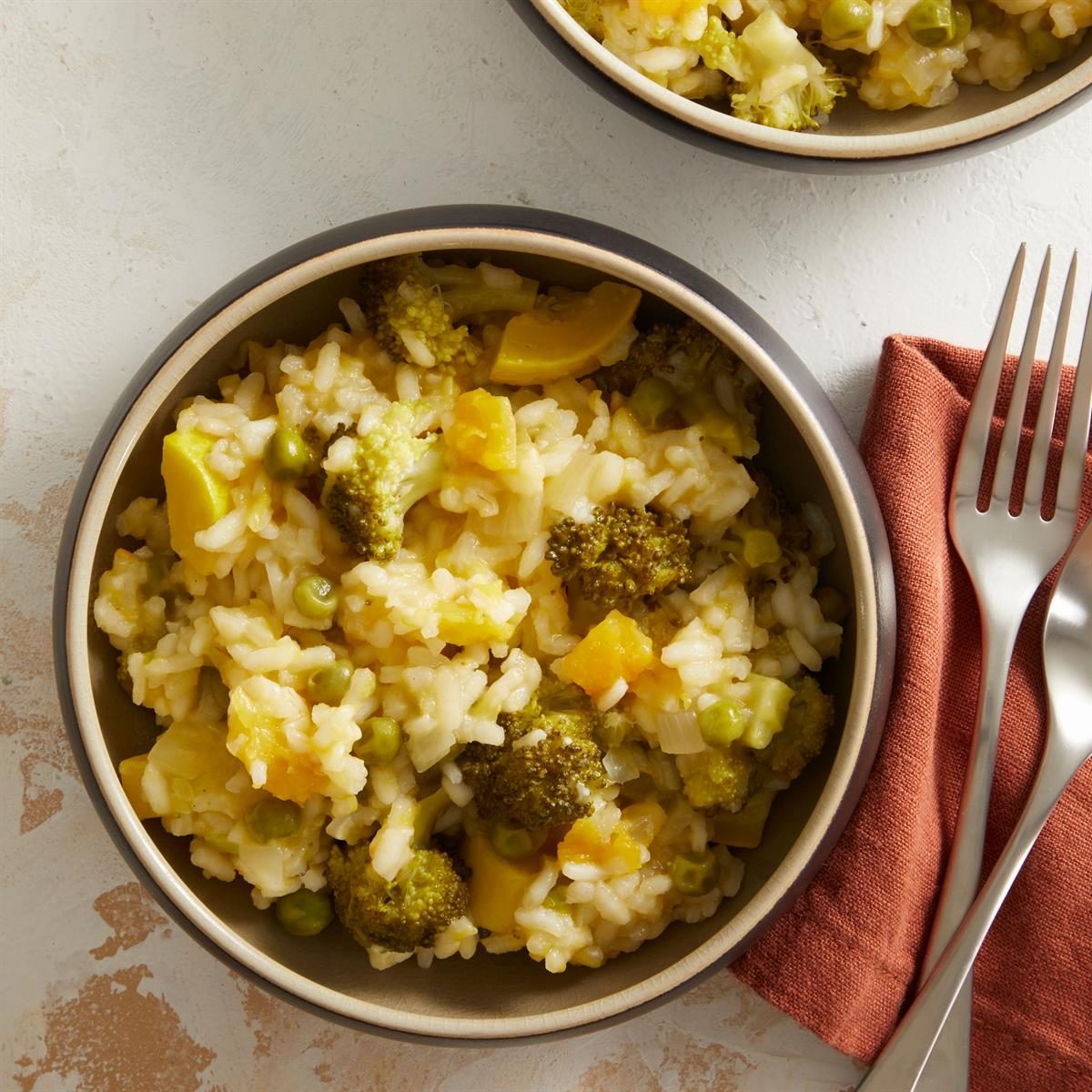
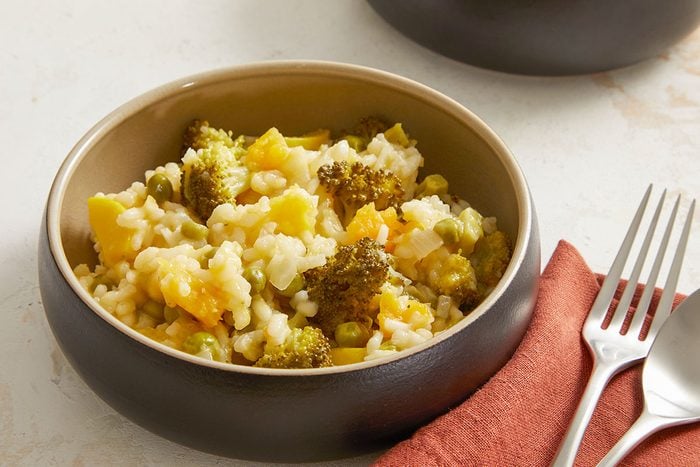
This simplified vegetable risotto skips the ladling and stirring, giving you a colorful, creamy meatless main or side that's easy enough for even the busiest weeknights.
Have you ever wanted to make risotto but felt intimidated by the process? While traditional risotto recipes are actually simple to make, they require slow cooking and constant attention. This simplified vegetable risotto, on the other hand, delivers all the creamy, flavorful goodness of classic risotto without the constant stirring.
This all-veggie version features a colorful mix of broccoli, yellow squash, peas and winter squash, making it perfect for fall and winter. You can easily swap in whatever vegetables are in season to create a fresh, colorful version any time of year. This easy vegetable risotto is perfect for a meatless Monday or as a delicious side dish. Want to make it heartier? Add cooked chicken, shrimp or sausage to turn it into a cozy and satisfying one-pot dinner.
Vegetable Risotto Ingredients
- Onion and garlic: These aromatics create the savory base of the risotto, adding gentle sweetness and warmth as they soften. Fresh garlic and a sweeter onion variety work best, but shallots are a great stand-in if you want a milder onion flavor.
- Butter: Cooking the aromatics and toasting the rice in butter adds richness, giving the finished risotto a nutty flavor and silky finish. For a lighter-tasting risotto, use a high-quality olive oil.
- Arborio rice: Short-grain Arborio rice is the classic choice for risotto. It’s high in starch, which releases as it cooks to create risotto’s signature creaminess. If you don’t have it, you can use standard long-grain rice, but it won’t release as much starch and the texture will be more like a fluffy pilaf than a creamy risotto.
- White wine: A dry white cooking wine adds gentle acidity that brightens the whole dish. If you’d rather cook without alcohol, replace the wine with extra broth and stir in a splash of lemon juice for a similar lift.
- Broth: The grains of rice absorb the broth as they plump and soften, so each bite is full of savory depth. Use chicken broth for a richer flavor or veggie broth to keep the recipe vegetarian.
- Vegetables: A mixture of broccoli florets, yellow squash, peas and winter squash makes the risotto pop with color, texture and natural sweetness. This recipe uses both fresh and frozen produce. Fresh broccoli and yellow squash hold their shape and retain a bit of chew as they cook, while frozen peas and winter squash save on prep time.
Directions
Step 1: Saute the aromatics
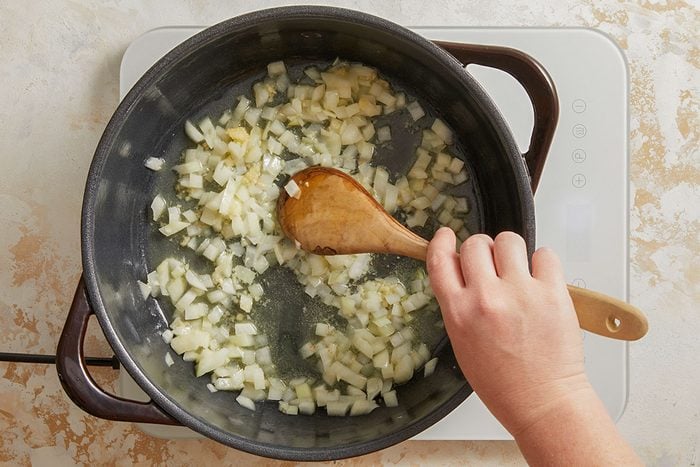
In a Dutch oven, melt the butter over medium heat. Add the onion and garlic and saute them for two to three minutes or until they’re tender and fragrant.
Step 2: Toast the rice, then deglaze the pan

Add the rice to the pot and cook for one minute, stirring constantly, until each grain looks glossy and coated with butter.
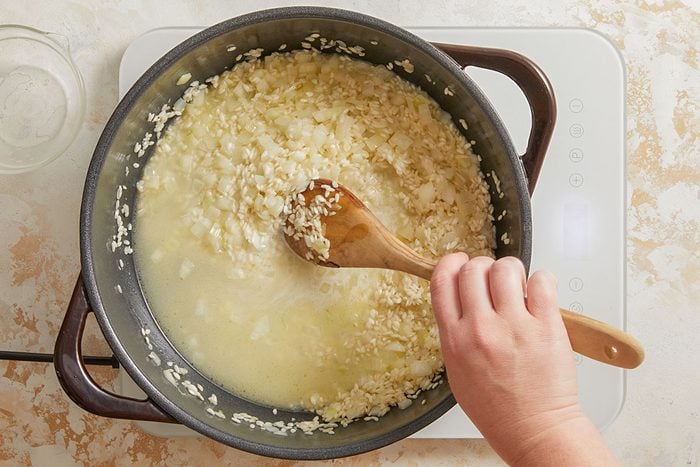
Stir in the wine and cook for about two minutes or until the wine is absorbed.
Editor’s Tip: If you prefer not to use wine, swap in an equal amount of broth with a squeeze of lemon juice for brightness.
Step 3: Add remaining ingredients and simmer

Stir in the broth, vegetables, salt and pepper. Bring the mixture to a gentle boil, then reduce the heat to low. Cover the pot and simmer the risotto for 20 to 25 minutes until the rice is creamy and tender.
Step 4: Rest, then serve
Remove the pot from the heat and let it stand, uncovered, for 10 minutes before serving.
Editor’s Tip: This brief rest allows the risotto to thicken a bit more and gives the flavors more time to meld. If the risotto seems thick, stir in a splash of warm broth or cream just before serving to loosen it up.
Recipe Variations
By mixing and matching seasonal produce, you can create an endless variety of veggie risotto dishes. Simply swap in what’s fresh or whatever you have on hand for a whole new flavor profile that reflects the time of year. Try these tasty combinations for inspiration:
- Mediterranean: Stir in diced zucchini, halved cherry tomatoes, baby spinach and a handful of pitted olives. Finish the risotto with a sprinkle of crumbled feta for a tangy twist.
- Creamy corn: Add frozen or fresh corn kernels during the last 10 minutes of simmering, then stir in a splash of cream and some grated Parmesan just before serving to make a sweet, summery version.
- Tomato-basil: Add a tablespoon or two of tomato paste to the pan before adding the liquids, and toss in a handful of cherry tomatoes during the last 5 to 10 minutes of cooking. Garnish it with fresh basil for a Caprese-inspired meal.
- Roasted vegetable: Oven-roast an assortment of diced veggies such as carrots, butternut squash, bell peppers, mushrooms or eggplant, then stir them into the risotto after the rice has simmered. Roasting brings out their natural sweetness and adds rich, concentrated flavor without extra fuss.
- Spring greens: For a light, bright risotto that’s perfect for springtime, stir in chopped asparagus and frozen peas, then finish the dish with lemon zest, sliced green onions and/or a swirl of pesto.
- Mushroom and herb: Swap sliced cremini or button mushrooms for the mixed vegetables and finish the dish with a generous sprinkle of chopped fresh thyme, rosemary and/or parsley for an earthy, aromatic twist.
How to Store Vegetable Risotto
Store leftover risotto in an airtight container in the refrigerator for up to four days. It will thicken as it chills, so stir in a splash of broth or water before reheating it to help restore its creamy texture.
Can you freeze vegetable risotto?
While you can freeze risotto, it’s best enjoyed fresh, straight from the stovetop. The texture can change and become less creamy after freezing and thawing; the vegetables will soften, and the rice will thicken as the starch continues to absorb moisture.
How do you reheat vegetable risotto?
Gently warm leftover vegetable risotto on the stovetop over low heat, or microwave individual portions. Stir in a splash of warm broth as it reheats to prevent drying and bring back its creamy, luscious texture.
Vegetable Risotto Tips

What vegetables are good in risotto?
Risotto is flexible; broccoli, asparagus, mushrooms, peas, spinach, bell peppers, eggplant, zucchini, squash and cherry tomatoes are all excellent choices. For the best flavor, choose what’s in season or use frozen veggies for convenience. If you’re adding leafy greens such as spinach or kale, stir them in toward the end of cooking and heat them just until they’re wilted to keep them bright and tender.
Can you add meat to vegetable risotto?
Yes! Risotto pairs beautifully with a variety of proteins such as grilled chicken, juicy shrimp, diced ham, Italian sausage or crispy pancetta. Cook or brown the protein first—either ahead of time or in a separate pan—then slice or dice it as needed and stir it into the risotto at the end of cooking, so it heats through without overcooking.
Does this risotto need constant stirring?
Nope! This vegetable risotto is a simplified take on the classic—you add all the ingredients to the pot and only need to stir occasionally to prevent sticking. Traditional risotto requires frequent ladling of broth and constant stirring, but this version is designed to be hands-off yet still deliciously creamy.
What can I serve with vegetable risotto?
Vegetable risotto pairs well with light, fresh sides, such as a simple green salad. Serve it with crusty bread for mopping up the creamy rice. It also pairs well with a hearty main, such as grilled chicken, steak, or shrimp. For an extra burst of flavor, finish it with a drizzle of pesto, a sprinkle of fresh herbs or some grated Parmesan just before serving.
Ingredients
- 1 cup chopped onion
- 2 teaspoons minced garlic
- 1/3 cup butter, cubed
- 1-1/2 cups uncooked arborio rice
- 1 cup white wine
- 4 cups chicken broth or vegetable broth
- 3 cups fresh broccoli florets
- 2 cups chopped yellow summer squash
- 2 cups frozen peas, thawed
- 1 package (10 ounces) frozen cooked winter squash, thawed
- 1/2 teaspoon salt
- 1/8 teaspoon white pepper
Directions
- In a Dutch oven, saute onion and garlic in butter for 2-3 minutes or until tender. Add the rice; cook and stir for 1 minute or until rice is glossy and coated with butter. Stir in wine; cook for 2 minutes or until wine is absorbed.
- Stir in the remaining ingredients and bring to a boil. Reduce heat; cover and simmer for 20-25 minutes or until rice is tender. Let stand, uncovered, for 10 minutes before serving.

Loading Popular in the Community
Short grain rice is preferred when making this classic Italian dish. Arborio rice is the most widely available short grain rice to use.
Recipe Creator
Loading Reviews

