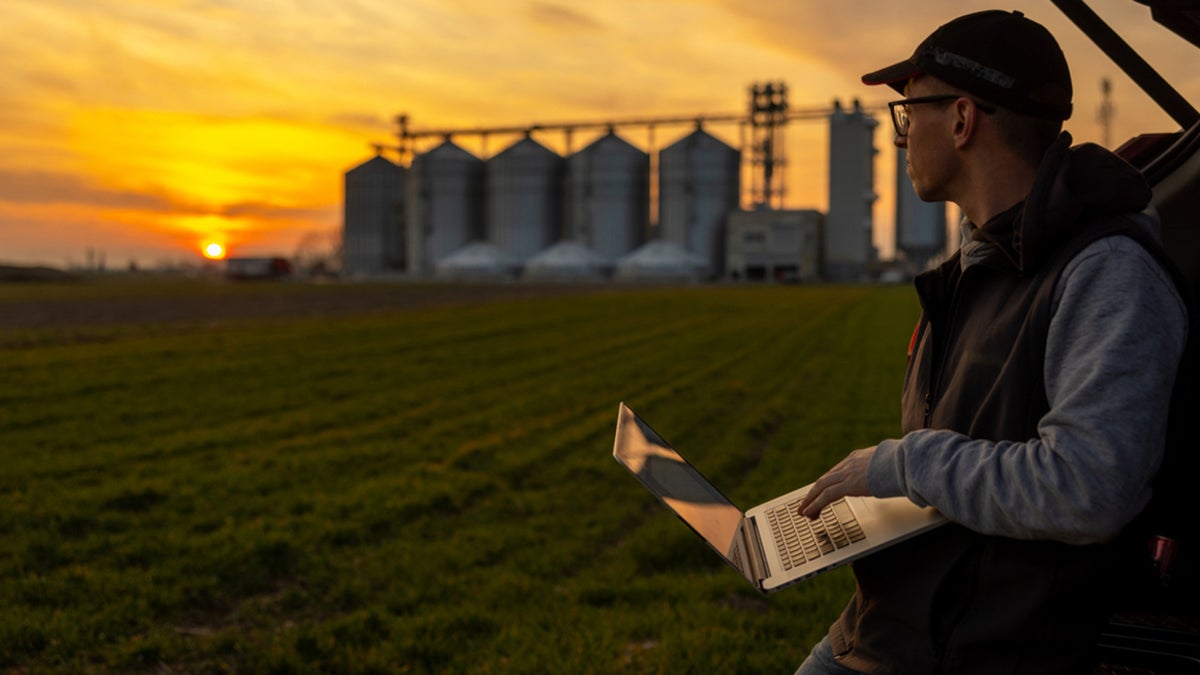
Rural areas rarely offer a good network. | Image by T-Mobile
T-Mobile is already making 6G promises, but as a matter of fact, many Americans live in rural areas where phone signal is terrible. For us city folks, taking long walks in the Great Outdoors without a cell network is refreshing, but I guess many locals are tired of not having proper connectivity. Not to mention the safety risks.
That's why T-Mobile wants to expand.
Under the $42.5 billion BEAD program, administered by the National Telecommunications and Information Administration (NTIA), states are allocating funds primarily to expand fixed home broadband. Through competitive bidding, the agency says it has generated roughly $21 billion in savings compared to initial projections.
Recommended For You
Out of those $21 billion, T-Mobile's John Saw, president & CTO argues, there are about $8 billion that could help make this become a reality.
Here's the proposition
The Magenta carrier wants to expand. | Image by PhoneArena
T-Mobile's proposal is presented as a "disciplined approach". Once targeted mobile funding under BEAD is allowed, it should be capped at around $8 billion. More than $13 billion would still be left after the specified coverage targets are met. The approach calls for constructing only the necessary infrastructure, achieving the required coverage.
Mobile connectivity is critical to how people live and work today. It keeps businesses running, students learning, farms productive, commercial drivers connected and first responders reachable. In rural America, reliable mobile service is not a bonus. It is a basic need. And yet, there are still coverage gaps where over 3 million Americans still lack even 4G connectivity. To get ahead, we can't leave people behind.
– John Saw, president & CTO, T-Mobile
Recommended For You
By building approximately 6,000 more mobile macro sites (or cell towers), T-Mobile's 5G network could be extended to roughly 99% of Americans – including "key rural roads".
Should BEAD funds be used to expand rural 5G coverage?
Yes, rural mobile coverage is just as important.
68.18%
Yes, but only if all carriers can compete.
13.64%
No, BEAD money should stay focused on home broadband only.
5.68%
No, carriers should fund their own network expansions.
12.5%
88 Votes
According to Saw, the US has made real progress in bringing high-speed internet to homes, but some gaps still remain. The Broadband Equity, Access and Deployment program, known as BEAD, was created to ensure every American has reliable broadband, especially in rural and underserved areas.
However, even as more homes get connected, many rural areas still lose service once people leave their houses. These mobile dead zones are more than just frustrating. They can slow down local businesses, create safety risks, and keep parts of the digital divide in place, even if home internet improves.
In late 2025, the National Telecommunications and Information Administration said its updated state funding process saved taxpayers $21 billion compared to earlier projections. That raised a new question: how should those savings be used?
Well, T-Mobile has an idea. But I bet AT&T and Verizon will want a piece of the action, too.
Sebastian, a veteran of a tech writer with over 15 years of experience in media and marketing, blends his lifelong fascination with writing and technology to provide valuable insights into the realm of mobile devices. Embracing the evolution from PCs to smartphones, he harbors a special appreciation for the Google Pixel line due to their superior camera capabilities. Known for his engaging storytelling style, sprinkled with rich literary and film references, Sebastian critically explores the impact of technology on society, while also perpetually seeking out the next great tech deal, making him a distinct and relatable voice in the tech world.
A discussion is a place, where people can voice their opinion, no matter if it
is positive, neutral or negative. However, when posting, one must stay true to the topic, and not just share some
random thoughts, which are not directly related to the matter.
Things that are NOT allowed:
Off-topic talk - you must stick to the subject of discussion
Offensive, hate speech - if you want to say something, say it politely
Spam/Advertisements - these posts are deleted
Multiple accounts - one person can have only one account
Impersonations and offensive nicknames - these accounts get banned
To help keep our community safe and free from spam, we apply temporary limits to newly created accounts:
New accounts created within the last 24 hours may experience restrictions on how frequently they can
post or comment.
These limits are in place as a precaution and will automatically lift.
Moderation is done by humans. We try to be as objective as possible and moderate with zero bias. If you think a
post should be moderated - please, report it.
Have a question about the rules or why you have been moderated/limited/banned? Please,
contact us.












Things that are NOT allowed:
To help keep our community safe and free from spam, we apply temporary limits to newly created accounts: