Samsung Gear VR with Controller Review

Introduction
Last summer, Samsung introduced an upgrade to the Gear VR headset for its Galaxy smartphones. In contrast to the simple lens-and-frame Google Cardboard-type viewers that were the VR standard with other smartphones, Samsung's platform upped the ante with higher-end headset hardware, incorporating features like adjustable focus, input buttons, and a side-mounted touchpad.

Does that one addition manage to substantially improve the Gear VR experience? Does Samsung's new Controller fit in well with its established Gear VR ecosystem, or does this feel more like a case of shamelessly copying Google?
Headset
We just now employed the very same language Samsung did when announcing this hardware, but despite that talk of a “new Gear VR,” this is very much the same headset we saw launch last summer. As such, we're not going to spend a huge amount of time talking about the viewer itself, having covered it exhaustively back when it was first released.

As a quick reminder, we were generally impressed with the product, and quite appreciated how it offered a much more refined approach to VR than we got with the likes of Google Cardboard. Our chief complaints concerned the limited selection of (oftentimes expensive) apps, some discomfort with the cushioning surrounding the eyepieces, and software performance that was occasionally stuttering and jerky, serving to break the illusion the Gear VR was trying to create of virtually real worlds.
The good news is that we've either gotten a little better at adjusting the Gear VR's fit, its padding has managed to “break in” a bit over time, or maybe we just became more used to the way it feels, because we no longer have any significant issue with the headset's comfort level.
Performance
A new generation of smartphone tends to bring us hardware more adept at number-crunching and graphics-rendering than the devices before it, and that's very much the case with the Galaxy S8. When paired with the Gear VR, we're noticing less in the way of distracting graphical hiccups, and the new 10nm processors seem very well equipped at keeping up with VR-app demands.
Control

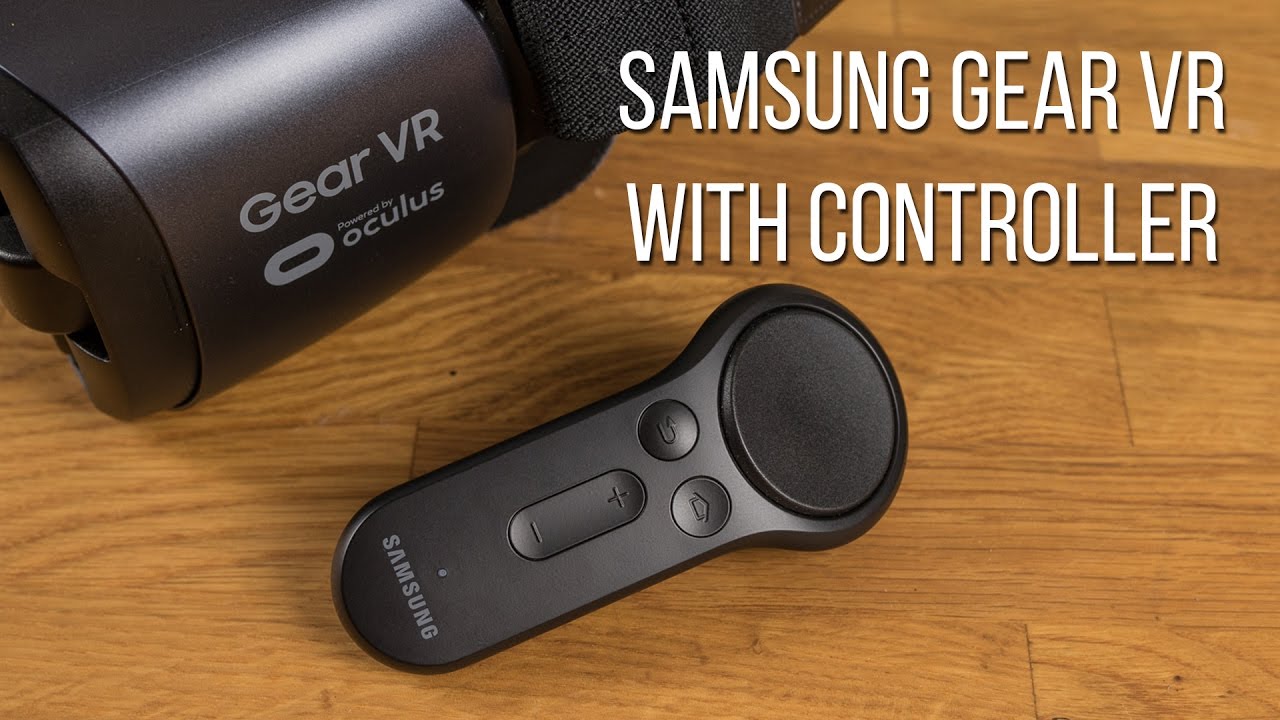
The important part of Samsung's new Gear VR package is the Controller, a handheld wireless unit with index-finger trigger, clicky touchpad, a pair of back and home buttons, and volume rocker.
It's impossible to look at this hardware without drawing comparisons to Google's Daydream controller, so why beat around the bush? Functionally, they're very, very similar, with the only notable difference in terms of input the front trigger button on Samsung's Controller that Daydream lacks.
Like Google, Samsung gives users a shortcut to assist with calibrating the Controller, and pointing the device forward while holding down its home button reorients what the Controller sees as “front.” With Daydream we found ourselves doing this often, as the controller had a bad tendency to drift. So far the Samsung Controller seems to be a little better, but still very much has some calibration issues from time to time. These tend to be less of the “slowly going out of alignment” type than just abruptly, completely losing track of which way is which – thankfully, recalibration is quick and painless. Slightly more frustrating are issues when jumping in and out of the Gear VR altogether, where the system would sometimes lose track of the Controller entirely.
Software
Samsung's graphical interface for using the wireless Controller is almost shockingly similar to Google's. That is: not only do you see an on-screen virtual representation of where the Controller is in 3D space, but the UI renders a beam of light shining out of the Controller's tip, letting you instantly see where you're pointing it. Mind you, individual games are free to change that up as they see fit, but many that support the Controller offer similar systems, such that you're not just pointing off into space blindly.
If you're just picking up a Gear VR with the Controller, and want to check out a little variety for what you can do with the new accessory, that's not the strongest starting-out point. Granted, Samsung's at a disadvantage compared to Google, as while there's an existing library of Gear VR apps, this Controller is brand new, and it's going to take some time for devs to recognize the demand and start coding their apps for it.
The good news there is that even without being custom-made for the Controller, existing apps can still take advantage of it to an extent. While its “pointing” mode goes to waste, the Controller still offers all the hardware buttons of the Gear VR headset in a slightly-easier-to-reach location, and its touchpad replicates the one mounted on the visor's side.
While that tends to be an upgrade over tapping the side of your headset to navigate around virtual worlds, it's still a little unsatisfying for users expecting a dense selection of apps tailor-made to showcase the capabilities of Samsung's new Controller.
Conclusion

Samsung's making the very smart move of bundling the Controller with the Gear VR going forward; the set will run you just about $130. If you already have the headset, and just want to upgrade to the motion Controller, you can buy the accessory separately for around $40. Or at least, you will be able to soon – sales of the Controller alone have yet to get started.
If you're just getting into Gear VR now, don't think twice about picking up that package deal – you'll be well equipped to enjoy any virtual content coming your way. But if you're thinking about upgrading your existing Gear VR with the new Controller, you might want to hold off just a little.
The wireless Controller is utterly overflowing with potential, but so far it doesn't feel like the Gear VR software library has yet to fully realize it. The situation's almost certainly going to get better, and there's probably going to be a day in the not-too-distant future where we'll be recommending the Gear VR Controller upgrade without hesitation. But we aren't there quite yet, and we can appreciate that someone who goes out and picks up the Controller the moment it becomes available might end up feeling a little disappointed.
For now, keep the faith: Samsung continues to make some of the biggest investments in smartphone-based VR of any manufacturer around, and the experience you enjoy with its Gear VR system only gets better and better as new hardware and software arrives. This latest Controller offers no indication that it will break from that pattern, and we've just got to wait for the apps to catch up with it.

Follow us on Google News
Popular stories

Latest News

Things that are NOT allowed:
To help keep our community safe and free from spam, we apply temporary limits to newly created accounts: