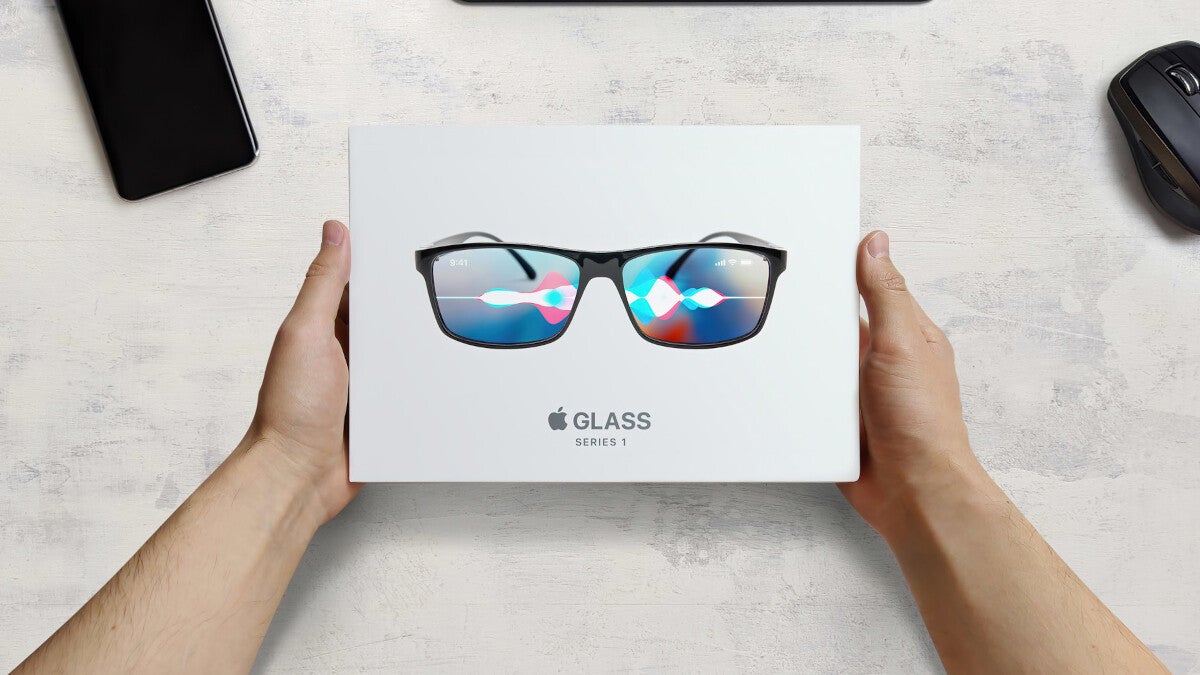
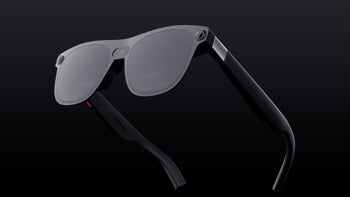
Reportedly, the device has gotten delayed because of Apple Intelligence and the Cupertino giant needing more time to refine it. Meanwhile, there are some rumors that hint the smart glasses by Cupertino may come together with the iPhone 18 as well.
Apple is said to be accelerating the development of its smart glasses now, according to the latest rumors on the matter.
Apple Glasses price
The Apple Glasses are widely expected to compete with Meta's smart glasses, which means their pricing may be positioned somewhere around the Ray-Bans'. However, the exact price has not leaked yet. We know for certain that they won't be as expensive as Apple's Vision Pro, an AR/VR device starting at $3,499.
Apple Glasses camera
Earlier rumors claimed that Apple's smart glasses were not going to have cameras, citing reasons of privacy. However, later, reputable analyst Ming-Chi Kuo claimed an Apple AR headset to actually sport a whole 15 cameras, with eight of them used for AR video.
Now, newer reports hint that the Apple smart glasses may sport a high-resolution camera for photo and video capture. The smart glasses are also believed to feature another camera for "computer vision". That would be providing environmental context to the device, potentially to be analyzed by AI for AI features.
Meanwhile, we've also heard that Apple's LiDAR sensor could make it into the smart glasses. Considering that LiDAR isn't capable of capturing clear photos and videos of people like a standard camera and will be useful for scanning the user's environment to enhance AR apps, Apple might be able to avoid potential privacy concerns despite including it.
Apple Glasses design
The latest info on the matter claims that the Apple Glassesare not going to have displays. According to Bloomberg's Mark Gurman, the glasses would be intended as something you'd actually wear.
Gurman says that Apple is going to design the frames in-house, deciding not to partner with glasses companies, unlike the competition (Meta, Google, Samsung).
Reportedly, the Cupertino giant is testing four different styles: a large Wayfarer style, a slimmer rectangular option, larger oval frames, and smaller oval frames. The report also claims the glasses may be made from acetate.
Acetate is a premium material that's more durable than your standard plastic. Gurman also says the frames may be available in three colors: black, ocean blue, and light brown.
Recommended For You
Earlier, the Apple Glasses were believed to sport 1.4" MicroLED or MicroOLED screens, but Gurman's recent report directly contradicts this information.
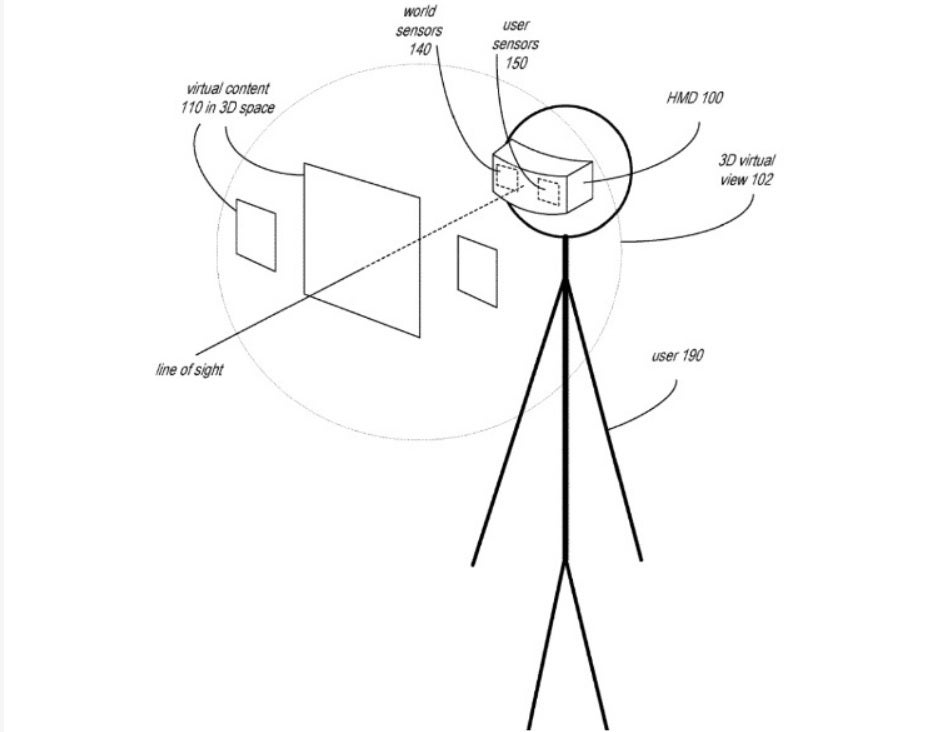
A patent submission from some time ago provided us with some information about what we can expect from their design. The patent was submitted alongside 85 other entries. Some of them were related to the Vision Pro, but there's one particular entry that could be about the smart glasses we're talking about here.
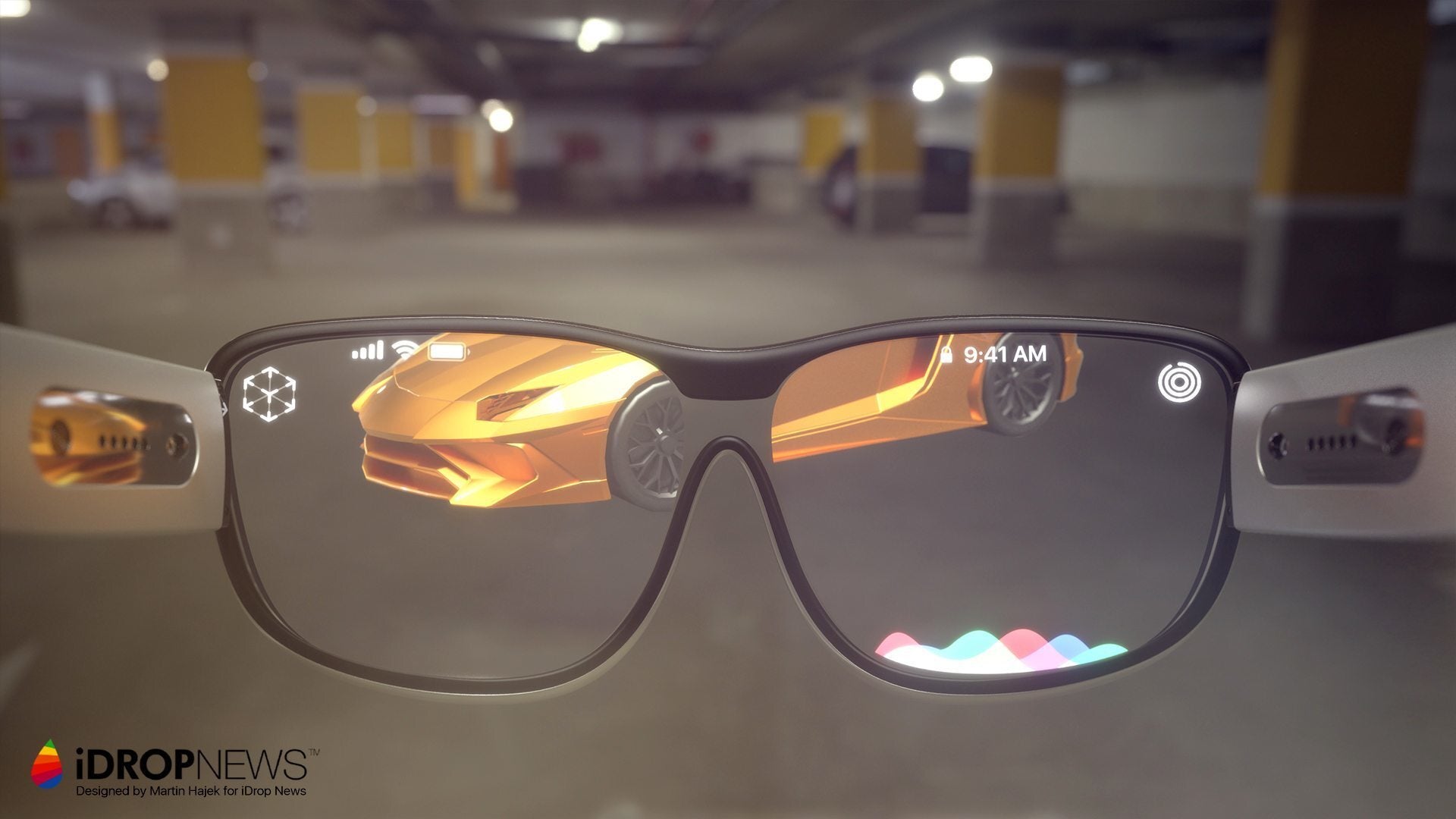
Apple Glasses concept. | Image by Martin Hajek for iDrop News
Apple glasses concept. | Image by EverythingApplePro
Prosser also mentioned that prescription lenses will be supported by Apple glasses, which suggests that their lenses might be interchangeable, just like the Vision Pro.
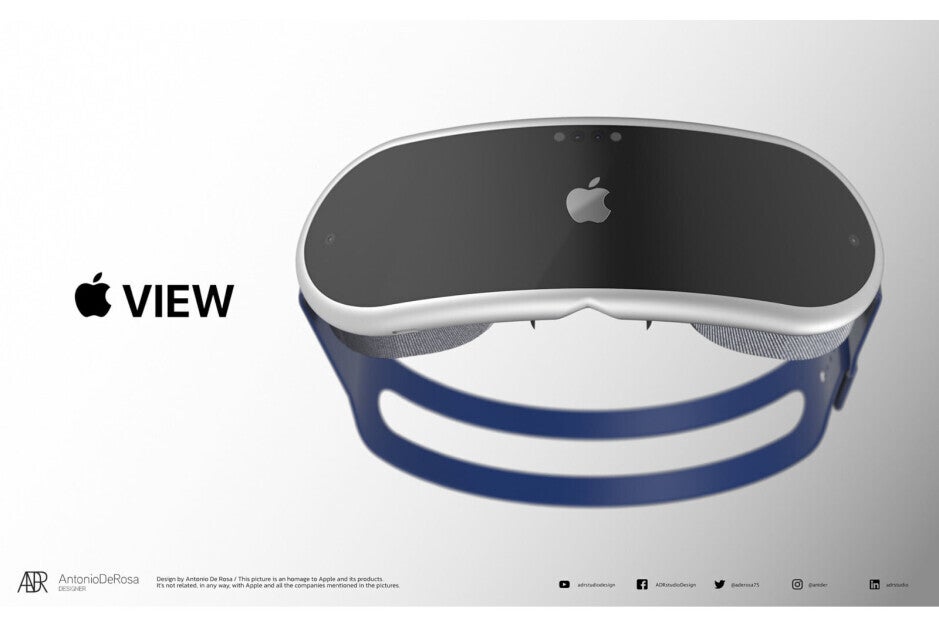
Apple AR headset concept. | Image by AntonioDeRosa
Apple Glasses display
Currently, the Apple Glasses are expected to be display-free, according to a recent report by Bloomberg's Mark Gurman.
Earlier rumors claimed that the Apple Glasses may have either one or two projectors in each frame, which would cast the image onto the lenses.
Apple Glasses concept. | Image by Martin Hajek for iDrop News
Back in 2019, a CNET report suggested that the Apple glasses would project in 8K, meaning an impressive 7680 x 4320 pixel resolution for each eye.
Apple HMD (head-mounted display) patent image from 2019. | Image by Apple
Earlier, Ming-Chi Kuo suggested that Apple will use Sony Micro-OLED displays and optical modules for a "see-through AR experience," but will also be capable of providing a "a VR experience".
Apple Glasses battery
It's widely believed that the device isn't going to have a huge battery. Obviously, we have the size constraint of the design, so large batteries are just about out of the question. Potentially, Apple would be able to integrate a small battery cell into the frame of the glasses.
Image from an Apple patent showing an AR headset charging in a docking station. | Image by Apple
Several Apple patent applications, which were published in 2020, suggested that Apple is considering its glasses to charge wirelessly on a dedicated dock. Judging by the most plausible patent, the glasses will contain magnets and coils that will connect with the dock, allowing for inductive charging.
Some rumors also indicate that you'll be able to interact with a smart assistant like Siri, similarly to Amazon's Echo Frames smart glasses. You'd be able to use voice commands and ask the assistant to call someone, answer questions, or make a note.
There's a curious rumor mentioning Apple's take on voice commands may not be what we're used to, though. Reportedly, the Cupertino company recently acquired a startup called Q.ai. One of the few things that's known about the startup is that it specialized in machine learning technology for interpreting silent voice input.
And that's something interesting. Apple may be working on a way to let you control the Apple Glasses with voice, but silently. Whispering. Or without anything audible at all.
According to rumors, Q.ai developed systems that could interpret facial movements to read what you are saying without it being really audible. If Apple succeeds in pulling this off with the Apple Glasses, that would definitely make the headset stand out from the competition. Yep, the Apple Glasses may be able to read your lips if these reports are true.
Of course, as with anything that's rumored, this is far from confirmed, so take it with a grain of salt.
We also expect Apple Intelligence and Visual Intelligence to be the central part of the Apple Glasses experience. Visual Intelligence came with the iPhone 16 Pro and currently relies on ChatGPT for search results. However, the Cupertino company is said to be working on its own AI visual models, set to arrive in 2026, potentially alongside the new Siri.
Visual Intelligence uses generative AI to identify, analyze, and take actions in relation to objects in the real world (in real time). On iPhones that support the feature, you can use the Camera Control button to search for things you see or identify a plant or an element.
Moreover, Visual Intelligence can translate text that the camera is seeing or provide you with info on landmarks you're seeing.
All in all, the feature set would heavily rely on Siri being able to reach context awareness and rich capabilities. If so, the smart glasses may turn out to be popular.
Other Apple glasses features may include showing the wearer their iPhone notifications, displaying messages, map directions, and other useful content. Like with Apple Watch, the Apple glasses would probably get their own app store, containing 3D AR games and other dedicated AR apps.
The Apple glasses will likely have 5G connectivity, according to leaker Jon Prosser.
Apple Glasses hardware and specs
Currently, speculations around the Apple Glasses claim the device may feature at least two speakers. Each speaker is supposedly positioned in each frame and close to your ears, similarly to how other AR and VR devices are designed.
Smart glasses are also designed similarly. For example, the Amazon Echo Frames: they don't have a display, but they have four tiny speakers, two in each frame, in addition to a microphone. While wearing them, you can interact with Amazon Alexa and hear feedback from the assistant.
Another patent filed by Apple revealed that the Apple glasses might employ a large array of microphones covering them. The patent in question has the microphones detect sounds, even those that are beyond human hearing, and suggests that some sort of indicators will be used for "directing the user to the source of the sound".
Of course, do keep in mind that patents don't always translate to a real-world product. They could very well be things that Apple is researching and may have decided against.
Apple glasses patent image possibly showing the planned arrangement of its microphones. | Image by Apple
Should I wait for the Apple Glasses?
You should wait for the Apple Glasses if you're interested in what the novelty that Apple may offer on the smart glasses market with this new product is. We obviously don't know when we'll see them just yet, so if you're willing to wait, keep in mind you may be waiting some time before you get to have one of these.
You should not wait for the Apple Glasses if you're not interested in smart glasses. Also, if competing products like Meta's Ray-Ban AI glasses are enough for your current needs or interests.
Stan, also known as Stako, is a smartphone enthusiast who loves exploring the limits of Android customization. His journey with mobile tech began with the Nokia 5110 and evolved with devices like the BlackBerry 9350 Curve and Samsung Galaxy A4. Despite his love for Android, he holds equal respect for Apple, considering the iPhone 4s as a significant milestone in mobile tech. Stan started his writing career early, contributing to MetalWorld, and harbors a passion for creative writing. Beyond smartphones, he's interested in photography, design, composition, and gaming, often preferring solo projects to hone his objective thinking. He's also an avid student of open-source technology and consoles, with a special fondness for the Pebble Watch, Arduboy, and Playdate.