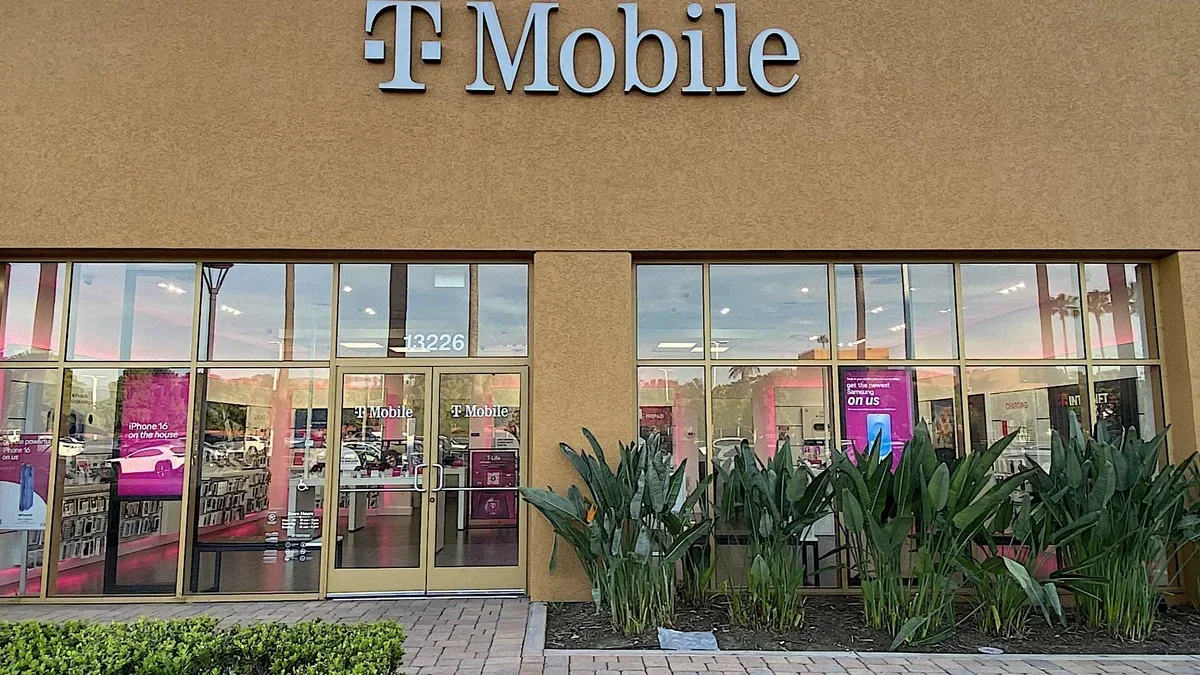
A T-Mobile store in California. | Image by Wave7 Research
Every so often, a software system stumbles and behaves unexpectedly. That appears to be the case at T-Mobile, where a wave of customers is receiving trade-in notifications for transactions they never initiated.
Just a glitch
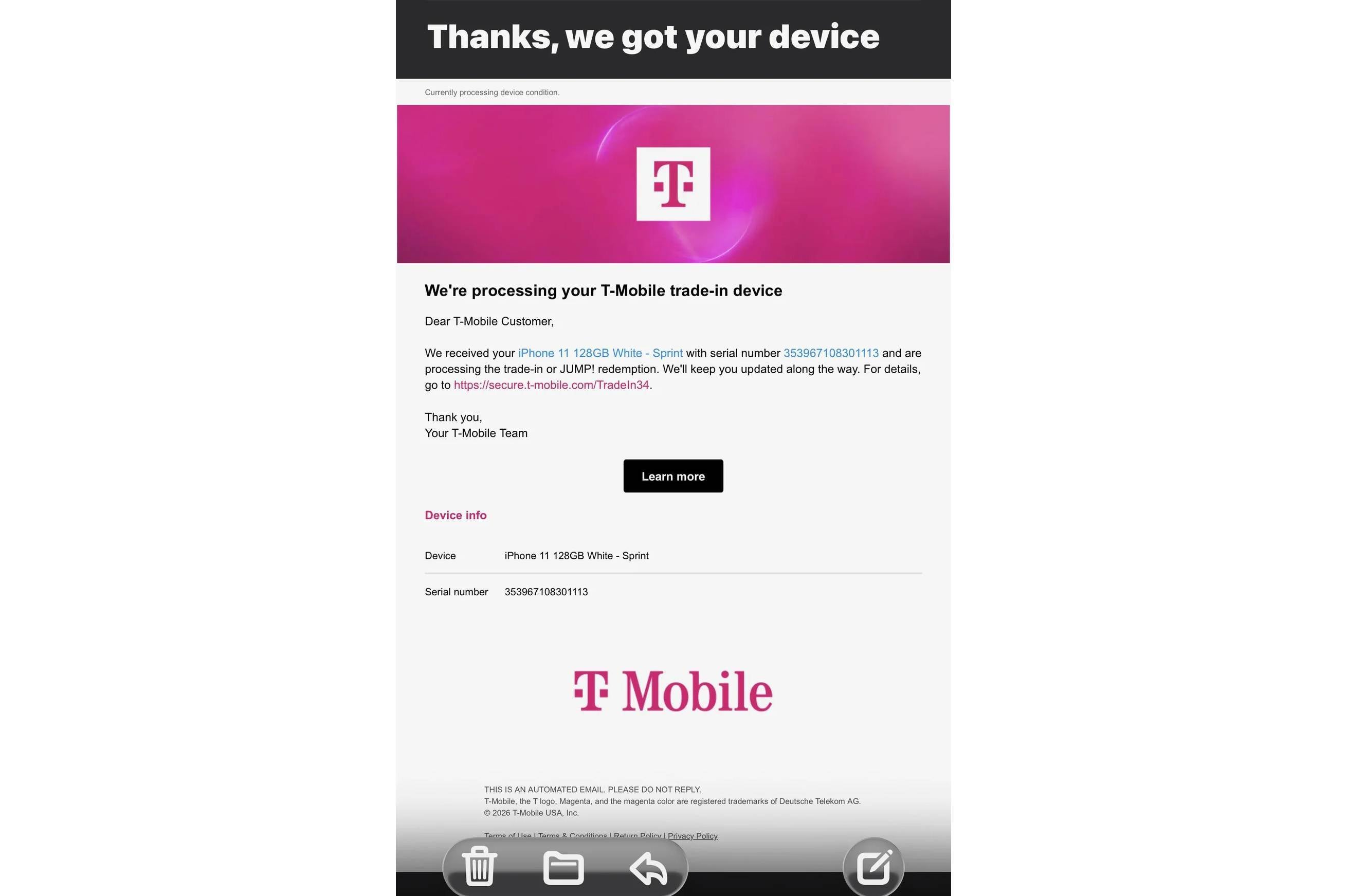
A T-Mobile email blast is confusing customers. | Image by Reddit user Kenshin_kruger
There have been multiple complaints on Reddit highlighting a surge of emails confirming the receipt of trade-in devices, even though the recipients haven't sent anything to the carrier.
While the emails originate from a legitimate T-Mobile email address, they don't correspond to any actual upgrade activity.
PerThe Mobile Report, T-Mobile's system has gone berserk and is randomly blasting out trade-in confirmations to customers.
Still setting customers on edge
For customers receiving the trade-in emails from a standard email address, it's hard not to feel perturbed. After all, no one wants to be unwittingly dragged into an upgrade process they didn't initiate.
The emails mention the International Mobile Equipment Identity (IMEI) of the device supposed to be traded in. Some customers have received as many as four such emails, each with distinct device details.
Since no account changes have occurred, customers don't need to worry. As a precaution, the email recipients may still review their accounts or get in touch with a customer representative.
Not a trivial matter
While customers who are getting the trade-in alerts have nothing to worry about, this is still a serious glitch.
Recommended For You
After all, T-Mobile may be sending the emails to the wrong customers, disclosing the IMEI of devices to unintended recipients. Fortunately, the emails don't contain any other personally identifiable information.
For some customers, the email refers to the IMEI of a device they traded in the past, in which case there are no privacy and security concerns either.
What would your first thought be after receiving an alert like this?
Just another day
T-Mobile customers are no strangers to such incidents. In some cases, like last year's SyncUP bug that allowed unauthorized customers to view the real-time location of other people's children, T-Mobile is responsible. In others, such as when customers got emails shaming them for their online behavior, T-Mobile has no part.
In the grand scheme of things, incidents like these are few and far between. More importantly, they don't pose a threat beyond inducing a bit of temporary anxiety.
Anam Hamid is a computer scientist turned tech journalist who has a keen interest in the tech world, with a particular focus on smartphones and tablets. She has previously written for Android Headlines and has also been a ghostwriter for several tech and car publications. Anam is not a tech hoarder and believes in using her gadgets for as long as possible. She is concerned about smartphone addiction and its impact on future generations, but she also appreciates the convenience that phones have brought into our lives. Anam is excited about technological advancements like folding screens and under-display sensors, and she often wonders about the future of technology. She values the overall experience of a device more than its individual specs and admires companies that deliver durable, high-quality products. In her free time, Anam enjoys reading, scrolling through Reddit and Instagram, and occasionally refreshing her programming skills through tutorials.
A discussion is a place, where people can voice their opinion, no matter if it
is positive, neutral or negative. However, when posting, one must stay true to the topic, and not just share some
random thoughts, which are not directly related to the matter.
Things that are NOT allowed:
Off-topic talk - you must stick to the subject of discussion
Offensive, hate speech - if you want to say something, say it politely
Spam/Advertisements - these posts are deleted
Multiple accounts - one person can have only one account
Impersonations and offensive nicknames - these accounts get banned
To help keep our community safe and free from spam, we apply temporary limits to newly created accounts:
New accounts created within the last 24 hours may experience restrictions on how frequently they can
post or comment.
These limits are in place as a precaution and will automatically lift.
Moderation is done by humans. We try to be as objective as possible and moderate with zero bias. If you think a
post should be moderated - please, report it.
Have a question about the rules or why you have been moderated/limited/banned? Please,
contact us.












Things that are NOT allowed:
To help keep our community safe and free from spam, we apply temporary limits to newly created accounts: