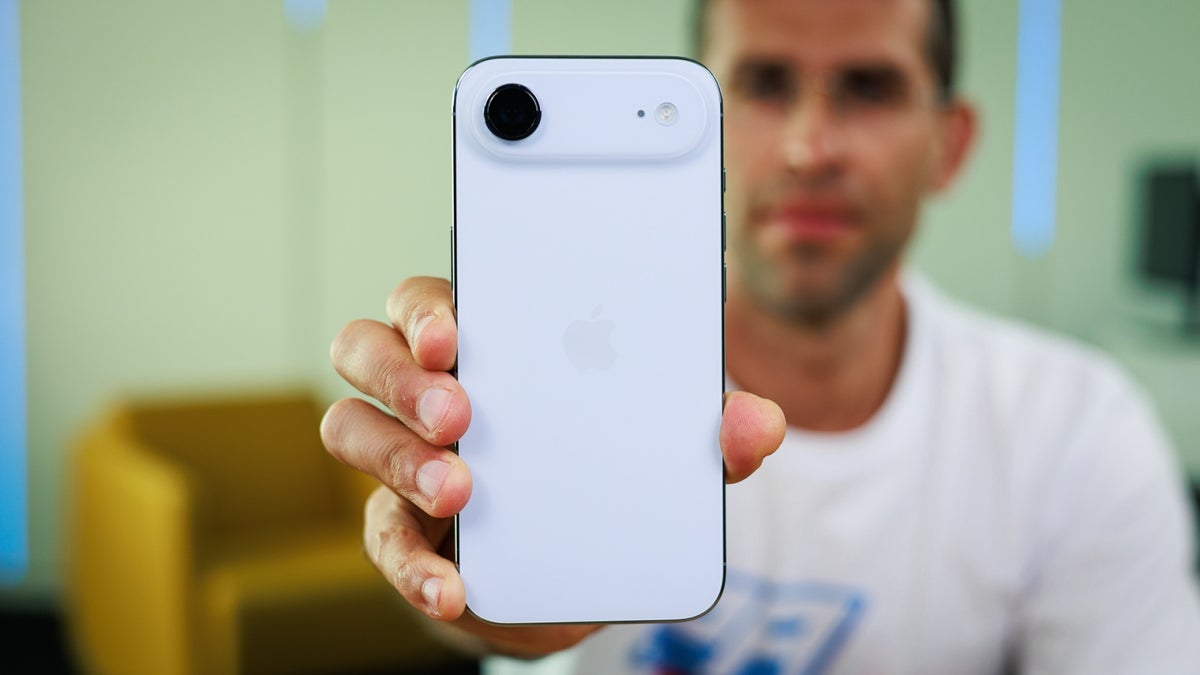
The iPhone Air is not a huge global hit, but it's clearly not a flop either. | Image by PhoneArena
Was Apple right to not follow up the 2024-released iPhone 16 Plus with a Plus-branded member of the iPhone 17 family last year and instead elect to start an entirely new iPhone Air series? Would it make any sense for the iPhone 18 lineup to include a Plus model next spring?
It's not easy to definitively answer those questions without official and detailed sales data for the iPhone 16 and 17 rosters, but a fascinating new Ookla report reveals some key differences between the apparent user bases of the first-ever iPhone Air and (possibly) the last-ever iPhone Plus that suggest Apple made a wise decision in 2025.
A big hit in Asia, a moderate one in the US
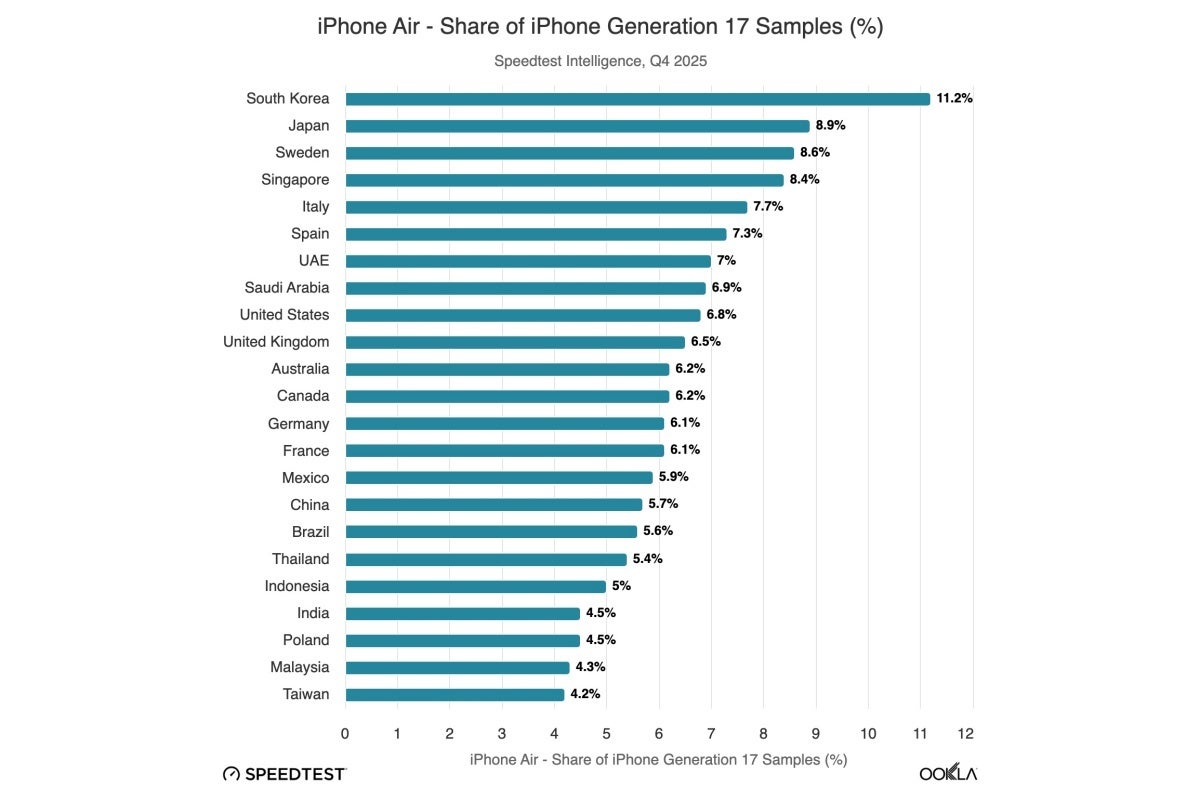
Based on Speedtest samples from around the world, it looks like the iPhone Air was more than twice as successful in Q4 2025 as the iPhone 16 Plus during the same timeframe of 2024, particularly excelling in countries like South Korea and Japan while finding significantly smaller audiences in Taiwan, Malaysia, and Poland.
Recommended For You
Those are some pretty big disparities between countries like Japan and Taiwan, for instance. | Image by Ookla
Stateside, the razor-thin 6.5-inch flagship was not tremendously popular... or terribly unpopular, accounting for nearly 7 percent of the "iPhone generation 17's" speed tests conducted between October and December 2025.
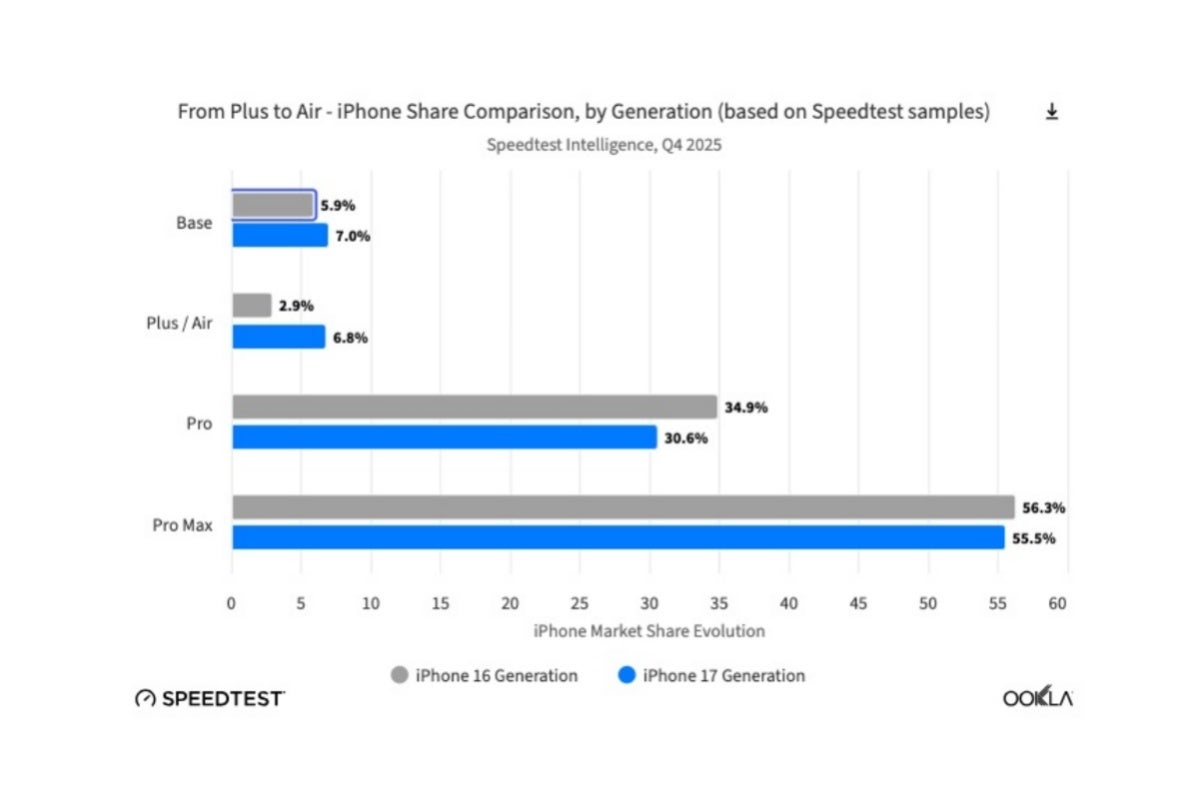
Now, I know exactly what you're thinking. That can't be the best and most reliable way of measuring a handset's success, as the number of global Speedtest visits is impossible to scientifically correlate with a product's actual sales figures. But when the iPhone 16 Plus held a microscopic share of its family's user-initiated speed evaluations in Q4 2024 and the iPhone Air boosted that slice of the pie from 2.9 to 6.8 percent in the final three months of last year, it became pretty clear which of the two devices proved (considerably) more popular.
Recommended For You
Does the iPhone Air deserve a razor-thin sequel?
Of course, Apple likely expected more from a product it marketed as an industry "breakthrough" at the time of its announcement, but this report makes it pretty obvious that the company will soon release a second-gen iPhone Air and thus attempt to further reduce the popularity of Pro-branded iPhones.
Wait, why is the "vanilla" iPhone 17 ranked so low?
These are not actual sales numbers, remember. | Image by Ookla
The 17 Pro, meanwhile, clearly had the most to suffer from the iPhone Air's major evolution over the 16 Plus, with the iPhone 17 Pro Max impressively sitting at a similarly dominant share in Q4 2025 as the 16 Pro Max a year before.
Once again, it's important to remember that this hierarchy and these numbers are based on Speedtest data rather than actual shipment scores put together by the usual market analysts and research firms, so it's possible that owners of the "vanilla" iPhone 17 are simply much less inclined to perform such evaluations than iPhone 17 Pro and 17 Pro Max users.
Unsurprisingly, the iPhone Air is ranked well ahead of the Galaxy S25 Edge in this Ookla report, "out-sampling" Samsung's super-slim 6.7-inch Android powerhouse roughly 3-to-1 in the US and by an even larger margin across European markets, where the S25 Edge "remains statistically negligible."
What's next for the "Slim Flagship" class?
While I wouldn't go so far as to say that Apple has found its "next big thing" that will generate chunky profits for years and years to come, it's clear that the iPhone Air has done enough to warrant (at least) a sequel, and that bringing back the Plus label for a bigger but not necessarily better brother to the iPhone 18 would be... hard to understand.
At the same time, I'm starting to understand better and better why the Galaxy S26 Edge is not a thing (at least not yet), and I'm starting to think it's less and less likely that Samsung will expand the S26 family with an ultra-thin member at any point in time or release a Galaxy S27 Edge next year. Nothing is impossible, of course, just... highly unlikely.
Adrian, a mobile technology enthusiast since the Nokia 3310 era, has been a dynamic presence in the tech journalism field, contributing to Android Authority, Digital Trends, and Pocketnow before joining PhoneArena in 2018. His expertise spans across various platforms, with a particular fondness for the diversity of the Android ecosystem. Despite the challenges of balancing full-time parenthood with his work, Adrian's passion for tech trends, running, and movies keeps him energized. His commitment to mid-range smartphones has led to an eclectic collection of devices, saved from personal bankruptcy by his preference for 'adequate' over 'overpriced'.
A discussion is a place, where people can voice their opinion, no matter if it
is positive, neutral or negative. However, when posting, one must stay true to the topic, and not just share some
random thoughts, which are not directly related to the matter.
Things that are NOT allowed:
Off-topic talk - you must stick to the subject of discussion
Offensive, hate speech - if you want to say something, say it politely
Spam/Advertisements - these posts are deleted
Multiple accounts - one person can have only one account
Impersonations and offensive nicknames - these accounts get banned
To help keep our community safe and free from spam, we apply temporary limits to newly created accounts:
New accounts created within the last 24 hours may experience restrictions on how frequently they can
post or comment.
These limits are in place as a precaution and will automatically lift.
Moderation is done by humans. We try to be as objective as possible and moderate with zero bias. If you think a
post should be moderated - please, report it.
Have a question about the rules or why you have been moderated/limited/banned? Please,
contact us.








Things that are NOT allowed:
To help keep our community safe and free from spam, we apply temporary limits to newly created accounts: