Pixel 10a vs Pixel 9a: Main differences

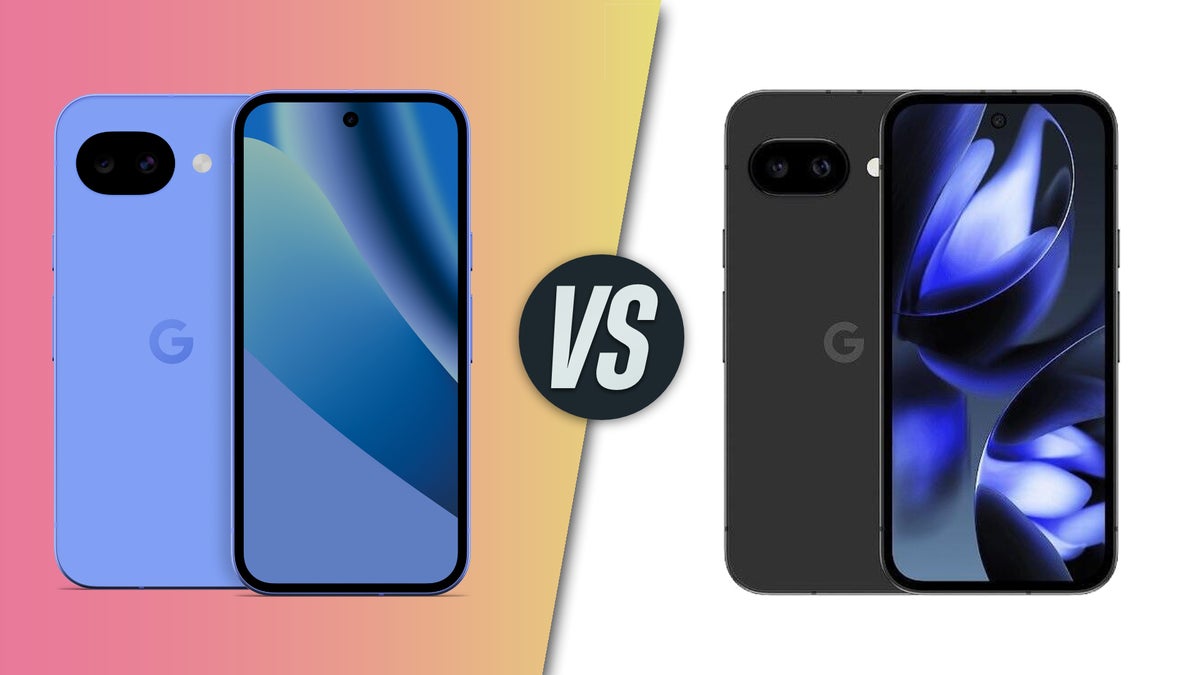
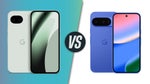
Google Pixel 10a vs Pixel 9a | Image by PhoneArena
Google has just unveiled the Pixel 10a, its most recent affordable smartphone, and this one is a very peculiar release. The reason for that is the fairly slim list of improvements, which can be summed up with faster charging, more durable glass, and a brighter screen.
In real life, you'd really be hard-pressed to notice any major differences between the Pixel 10a and the Pixel 9a, which share pretty much identical hardware specs, but the Pixel 10a is, of course, automatically a much better value. It's still $499, but you will now get a year extra of software updates than the Pixel 9a, plus the faster charging and the brighter screen are decent quality-of-life upgrades.
Should you consider upgrading from the Pixel 9a to the Pixel 10a? Which one should you pick if you are buying a Pixel device in the coming weeks? Let's try to answer both of these questions.
Pixel 10a vs Pixel 9a expected differences:
| Pixel 10a | Pixel 9a |
|---|---|
| Obsidian, Berry, Fog, and Lavender colors | Obsidian, Porcelain, Iris, and Peony colors |
| Same flat design language, but taller, wider, thicker, and lighter | Marginally more compact |
| Same 6.3-inch 120Hz display, but with 3,000-nit brightness | 6.3-inch 120Hz display with 2,700 nits peak brightness |
| Gorilla Glass 7i | Gorilla Glass 3 |
| Same Tensor G4 chipset | Tensor G4 (4nm) chip on deck |
| Satellite SOS on board | No Satellite SOS functionality |
| 45 W wired, 10 W wireless Qi charging | 23 W wired, 7.5 W wireless charging |
Table of Contents:
Also read:
Design and Size
A new coat of paint is all you get
The Pixel 10a is mostly identical to the Pixel 9a in terms of exterior design, with a flat and heavily rounded style that's pretty much identical to the Pixel 9a and the rest of the Pixel 10 series in most ways.
The only difference between the affordable and the mainline Pixels is the camera strip in the back. Both the Pixel 10a and 9a have that one flush with the back of the phone, which I absolutely love.
Both rely on aluminum frames, but the major difference here is the glass in the front. The Pixel 9a used Gorilla Glass 3, which is an older solution that doesn't offer exemplary scratch or drop resistance, but the Pixel 10a arrives with Gorilla Glass 7i, which should boost the durability.
Google has introduced some marginal changes between the two phones: the Pixel 10a is more compact in most dimensions and is a few grams lighter than the Pixel 9a. Not enough for you to notice, but enough for your old Pixel 9a cases to be rendered incompatible with the new device. Still, I have to applaud the slimming down of the new phone; this is what I like to see.
| Pixel 10a | Pixel 9a |
|---|---|
| Thickness 9 mm | Thickness 8.9 mm |
| Dimensions 153.9 x 73 mm | Dimensions 154.7 x 73.25 mm |
| Weight 183 g | Weight 186 g |
It appears that the only new feature and reason for the existence of the Pixel 10a will be the new colorways that Google is offering. The device arrives in Obsidian, Berry, Fog, and Lavender colors, whereas the Pixel 9a was offered in Obsidian, Porcelain, Iris, and Peony.

All Google Pixel 10a colors | Image by Google
Display Differences
Although the displays are mostly similar, the Pixel 10a scores two important upgrades that I love to see.
First up, the peak brightness has been improved by 11% and now matches the 3,000 nits of peak brightness of the Pixel 10 series.
Another improvement is the already mentioned Gorilla Glass 7i front panel, an improvement over the Gorilla Glass 3 of the Pixel 9a. You love to see it.
The rest of the specs are similar: the same 6.3-inch OLED screen with up to 120 Hz of refresh rate, HDR support, and FHD+ resolution.
| Pixel 10a | Pixel 9a |
|---|---|
| Size 6.3" | Size 6.3" |
| Brightness 3,000 nits (peak) | Brightness 2,700 nits (peak) |
Biometrics-wise, both the Pixel 10a and Pixel 9a share the same optical fingerprint sensor, but also come with face unlock that's a tad more secure than the standard picture-based one. It is actually safe enough to be used for proper biometric authentication. This means you can use it for banking apps and payments, à la Face ID.
Performance and Software
Tensor G4 is a decent mid-range chip
Both the Pixel 10a and the Pixel 9a come with the same 4 nm Tensor G4 chip, which isn't a performance monster like most other chips but aims to deliver an experience tailored towards on-device AI.
However, while Tensor definitely lacks in terms of raw performance, it's pretty capable in everyday usage, as devices powered by the Tensor G4 feel snappy and okay in real-life performance.
| Pixel 10a | Pixel 9a |
|---|---|
| Chip Google Tensor G4 | Chip Google Tensor G4 |
| Process 4nm | Process 4nm |
| RAM, Storage 8/128 GB 8/256 GB | RAM, Storage 8/128 GB 8/256 GB |
Memory-wise, both phones come with 8 GB of RAM, which is okay for a mid-range device, and given the RAM shortage caused by those pesky AI image generators, 8 GB could soon become the new standard.
Camera
Dual camera
The Pixel 10a and Pixel 9a share the same dual-camera setup, with a 48 MP main camera and a 13 MP ultrawide, while at the front there's a 13 MP front camera.
Not a terribly versatile setup, but okay-ish for the price segment that the Pixel 10a and Pixel 9a occupy. Lately, we've been seeing even pricier devices with dual-camera setups, indicating a move away from the triple-camera standard.
| Pixel 10a | Pixel 9a |
|---|---|
| Main 48 MP, f/1.7 | Main 48 MP, f/1.7 |
| Ultrawide 13 MP, f/2.2 | Ultrawide 13 MP, f/2.2 |
Battery Life and Charging
A decent battery
The Google Pixel 10a is coming with the same 5,100 mAh battery as the Pixel 9a. Given that the two devices will share the same display and processor, it's pretty logical to expect the same battery life out of both.
A big upgrade is in the charging department: the Pixel 10a now charges at up to 45 W, up from 23 W on the Pixel 9a. There's also faster wireless charging: 10 W on the new phone versus 7.5 W on the older phone. Sadly, Pixelsnap hasn't made the cut.
| Pixel 10a | Pixel 9a |
|---|---|
| Battery size 5,100 mAh | Battery size 5,100 mAh |
Charging speeds 40 W wired 15 W wireless charging | Charging speeds 23 W wired 7.5 W wireless charging |
Specs Comparison

|

|
| Google Pixel 10a | Google Pixel 9a |
| Dimensions | |
|---|---|
| 154.9 x 73.7 x 10.2 | 154.7 x 73.2 x 8.9mm (~9.4 mm with camera bump) |
| Weight | |
| 184.0 g | 186.0 g |
| Size | |
|---|---|
| 6.3-inch | 6.3-inch |
| Type | |
| P-OLED, 120Hz | P-OLED, 120Hz |
| System chip | |
|---|---|
| Google Tensor G4 (4 nm) | Google Tensor G4 (4 nm) |
| Memory | |
| 8GB (LPDDR5X)/128GB (UFS 3.1) 8GB/256GB | 8GB (LPDDR5X)/128GB (UFS 3.1) 8GB/256GB |
| Type | |
|---|---|
| 5100 mAh | 5100 mAh |
| Charge speed | |
| Wired: 30.0W Wireless: 10.0W |
Wired: 23.0W Wireless: 7.5W |
| Main camera | |
|---|---|
| 48 MP (OIS, PDAF) Aperture size: F1.7 Focal length: 25 mm Sensor size: 1/2" Pixel size: 0.8 μm | 48 MP (OIS, PDAF) Aperture size: F1.7 Focal length: 25 mm Sensor size: 1/2" Pixel size: 0.8 μm |
| Second camera | |
| 13 MP (Ultra-wide) Aperture size: F2.2 Sensor size: 1/3.1" Pixel size: 1.12 μm | 13 MP (Ultra-wide) Aperture size: F2.2 Sensor size: 1/3.1" Pixel size: 1.12 μm |
| Front | |
| 13 MP | 13 MP |
See the full
Google Pixel 10a vs Google Pixel 9a specs comparison
or compare them to other phones using our
Phone Comparison tool
Also read:
Summary
Although the Pixel 10a is not the most exciting release Google has ever pulled off, it has scored a few important upgrades that definitely boost the value.
And let's get one thing clear: the Pixel 10a isn't a phone intended for Pixel 9a users. It's not really intended for Pixel 8a or 7a users either. It's a phone that should appeal to users of the much older Pixel 6a or even earlier Pixel phones who might be looking to upgrade but maximize their value.
Sure, it's not an exciting device in any way, but if you expected major surprises here, you're in for a rude awakening. The Pixel 10a is boringly genius.

Follow us on Google News

Popular stories

Related Content



Latest News


Things that are NOT allowed:
To help keep our community safe and free from spam, we apply temporary limits to newly created accounts: