Samsung Galaxy S26 vs Google Pixel 10 Pro: Main differences

We may earn a commission if you make a purchase from the links on this page.
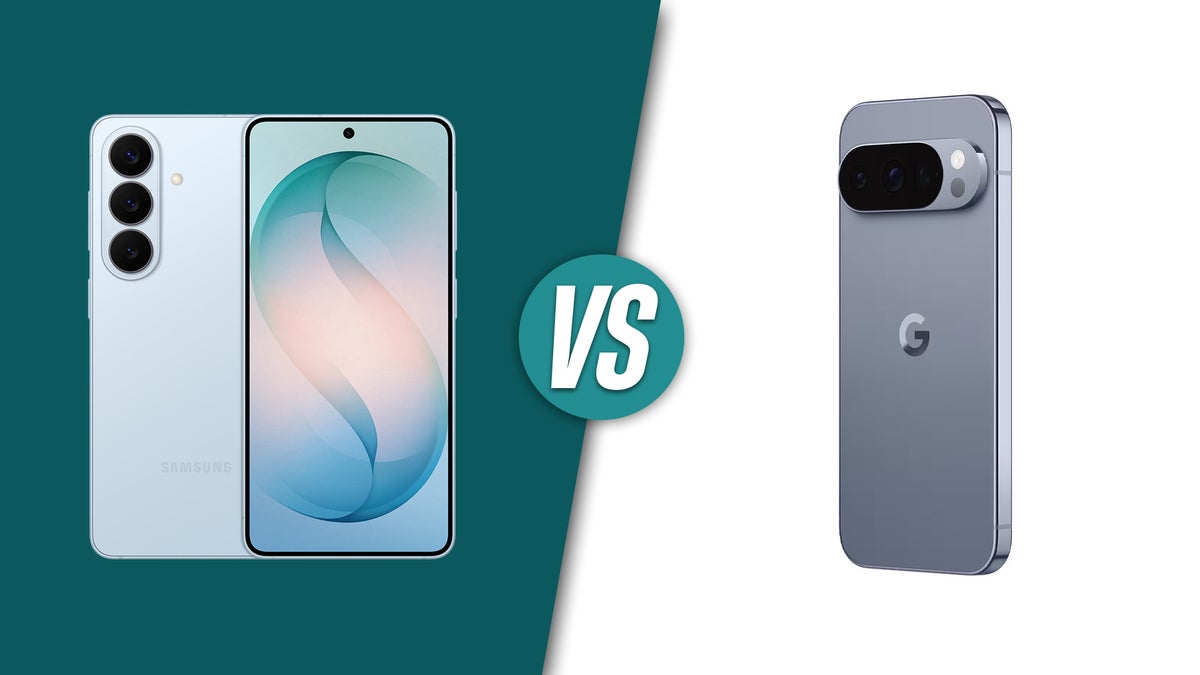
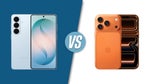
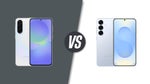
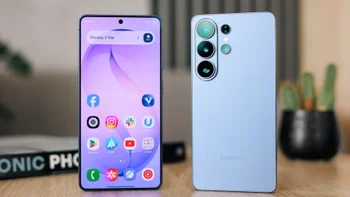
The Galaxy S26 has just broken cover, aiming to solidify Samsung's position in the compact flagship market, where the competition is pretty heated right now. Aside from the iPhone 17 bestseller residing there, we also have the Pixel 10 Pro, which is the compact flagship offering of Google.
This year might as well be the year of the compact Galaxy flagship, as the Galaxy S26 scores a slightly larger display, a bigger battery, and faster chipsets. That's a ton of key upgrades after years of regular Galaxies staying mostly the same. At the same time, seemingly little has changed regarding key features like the camera.
Many might be asking if they should get the Galaxy S26 or just pick the Pixel 10 Pro?
Galaxy S26 vs Pixel 10 Pro differences:
| Samsung Galaxy S26 | Pixel 10 Pro |
|---|---|
| Design | |
| Same flat design as Galaxy S25, no major changes | Similar design, same as the Pixel 9 Pro |
| Design | |
| Larger 6.3-inch display | Same-sized 6.3-inch display |
| Performance | |
| Much faster 3nm Snapdragon 8 Elite Gen 5 (US), 2nm Exynos 2600 (ROW) | 3nm Google Tensor G5 chipset |
| Camera | |
| Same triple camera as before (50 MP + 12 MP + 10 MP) | Triple camera setup |
| Battery | |
| Upgraded 4,300 mAh battery | Larger 4,870 mAh battery |
| No magnetic attachment support | Pixelsnap support |
Table of Contents:
Read more:
Design and Size
All aluminum, all the time
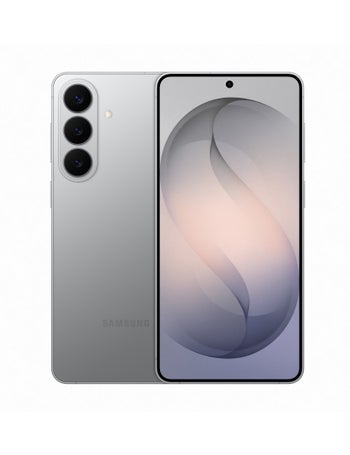
The Galaxy S26 has just scored a slightly larger 6.3-inch display, but the design language hasn't changed at all. But this display increase is in tune with what the rest of the industry is doing right now, so it definitely isn't out of sync with Samsung's competitors, which have all brought their compact flagships to 6.3 inches in size.
Naturally, when a screen grows, it lifts every other dimension as well, and the Galaxy S26 has grown, too. It is taller, slightly wider, and a bit heavier than before. It still relies on Armor Aluminum and Gorilla Glass Victus 2, though.
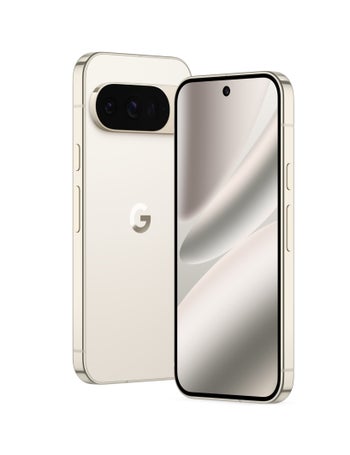
The Pixel 10 Pro measures taller, wider, and thicker, and noticeably heavier than the Galaxy S26. It still looks pretty much identical to the Pixel 9 Pro. Key here is the large camera strip at the rear, which will absolutely be more imposing than the sleeker camera cutout of the Galaxy S26.
| Galaxy S26 | Pixel 10 Pro |
|---|---|
| Thickness 7.2 mm | Thickness 8.6 mm |
| Dimensions 149.6 x 71.7 mm | Dimensions 152.8 x 72 mm |
| Weight 167 g | Weight 207 g |
Both phones are IP68-rated for dust and water penetration.
Colors-wise, the Galaxy S26 is available in Cobalt Violet, Sky Blue, White, and Black, while Silver Shadow and Pink Gold can be bought exclusively on Samsung.com. The Pixel 10 is available in Moonstone, Obsidian, Jade, and Porcelain colors.
Display Differences
Now, aside from the slight display increase for the Galaxy S26, we are not getting any other major specs changes. The screen is a Dynamic AMOLED 2X screen with up to a 120 Hz screen refresh rate, HDR support, FHD+ resolution, and peak brightness hopefully above 2,600 nits.
We also hope that Samsung's anti-reflective screen tech trickles down from the Ultra down to the vanilla Galaxy, as it will be that much more useful when it comes to screen legibility. After all, the base iPhones have anti-glare coating, so it makes a lot of sense. One feature that's not coming is the Privacy screen feature of the Galaxy S26 Ultra.
We also hope that Samsung's anti-reflective screen tech trickles down from the Ultra down to the vanilla Galaxy, as it will be that much more useful when it comes to screen legibility. After all, the base iPhones have anti-glare coating, so it makes a lot of sense. One feature that's not coming is the Privacy screen feature of the Galaxy S26 Ultra.
The Pixel 10 Pro, on the other hand, comes with a fairly similar display. The 6.4-inch Super Actua panel is also 120Hz-capable, with a little higher resolution (2856 x 1280 pixels), and has a pretty high peak brightness of 3,300 nits. If anything, it might very well retain its crown as the phone with the better screen.
The Pixel 10 Pro comes with Gorilla Glass Victus 2, whereas the Galaxy S26 will come with Gorilla Glass Armor.
| Galaxy S26 | Pixel 10 Pro |
|---|---|
| Size 6.3" | Size 6.3" |
| Brightness 2,600 nits (peak) | Brightness 3300 nits (peak) |
Both will rely on ultrasonic fingerprint sensors.
Performance and Software
Sorry, Google
The Galaxy S26 comes in two flavors. The US, Canada, and China will be treated to Qualcomm's Snapdragon 8 Elite Gen 5 for Galaxy chipset, a slightly tuned-up version of the "vanilla" Qualcomm chip, sealed with a kiss by Samsung. The rest of the world will get the Exynos 2600 chipset, which is built on a 2nm manufacturing process, a record when it comes to miniaturization and, hopefully, efficiency.
Both of these are certainly leaving the Tensor chipset in the proverbial dust in terms of performance, as the Pixel 10 Pro is not aimed to be a benchmark powerhouse.
Google's flagship isn't really a performance beast, and it actually doesn't pretend it is. The on-board Tensor provides you with just the right amount of power to ensure smooth day-to-day operations without having much in excess, which should be enough for most users. It's a chip tailored for AI, after all.
| Galaxy S26 | Pixel 10 Pro |
|---|---|
| Chip Qualcomm Snapdragon 8 Elite Gen 5 (US) Exynos 2600 (ROW) | Chip Google Tensor G5 |
| Process 3nm / 2nm | Process 3nm |
| RAM, Storage 12/256GB 12/512GB LPDDR5X RAM UFS 4.0 storage | RAM, Storage 16/128GB 16/256GB 16/512GB 16/1TB LPDDR5X RAM UFS 3.1 storage (128GB) UFS 4.0 (256GB, 512GB, 1TB) |
In terms of memory, Samsung drops the 128 GB storage option The Galaxy S26 now starts with 256 GB of storage, which automatically makes the model more expensive. The phone comes with 12 GB of RAM in both the 256 and 512 GB versions.
Meanwhile, the Pixel 10 Pro XL comes with 16 GB of RAM in all storage versions. The phone arrives with 128 GB UFS 3.1 storage, but the more ample 256 GB, 512 GB, and 1 TB versions are available with faster UFS 4.0 storage.
One UI 8.5 is the software of choice on the Galaxy S26 series, and besides seven years of software support, this one comes with many key new features, including important visual changes.
First, the software scores a new floating app bar at the bottom, which should improve the readability. Next up, One UI 8.5 now offers even more customization options and lets you personalize the Quick Settings panel even more by reordering and removing existing controls.
If you set a picture of a person or a pet as your lock screen wallpaper, the layout will automatically move around so that neither the clock nor the widgets obscure key parts of the image. There are a few extra customization options for the lock screen clock, too.
Galaxy AI has been upgraded with continuous image generation, which lets you generate several images without stopping and pick from the ones you want afterward.
Call Screening is another new feature that will let Galaxy AI answer calls for you and see who's calling and for what reason. You will be provided with a transcript and only then decide if you want to answer the call.
Bixby can now understand you better when you talk to the assistant in your own words. This lets you use it to find specific settings or features without having to sift through numerous menus. It now has an easy way of accessing your conversation history with Bixby.
The Galaxy S26 now comes with an AI-powered screenshot analyzer, which will automatically sort your screenshots into one of eight categories. You can then find these screenshots by simply searching for said category.
The Weather app has scored a more detailed new widget that will showcase a graph of any upcoming precipitation that is expected. Your daily alarms can also show the current weather as a background when they ring, which is a neat quality-of-life upgrade.
Samsung has also enhanced the battery info menu, making it easier to check the remaining battery life left, the battery usage, as well as your charging status. There are also two power-saving modes now: Standard, which is more temperate, and Maximum, which disables all non-essential features to boost battery life.
First, the software scores a new floating app bar at the bottom, which should improve the readability. Next up, One UI 8.5 now offers even more customization options and lets you personalize the Quick Settings panel even more by reordering and removing existing controls.
If you set a picture of a person or a pet as your lock screen wallpaper, the layout will automatically move around so that neither the clock nor the widgets obscure key parts of the image. There are a few extra customization options for the lock screen clock, too.
Call Screening is another new feature that will let Galaxy AI answer calls for you and see who's calling and for what reason. You will be provided with a transcript and only then decide if you want to answer the call.
Bixby can now understand you better when you talk to the assistant in your own words. This lets you use it to find specific settings or features without having to sift through numerous menus. It now has an easy way of accessing your conversation history with Bixby.
The Galaxy S26 now comes with an AI-powered screenshot analyzer, which will automatically sort your screenshots into one of eight categories. You can then find these screenshots by simply searching for said category.
Samsung has also enhanced the battery info menu, making it easier to check the remaining battery life left, the battery usage, as well as your charging status. There are also two power-saving modes now: Standard, which is more temperate, and Maximum, which disables all non-essential features to boost battery life.
Camera
Triple cameras, but which one will come out on top?
The Galaxy S26 camera is identical to the one on the Galaxy S25, so we get a 50 MP main, 12 MP ultrawide, and a 10 MP 3X telephoto camera in the rear. I do hope for image-processing improvements.
The Pixel 10 Pro comes with a more intriguing camera system, one that employs a 50MP main camera, a 48MP ultrawide, and a 48MP telephoto with 5X optical zoom which allows zooming up to 100X. Way more intriguing, that one.
On paper, this one is superior to the camera that Samsung might use, but real-life differences usually pile up at a faster and often unforeseeable rate, so the Galaxy might turn out to be the better camera phone, who knows.
On paper, this one is superior to the camera that Samsung might use, but real-life differences usually pile up at a faster and often unforeseeable rate, so the Galaxy might turn out to be the better camera phone, who knows.
| Galaxy S26 | Pixel 10 Pro |
|---|---|
| Main 50 MP, f/1.8 | Main 50 MP, f/1.1 1/1.3" |
| Ultrawide 12 MP, f/2.2 | Ultrawide 48 MP, f/1.7 1/2.55" |
| Telephoto 10 MP, f/2.4 3X zoom | Telephoto 48MP MP, f/2.8 5X zoom 1/2.55" sensor |
Battery Life and Charging
It's either way here
The Galaxy S26 is getting a larger 4,300 mAh battery, some 300 mAh bigger than the one on the Galaxy S25. That's a welcome upgrade! Hopefully, the chips on board play well in terms of efficiency so that we get better battery life out of this on-board battery.
Meanwhile, the Pixel 10 Pro comes with a much larger 4,870 mAh battery. It fares fairly well in all of our battery life tests aside from the gaming one, where it utterly disappoints. The Pixel 10 Pro battery life is on par with the Galaxy S25, so the Galaxy S26 can potentially improve on that.
| Galaxy S26 | Pixel 10 Pro |
|---|---|
| Battery size 4,300 mAh | Battery size 4,870 mAh |
Charging speeds 25 W wired 15 W wireless charging | Charging speeds 30 W wired 15 W wireless charging Pixelsnap support |
While the Galaxy S26 Ultra has scored 60 W wired charging, and the Galaxy S26 Plus has 45 W of wired charging, the Galaxy S26 is stuck with 25 W wired charging. Definitely the slowest of the bunch. The Pixel 10 Pro charges at 30W, and while that's not too fast either, it's still slightly faster. The larger battery, however, likely means that the Pixel will be slower to charge.
The Galaxy S26 has wireless charging, but no magnetic attachment support. That's what the Pixel comes with: the Pixelsnap system lets you attach supported accessories magnetically. It's backwards-compatible with MagSafe.
Specs Comparison
|
|
| Samsung Galaxy S26 | Google Pixel 10 Pro |
| Dimensions | |
|---|---|
| 149.6 x 71.7 x 7.2 mm (~10 mm with camera bump) | 152.8 x 72 x 8.6 mm (~12.6 mm with camera bump) |
| Weight | |
| 167.0 g | 207.0 g |
| Size | |
|---|---|
| 6.3-inch | 6.3-inch |
| Type | |
| Dynamic AMOLED, 120Hz | OLED, 120Hz |
| System chip | |
|---|---|
| Snapdragon 8 Elite Gen 5 for Galaxy SM8850-1-AD (3 nm) International version - Exynos 2600 |
Google Tensor G5 (3 nm) |
| Memory | |
| 12GB (LPDDR5X)/256GB (UFS 4.0) 12GB/512GB |
16GB (LPDDR5X)/128GB (UFS 3.1) 16GB/256GB 16GB/512GB 16GB/1TB |
| Type | |
|---|---|
| 4300 mAh | 4870 mAh |
| Charge speed | |
| Wired: 25.0W Wireless: 15.0W | Wired: 30.0W Wireless: 15.0W |
| Main camera | |
|---|---|
| 50 MP (OIS, PDAF) Sensor name: Samsung GN3 Aperture size: F1.8 Focal length: 24 mm Sensor size: 1/1.56" Pixel size: 1.0 μm |
50 MP (OIS, PDAF) Aperture size: F1.7 Sensor size: 1/1.3" |
| Second camera | |
| 12 MP (Ultra-wide) Sensor name: Sony IMX564 Aperture size: F2.2 Focal Length: 13 mm Sensor size: 1/2.55" Pixel size: 1.4 μm |
48 MP (Ultra-wide) Aperture size: F1.7 Sensor size: 1/2.55" |
| Third camera | |
| 10 MP (Telephoto, OIS, PDAF) Sensor name: Samsung S5K3K1 Optical zoom: 3.0x Aperture size: F2.4 Focal Length: 67 mm Sensor size: 1/3.94" Pixel size: 1 μm |
48 MP (Telephoto) Optical zoom: 5.0x Aperture size: F2.8 Sensor size: 1/2.55" |
| Front | |
| 12 MP (HDR) | 42 MP (PDAF) |
See the full
Samsung Galaxy S26 vs Google Pixel 10 Pro specs comparison
or compare them to other phones using our
Phone Comparison tool
Summary
Samsung's Galaxy S26 is a phone that scores some important upgrades, like a larger screen, a bigger battery, and faster chipsets, which are all key upgrades.
These certainly make the Galaxy S26 a pretty intriguing device that will carry the Galaxy lineup forward. One downside of all these improvements is the price, which now starts at $899.
Meanwhile, the Pixel has been out for a couple of months already, and it's aimed at purists that enjoy pure Android and Google's AI advances more.

Follow us on Google News

Popular stories

Related Content

Latest News
Things that are NOT allowed:
To help keep our community safe and free from spam, we apply temporary limits to newly created accounts: