This article may contain personal views and opinion from the author.
AT&T is the new Un-carrier | Image by PhoneArena
Far from igniting a price war, AT&T, T-Mobile, and Verizon have chosen a different path to appeal to customers. In the quest to sustain momentum, the carriers have made it clear that the status quo has been preserved. T-Mobile has abandoned the Un-carrier ethos in all but name, leaving a vacuum. Surprisingly, it's AT&T, not Verizon, that has stepped up to the challenge.
It was meant to be AT&T
AT&T Discovery District | Image by Pangram Pangram Foundry
While T-Mobile made a spectacle of the Un-carrier movement as being about customers, the reality was that the strategy was necessary for growth at that time.
During the celebrated John Legere era, T-Mobile was not in the same league as AT&T and Verizon, and therefore couldn't afford the same premium-tier tactics as its rivals.
Today, AT&T finds itself in a similar underdog position in terms of growth. While it remains a titan with 120.1 million subscribers, it trails T-Mobile's 142.4 million and Verizon's 146.9 million.
Recommended For You
Consequently, while T-Mobile and Verizon can afford to chase revenue instead of growth, AT&T must rewrite the rules to lure customers away from its rivals.
The return of all-inclusive pricing
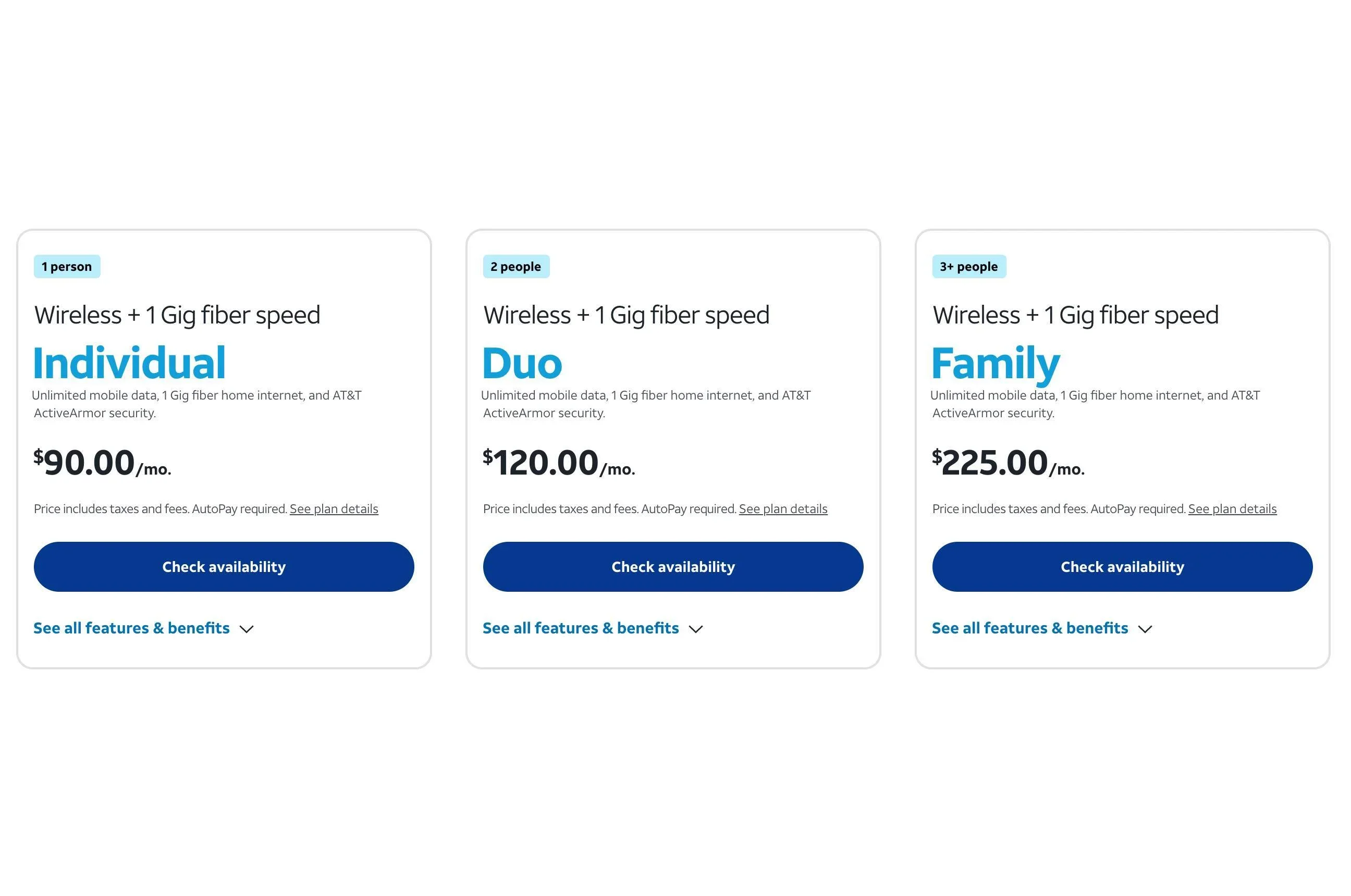
AT&T's OneConnect plan charges advertised rates. | Image by AT&T
The standout story, however, is the new all-in-one cellular and fiber plan, OneConnect, which includes taxes and fees in the price.
T-Mobile championed this transparency during the height of its Un-carrier era, but abandoned tax-inclusive pricing last year.
AT&T's commitment to charging the advertised rates is a clear win for customers who value simplicity.
T-Mobile's premium evolution
With an enviable network infrastructure, strategic partnerships, and a strong brand image, T-Mobile no longer feels the need to compete on price alone.
Having spent years building an image of network superiority, the company now believes it has earned the right to charge premium rates.
Recommended For You
Whether this pivot backfires, as it did in the case of Verizon, remains to be seen.
It's not just T-Mobile that has taken a step back, with BNP Paribas analysis showing that AT&T and Verizon have also started being less generous. As an example, Verizon has switched from offering free iPhone 17 Pro units to offering the iPhone 16 as part of its "4 lines for $100" switcher offer.
AT&T is pivoting to the lower end
While T-Mobile and Verizon are increasingly targeting affluent customers, with the former prioritizing family accounts, AT&T is shifting its focus to budget-conscious customers.
With its new plans, AT&T seems to be going for the cable companies' lunch.
A new landscape
While the Big 3 carriers want to maintain their lead, they are level-headed in how they roll out promotions, shying away from price wars and aggressive discounts.
Another focus is offering discounts to customers who buy both cellular and internet services from them.
So while a true Un-carrier is nothing but a relic of the past, for anyone looking for transparency and the lowest rates from a facilities-based provider, AT&T is as close as it gets.
Anam Hamid is a computer scientist turned tech journalist who has a keen interest in the tech world, with a particular focus on smartphones and tablets. She has previously written for Android Headlines and has also been a ghostwriter for several tech and car publications. Anam is not a tech hoarder and believes in using her gadgets for as long as possible. She is concerned about smartphone addiction and its impact on future generations, but she also appreciates the convenience that phones have brought into our lives. Anam is excited about technological advancements like folding screens and under-display sensors, and she often wonders about the future of technology. She values the overall experience of a device more than its individual specs and admires companies that deliver durable, high-quality products. In her free time, Anam enjoys reading, scrolling through Reddit and Instagram, and occasionally refreshing her programming skills through tutorials.
A discussion is a place, where people can voice their opinion, no matter if it
is positive, neutral or negative. However, when posting, one must stay true to the topic, and not just share some
random thoughts, which are not directly related to the matter.
Things that are NOT allowed:
Off-topic talk - you must stick to the subject of discussion
Offensive, hate speech - if you want to say something, say it politely
Spam/Advertisements - these posts are deleted
Multiple accounts - one person can have only one account
Impersonations and offensive nicknames - these accounts get banned
To help keep our community safe and free from spam, we apply temporary limits to newly created accounts:
New accounts created within the last 24 hours may experience restrictions on how frequently they can
post or comment.
These limits are in place as a precaution and will automatically lift.
Moderation is done by humans. We try to be as objective as possible and moderate with zero bias. If you think a
post should be moderated - please, report it.
Have a question about the rules or why you have been moderated/limited/banned? Please,
contact us.





![T-Mobile is about to test the limits of customer loyalty [UPDATED]](https://m-cdn.phonearena.com/images/article/179374-wide-two_350/T-Mobile-is-about-to-test-the-limits-of-customer-loyalty-UPDATED.webp)








Things that are NOT allowed:
To help keep our community safe and free from spam, we apply temporary limits to newly created accounts: